

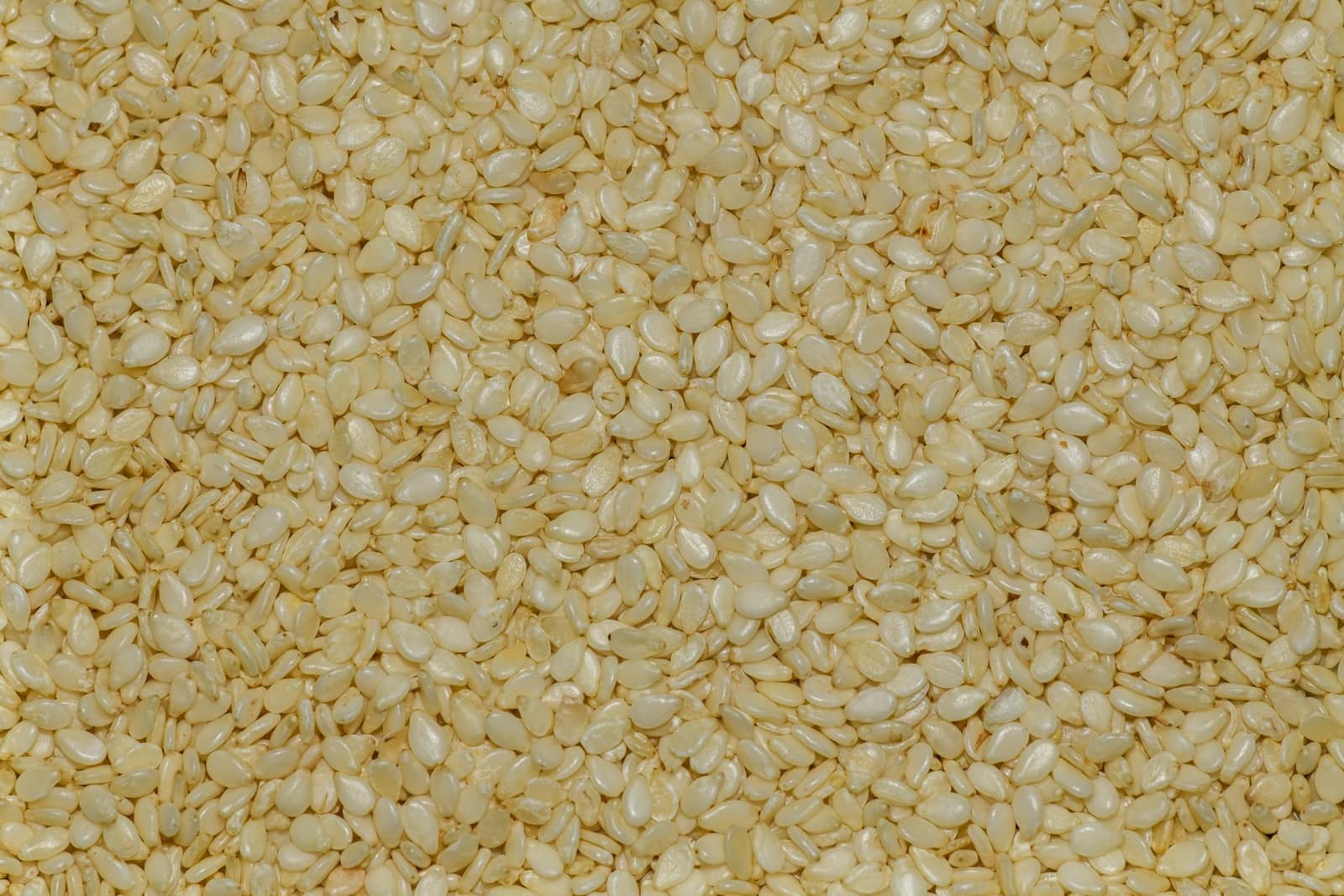
Farm produce
Export sesame seed (til)
Natural and hulled sesame from Gujarat, Rajasthan, MP and UP. EU shipments need an IOPEPC Certificate of Export and strict residue testing.
- HS code
- 1207.40 Sesame (sesamum) seeds, whether or not broken — natural, hulled and black sesame.
- Export policy
- Free to export Free under ITC(HS). Every consignment to the EU needs a Certificate of Export and a health certificate from IOPEPC before shipment, and IOPEPC has separate procedures for the USA and China.
- Registrations
- 5 IEC, GST and those below
- India’s exports, 2025-26
- US$ 423 mn to 100 countries
What is exported
India exports natural (whole) sesame for bakery and oil, and hulled sesame for tahini, confectionery and bun toppings. The Indian Oilseeds and Produce Export Promotion Council (IOPEPC) is the council for sesame and the competent authority for sesame going to the EU. We could not find a current official country-wise breakdown; check the Commerce Department’s trade data for the latest buyers.
Varieties, grades and forms
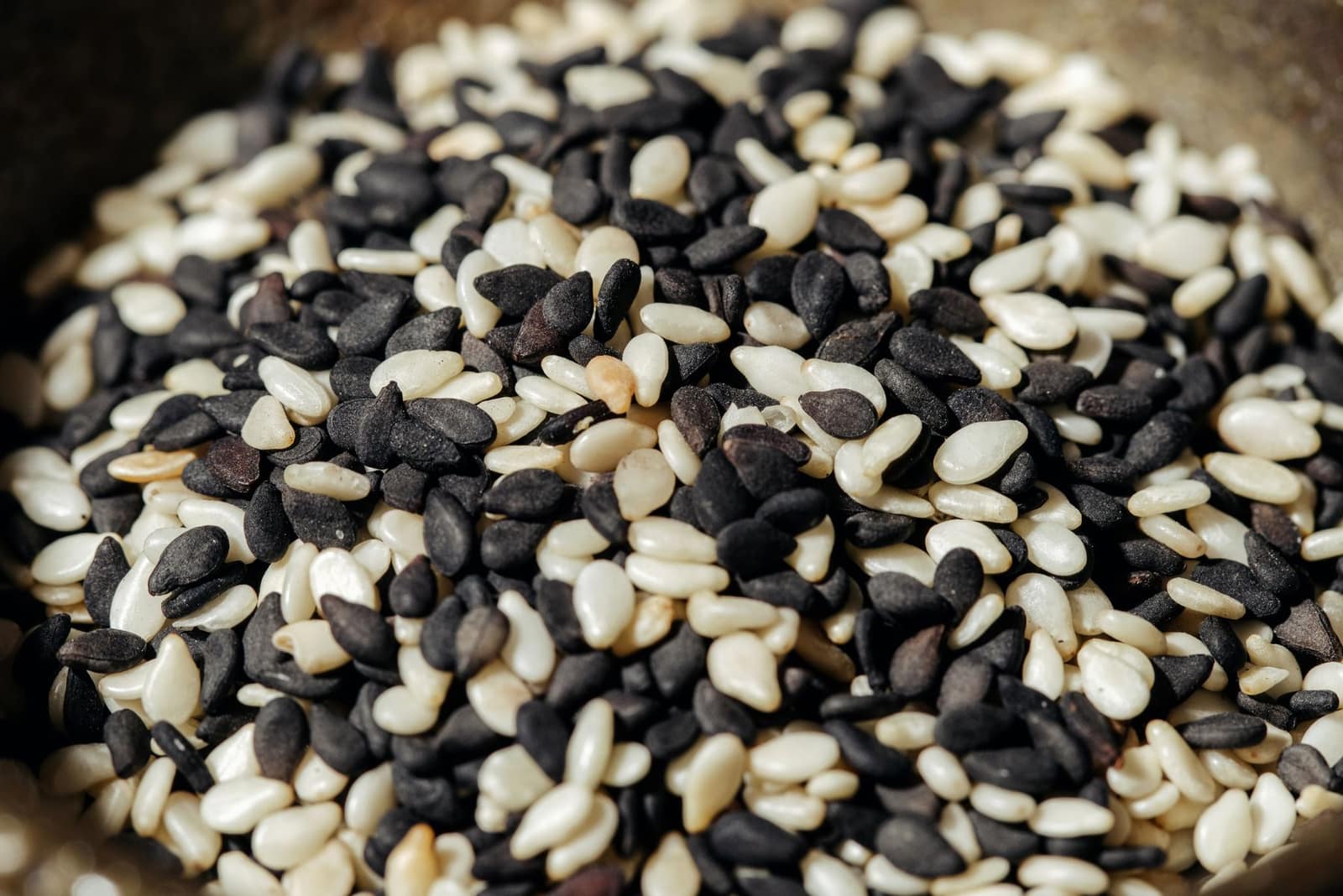
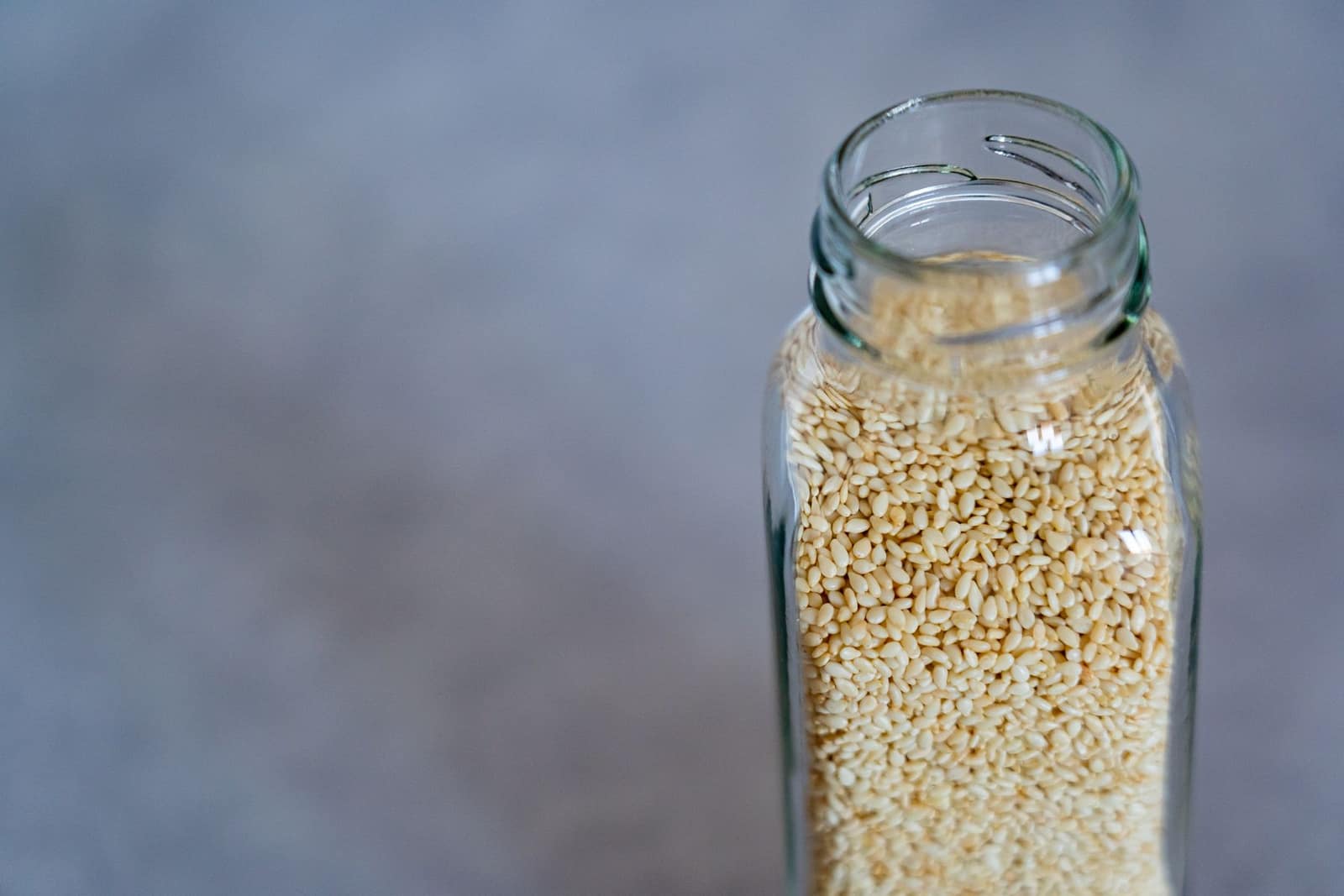
- Natural white sesameMachine-cleaned whole seed (99/1, 98/2 purity) for bakery and oil.
- Hulled sesameMechanically or chemically hulled; for tahini, halva and bun toppings.
- Black sesameSought in Japan, Korea and China for confectionery.
- Roasted sesameReady-to-use for food makers.
Where it is grown or made
- GujaratSaurashtra and Kutch farms; hulling plants around Rajkot and Unjha; Mundra and Kandla ports.
- Rajasthan and Madhya PradeshLarge kharif sesame area.
- West BengalSummer sesame crop.
- Uttar PradeshBundelkhand region.
The quality buyers ask for
- Purity
- Hulled sesame commonly 99.95% or 99.98%; natural (unhulled) seed 98/2 or 99/1 (purity/admixture)
- Free fatty acid and oil
- FFA and oil content stated in the contract; low FFA shows fresh, well-stored seed
- Aflatoxin (EU)
- For oilseeds for direct human consumption: B1 2 µg/kg, total 4 µg/kg (Regulation (EU) 2023/915)
- Microbes
- Salmonella absent in 25 g — the most common reason for EU and US alerts on sesame
- Ethylene oxide and residues
- Ethylene oxide must not be used; pesticide residues within destination MRLs
- Colour and moisture
- White, brown or black as ordered; moisture limit in the contract
Certificates
- IOPEPC RCMC and EU certificatesRequiredRCMC from IOPEPC; every EU consignment needs IOPEPC’s Certificate of Export and health certificate before shipment.
- Phytosanitary certificateRequiredIssued by Plant Quarantine (DPPQS) for each consignment of plant produce, after inspection. Apply on PQMS.
- FSSAI licenceRequiredCentral licence from FSSAI for the premises where the food is packed or stored for export. Apply on FoSCoS.
- HACCPOften askedA food-safety plan that identifies hazards at each processing step and controls them. Most importers ask for it from the processing unit.
- BRCGS Food SafetyOften askedGFSI-recognised standard asked for by UK and many EU supermarkets for private-label packing.
- Organic (NPOP / NOP / EU)Often askedNeeded only if you sell the product as organic: NPOP certification by an accredited body, plus the buyer market’s own organic rules.
- HalalOften askedAsked for by many buyers in the Gulf, Malaysia and Indonesia, especially for processed and animal-origin foods. Use a body the destination recognises.
Shipping, storage and shelf life
A 20-ft container typically holds about 18–19 tonnes in 25 kg (hulled) or 50 kg (natural) bags.
Sea freight, mainly from Mundra and Kandla.
Cool, dry, clean store; heat raises FFA and rancidity. Keep away from contamination sources such as birds and rodents.
Typically about a year for hulled seed in good storage.
What goes on the pack and carton
- Bulk bags and cartons: product and grade, crop year, lot number, net and gross weight, “Product of India”, exporter name and the buyer’s shipping marks, matching the invoice and packing list exactly.
- EU retail packs (Regulation 1169/2011): name of the food, ingredients with allergens highlighted, net quantity, best-before date, storage conditions, the EU importer’s name and address, and origin where required — in the language of the country of sale.
- USA (21 CFR 101): product name, net quantity in both US and metric units, ingredients, allergens, name and place of business of the packer or distributor, Nutrition Facts unless exempt; and “Product of India” marking (19 CFR 134).
- Lot or batch number on every pack and bag — FSSAI’s Labelling and Display Regulations, 2020 require it, and every importing country uses it to trace and recall.
Use the laboratories IOPEPC accepts for its EU certificate (check iopepc.org), or APEDA-recognised and NABL-accredited labs with Salmonella, aflatoxin and ethylene-oxide methods in scope (search nabl-india.org).
Benefits of exporting this product
- RoDTEP refund on this line
Sesame seeds (1207 40 10 seed quality, 1207 40 90 other): 0.9% of FOB, no value cap. Rate as listed in Appendix 4R (w.e.f. 10 Oct 2024); DGFT Notification 41/2026-27 keeps the rates in force on 30 Sep 2026 unchanged until 31 Dec 2026. Check your exact 8-digit line on dgft.gov.in before you price.
DGFT — Appendix 4R, RoDTEP schedule for DTA exports w.e.f. 10 Oct 2024 (Notification No. 32, 30 Sep 2024) ↗ - APEDA support (Bharat Krishi Niryat Yojana)
APEDA’s financial assistance scheme for 2026-27 to 2030-31 helps registered exporters, FPOs and processors with packhouses, cold chain and treatment plants, lab testing and quality systems, and market development (trade fairs, trial shipments, brand registration, retail listing fees). Read the component conditions before you spend.
APEDA — Bharat Krishi Niryat Yojana 2026-27 to 2030-31, operational guidelines (6 Oct 2026) ↗
Where to register
- IOPEPCRCMC from the Indian Oilseeds and Produce Export Promotion Council, and its Certificate of Export and health certificate for EU shipments.iopepc.org ↗
- FSSAIFood business licence. FSSAI rules put food exporters under the Central licence; apply on FoSCoS and keep it valid for the premises you pack from.foscos.fssai.gov.in ↗
- Plant Quarantine (DPPQS)Phytosanitary certificate for each consignment of plant produce, applied for online on PQMS. Some markets also need the farm, packhouse or mill to be registered with Plant Quarantine.pqms.cgg.gov.in ↗
Quality and checks
- Ethylene oxide: in 2020 the EU found Indian sesame with ethylene oxide more than 1,000 times the 0.05 mg/kg limit and put it under increased border checks. The check rate was later cut to 10% of consignments (Regulation (EU) 2025/1441). Confirm the current rate in the regulation’s annex.
- Pesticide residues from IOPEPC’s EU testing list, Salmonella, and aflatoxin.
- Purity, oil content and free fatty acids as per contract.
Take IOPEPC membership, then buy machine-cleaned natural sesame from a Gujarat processor with a lab report and ship to a non-EU buyer first. Add the EU once you can run IOPEPC’s pre-shipment testing smoothly.
Where new exporters go wrong
- Any ethylene oxide or sterilising-gas treatment — the EU treats it as a serious food-safety breach.
- Shipping to the EU without the IOPEPC Certificate of Export; the consignment will not be accepted.
Documents this product needs
Schemes that apply
Trade data
Indian sesame seed (til) exports in numbers
From the Department of Commerce’s TradeStat, country by country. US$, Indian financial years (April–March).
- Exports in 2025-26
- US$ 423 mn -0.1% a year on average, 2020-21 to 2025-26
- Change from 2024-25
- ↓ -13.8% US$ 491 mn → US$ 423 mn
- Buyer countries
- 100
- Average export price
- US$ 1.58 per kg · 2,68,707 tonnes shipped · US$ 1.96 the year before
The price cycle
India’s average export price per kg each year (total value ÷ total quantity). Highest in 2024-25, lowest in 2020-21 — a 26% swing between them. Keep this swing in mind when you quote.
What next: a projection from the trend
The past trend carried forward — not a forecast by any authority. Sudden changes in policy, prices or demand are not in it.
Likely range US$ 421 mn to US$ 578 mn.
- Trend
- +2.2% a year
- Fit (R²)
- 0.16 — weak, read with care
- Based on
- 6 years of official figures
Method: a straight line through the logarithm of yearly exports (log-linear regression); range = ±1 standard error.
Biggest buyer countries
By value in 2025-26. Change is against 2024-25.
Where demand is rising and falling
Only countries that buy at least US$ 1 million or 1% of India’s exports of this product. Change from 2024-25 to 2025-26.
↑ High demand
↓ Low demand
- LebanonUS$ 9.7 mn → US$ 4.1 mn↓-58%
- MoroccoUS$ 6.2 mn → US$ 2.7 mn↓-56.1%
- RomaniaUS$ 6 mn → US$ 2.7 mn↓-55.4%
- AlgeriaUS$ 6.8 mn → US$ 3.5 mn↓-49.3%
- CroatiaUS$ 6.7 mn → US$ 3.6 mn↓-46.1%
- Saudi ArabiaUS$ 17.7 mn → US$ 9.7 mn↓-45.2%
- NetherlandsUS$ 9.8 mn → US$ 6 mn↓-39.1%
- United States of AmericaUS$ 44.4 mn → US$ 27.2 mn↓-38.6%
Which forms sell, and at what price
India’s exports by 8-digit tariff line, 2025-26. Average price = total value ÷ total quantity (TradeStat): the average of every shipment on that line, not the price of any one deal.
| Tariff line | Value 2025-26 | Change | Quantity | Average price |
|---|---|---|---|---|
Other sesamum seeds whether or not broken1207 40 90 · Oil seeds, sesamum seeds, whether or not broken | US$ 417 mn | ↓-12.4% | 2,64,466 tonnes | US$ 1.58 per kgwas US$ 1.94 |
Sesamum seed whether or not broken of seed qlty1207 40 10 · Oil seeds, sesamum seeds, whether or not broken | US$ 6.5 mn | ↓-58.4% | 4,241 tonnes | US$ 1.53 per kgwas US$ 2.86 |
The world market
Each country’s own recorded exports and imports in UN Comtrade, 2023 (the latest year nearly every country has reported).
- World imports
- US$ 4.25 bn 2023
- India among exporters
- #1 of 122 countries
- India’s share of world exports
- 16.1% US$ 489 mn
- Left for others to win
- US$ 2.55 bn exported by other countries
Top exporters — your competitors
- 1IndiaUS$ 489 mn 16.1%
- 2NigeriaUS$ 459 mn 15.1%
- 3PakistanUS$ 414 mn 13.6%
- 4EthiopiaUS$ 233 mn 7.7%
- 5United Rep. of TanzaniaUS$ 226 mn 7.4%
- 6BrazilUS$ 220 mn 7.2%
- 7MozambiqueUS$ 150 mn 4.9%
- 8TürkiyeUS$ 124 mn 4.1%
- 9MyanmarUS$ 121 mn 4%
- 10ChinaUS$ 101 mn 3.3%
Biggest buyers in the world
- 1ChinaUS$ 1.53 bn 35.9%
- 2TürkiyeUS$ 486 mn 11.4%
- 3JapanUS$ 322 mn 7.6%
- 4IndiaUS$ 205 mn 4.8%
- 5Rep. of KoreaUS$ 162 mn 3.8%
- 6IsraelUS$ 120 mn 2.8%
- 7IranUS$ 118 mn 2.8%
- 8Saudi ArabiaUS$ 116 mn 2.7%
- 9EgyptUS$ 95 mn 2.2%
- 10USAUS$ 89 mn 2.1%
Opportunity: what these countries buy from the world, and from India
Each country’s own recorded imports in UN Comtrade, latest year it has reported. The long light part of each bar is demand other countries are filling today.
TradeStat’s 2023-24 quantities are double-counted, so that year is left out of the price. Sources: TradeStat — Export Import Data Bank, Department of Commerce · UN Comtrade database (United Nations Statistics Division) · Figures taken 29 October 2026.
Step by step
How to export sesame seed (til)
India is one of the world’s top sesame exporters and is especially strong in hulled white sesame, cleaned and processed in Gujarat. Sudan, Nigeria, Ethiopia, Tanzania and Myanmar supply cheaper natural seed, mainly to China. India’s buyers include China, South Korea, Vietnam, the EU, the USA and the Middle East, where sesame goes into tahini, halva, bakery and oil. After the EU found ethylene oxide in Indian sesame in 2020, it tightened checks, and buyers now demand strict testing. The openings are clean, sterilised hulled sesame for bakery and tahini, and organic and black sesame.
- 01Register with IOPEPC
Take the RCMC from IOPEPC and read its procedures for the EU, USA and China.
- 02Agree grade and tests
Fix purity, colour, FFA, moisture, Salmonella, aflatoxin and residue limits, and whether the seed must be sterilised.
- 03Process in a clean plant
Clean, hull and sort in a plant with good hygiene; steam-sterilise if the buyer needs it.
- 04Test every lot
Test Salmonella, aflatoxin, ethylene oxide and residues before you book the container.
- 05Get IOPEPC and plant certificates
For the EU, get IOPEPC’s certificate of export and health certificate; get the phytosanitary certificate for every market that asks.
- 06Ship
Stuff clean containers, file the shipping bill and send the documents.
- 07Get paid and close the file
Send the original documents through your bank (or to the buyer if paid in advance). Once the money arrives, get the e-BRC and claim RoDTEP and drawback where they apply.
Meet buyers
Trade fairs
- Usually late January or FebruaryGulfoodDubaigulfood.com ↗
- October, in odd-numbered years (next: 2027)AnugaCologneanuga.com ↗
- October, in even-numbered years (next: 2028)SIAL ParisParissialparis.com ↗
- Late November or early DecemberFood ingredients Europe (Fi Europe)Frankfurt or Paris (alternates)figlobal.com ↗
Questions
Questions about exporting sesame seed (til)
What does 99.95% hulled mean?
Why did the EU tighten checks on Indian sesame?
How do I avoid Salmonella?
Who buys black sesame?
Is sesame an APEDA product?
Sources (5)
- IOPEPC — RCMC and export procedures for sesame (EU, USA, China)
- Commission Implementing Regulation (EU) 2020/1540 (ethylene oxide in sesame from India)
- EU — Regulation (EU) 2023/915 on maximum levels for contaminants in food
- APEDA — International Pesticide MRL Database
- NABL — National Accreditation Board for Testing and Calibration Laboratories (laboratory search)
Who buys Indian sesame seed (til)
All countries → CEPAJPYTokyoJapanHigh-value, quality-obsessed market. Buys shrimp, chemicals, auto parts and garments; strict food-sanitation checks.From India 2025-26US$ 6.04 bn
 CEPAKRWSeoulSouth KoreaIndustrial buyer of Indian naphtha, metals, chemicals and yarn. Food plants must register with MFDS first.From India 2025-26US$ 6.01 bn
 APTACNYBeijingChinaHuge market, but mostly for raw materials. Food plants must be registered with GACC; fresh produce needs a protocol.From India 2025-26US$ 19.5 bn
 EGPCairoEgyptLarge North African market. Every shipment must be pre-registered on Egypt's ACI system before loading.From India 2025-26US$ 3.87 bn
 TRYAnkaraTürkiyeLarge manufacturing economy that buys Indian yarn, chemicals and machinery parts. Extra import duties apply to many goods.From India 2025-26US$ 4.54 bn
 TWDTaipeiTaiwanHigh-tech economy that buys Indian chemicals, metals, marine products and food. Strict food inspection and product standards.From India 2025-26US$ 1.95 bn
More in farm produce
All products → Free, with conditionsFarm produceBasmati riceIndia’s top agri export by value. Free to export, but every contract must be registered with APEDA first.HS1006.30Exports 2025-26US$ 5.67 bn ↓4.6%
 Free, with conditionsFarm produceNon-basmati riceHigh-volume staple sold mainly to Africa and Bangladesh. Export reopened in 2024–25, but contracts must now be registered with APEDA.HS1006.30Exports 2025-26US$ 5.86 bn ↓10.2%
 Free to exportFarm produceSpicesWhole, ground and blended spices. Spices Board registration (CRES) is compulsory; residue and ethylene oxide tests keep buyers.HS0904–0910Exports 2025-26US$ 3.12 bn ↓5.1%
 Free to exportFarm produceChilliIndia’s largest spice export by volume. Dried red chilli goes to China, Thailand and Bangladesh; aflatoxin is the key test.HS0904.21Exports 2025-26US$ 1.1 bn ↓12.9%