


Farm produce
Export fresh onion
Big-volume fresh export to Asia and the Gulf. Policy swings with domestic prices — check DGFT and CBIC before every season.
- HS code
- 0703.10 Fresh or chilled onions and shallots. Dehydrated onion is 0712.20.
- Export policy
- Free to export Free, with no export duty since 1 April 2025, when the 20% duty was withdrawn (PIB, 22 Mar 2025). Between Dec 2023 and Mar 2025 onion export was prohibited, then allowed with a minimum export price and duty. The government changes this quickly when prices rise — confirm on DGFT and CBIC before you sign.
- Registrations
- 5 IEC, GST and those below
- India’s exports, 2025-26
- US$ 430 mn to 60 countries
What is exported
India is the world’s second-largest onion grower, with Maharashtra producing 44% of the crop. India exported 15.48 lakh tonnes of fresh onion worth US$ 397 million in 2025-26. Malaysia, Sri Lanka, the UAE, Nepal, Bangladesh, Qatar and Kuwait were the main buyers. Most onion moves in 5–25 kg mesh or jute bags in ventilated or reefer containers, and by truck to Nepal and Bangladesh.


Varieties, grades and forms
- Nashik red (Agrifound Light Red, NHRDF Red)Pungent red onion, the bulk of Indian exports to Asia and the Gulf.
- Bangalore Rose onionSmall, bright pink onion (GI) sold mainly for pickling in South-East Asia.
- Krishnapuram onionAndhra rose-type onion; its export rules have differed from red onion in the past.
- Yellow onion (Tana F1, Granex)Grown for European buyers who prefer milder yellow bulbs.
- Shallots and dehydrated onionShallots share 0703 10; dehydrated flakes and powder are 0712 20.
Where it is grown or made
- Maharashtra44% of output (2024-25): Nashik (Lasalgaon, Pimpalgaon), Pune, Ahmednagar, Solapur.
- Madhya PradeshSecond-largest producer (about 14%).
- KarnatakaBengaluru rural and Kolar (rose onion); Chitradurga.
- GujaratBhavnagar and Mahuva — fresh onion and the main dehydration cluster.
The quality buyers ask for
- Size
- Graded by bulb diameter; bands such as 25–40 mm, 40–55 mm and 55 mm and above are common in trade
- Type
- Nashik red (rabi crop stores best), Bangalore Rose and Krishnapuram small onions, white onion
- Condition
- Firm, dry outer skin, tight neck, no sprouting, rot, black mould or bruising; limits per the buyer or AGMARK grading
- Grading for export
- DMI issues instructions for the Certificate of AGMARK Grading for onion exports
- Residues
- Pesticide residues within the destination MRLs (APEDA MRL database)
Certificates
- APEDA RCMCRequiredRegistration with APEDA, issued as an RCMC on the DGFT portal. Since 15 Sep 2026, a consignment up to ₹3 lakh FOB can go without it.
- Phytosanitary certificateRequiredIssued by Plant Quarantine (DPPQS) for each consignment of plant produce, after inspection. Apply on PQMS.
- FSSAI licenceRequiredCentral licence from FSSAI for the premises where the food is packed or stored for export. Apply on FoSCoS.
- AGMARK grading certificateOften askedGrading by DMI-approved graders under the onion export instructions; check whether your buyer or the current DGFT condition asks for it.
- GLOBALG.A.P.Often askedFarm-level good agricultural practice certification. Most European supermarket buyers of fresh produce ask for it.
- HACCPOften askedA food-safety plan that identifies hazards at each processing step and controls them. Most importers ask for it from the processing unit.
Shipping, storage and shelf life
Typically about 26–29 tonnes in a 40-ft container, in 5–25 kg mesh or jute bags.
Sea freight to the Gulf and Southeast Asia; trucks and rail to Bangladesh and Nepal through land ports.
Reefers are typically set near 0–2 °C with low humidity and open vents for long voyages; short Gulf runs often use ventilated containers. Cure onions well before packing.
Rabi onion keeps for months in good storage; kharif onion only weeks.
What goes on the pack and carton
- Bulk bags and cartons: product and grade, crop year, lot number, net and gross weight, “Product of India”, exporter name and the buyer’s shipping marks, matching the invoice and packing list exactly.
- Each bag should show size grade, variety, net weight, packing date, “Product of India” and the buyer’s marks.
- Gulf countries: Arabic text (Arabic plus English is normal), production and expiry dates, net weight, country of origin and the importer’s details. Confirm the current rules with your importer.
Use a laboratory on APEDA’s list of recognised laboratories (apeda.gov.in → Quality → Recognised Organisations). For any other test, search the NABL directory (nabl-india.org) for a lab accredited for that test, or use an FSSAI-notified lab. Ask the buyer which lab reports they accept before you send samples.
Benefits of exporting this product
- RoDTEP refund on this line
Fresh onion — rose onion (0703 10 11), other onion (0703 10 19) and shallots (0703 10 20): 1.9% of FOB, capped at ₹1.20 per kg. Rate as listed in Appendix 4R (w.e.f. 10 Oct 2024); DGFT Notification 41/2026-27 keeps the rates in force on 30 Sep 2026 unchanged until 31 Dec 2026. Check your exact 8-digit line on dgft.gov.in before you price.
DGFT — Appendix 4R, RoDTEP schedule for DTA exports w.e.f. 10 Oct 2024 (Notification No. 32, 30 Sep 2024) ↗ - Onion GIs
Lasalgaon Onion (Maharashtra) and Bangalore Rose Onion (Karnataka) are registered GIs listed by APEDA.
APEDA — Catalogue on Agri and Food GI Products (APEDA scheduled) ↗ - APEDA support (Bharat Krishi Niryat Yojana)
APEDA’s financial assistance scheme for 2026-27 to 2030-31 helps registered exporters, FPOs and processors with packhouses, cold chain and treatment plants, lab testing and quality systems, and market development (trade fairs, trial shipments, brand registration, retail listing fees). Read the component conditions before you spend.
APEDA — Bharat Krishi Niryat Yojana 2026-27 to 2030-31, operational guidelines (6 Oct 2026) ↗
Where to register
- APEDARegistration-cum-Membership Certificate (RCMC) for APEDA-scheduled products. Apply on the DGFT portal after you have your IEC.dgft.gov.in ↗
- Plant Quarantine (DPPQS)Phytosanitary certificate for each consignment of plant produce, applied for online on PQMS. Some markets also need the farm, packhouse or mill to be registered with Plant Quarantine.pqms.cgg.gov.in ↗
- APEDA (HortiNet / onion)Farm and packhouse registration on HortiNet where the buyer country asks for traceability.apeda.gov.in ↗
Quality and checks
- Phytosanitary certificate stating freedom from pests the buyer lists; some countries have added onion-specific quarantine conditions.
- Pesticide residues against importer MRLs (APEDA has residue guidelines for onion).
- Size grade, dry neck, no sprouting or black mould — checked at packing.
Work with a packhouse near Lasalgaon or Nashik. Ship one 40-ft container to a Malaysia or Gulf buyer on advance payment, or a truck to Nepal. Quote short validity, because both the mandi price and the policy can move within a week. Since 15 September 2026, a consignment worth up to ₹3 lakh FOB does not need an RCMC (DGFT Notification 36/2026-27). Registrations that a law requires for the product still apply.
Where new exporters go wrong
- A sudden ban, minimum export price or duty while goods are on the way to the port — keep contracts short.
- Loading onions that are not fully cured; they sweat and rot inside the container.
Documents this product needs
Schemes that apply
Sources (4)
- APEDA — Fresh Onions profile (exports and destinations 2025-26)
- PIB — Centre withdraws 20% duty on onion export effective 1 April 2025 (22 Mar 2025)
- APEDA — HortiNet traceability (GrapeNet, AnarNet, MangoNet, VegNet)
- DGFT Notification 36/2026-27 (15 Sep 2026) — no RCMC needed for consignments up to ₹3 lakh FOB
Trade data
Indian fresh onion exports in numbers
From the Department of Commerce’s TradeStat, country by country. US$, Indian financial years (April–March).
- Exports in 2025-26
- US$ 430 mn +2.1% a year on average, 2020-21 to 2025-26
- Change from 2024-25
- ↓ -8.3% US$ 469 mn → US$ 430 mn
- Buyer countries
- 60
- Average export price
- US$ 0.27 per kg · 1.60 mn tonnes shipped · US$ 0.40 the year before
The price cycle
India’s average export price per kg each year (total value ÷ total quantity). Highest in 2024-25, lowest in 2022-23 — a 77% swing between them. Keep this swing in mind when you quote.
What next: a projection from the trend
The past trend carried forward — not a forecast by any authority. Sudden changes in policy, prices or demand are not in it.
Likely range US$ 390 mn to US$ 617 mn.
- Trend
- +1% a year
- Fit (R²)
- 0.02 — weak, read with care
- Based on
- 6 years of official figures
Method: a straight line through the logarithm of yearly exports (log-linear regression); range = ±1 standard error.
Biggest buyer countries
By value in 2025-26. Change is against 2024-25.
Where demand is rising and falling
Only countries that buy at least US$ 1 million or 1% of India’s exports of this product. Change from 2024-25 to 2025-26.
↑ High demand
- ThailandUS$ 560k → US$ 4.6 mn↑+721.4%
- QatarUS$ 5.7 mn → US$ 17.2 mn↑+200.7%
- NepalUS$ 11.1 mn → US$ 27.8 mn↑+149.4%
- MauritiusUS$ 2.1 mn → US$ 5 mn↑+132.9%
- VietnamUS$ 6.6 mn → US$ 14.1 mn↑+113.3%
- SingaporeUS$ 6.8 mn → US$ 13.1 mn↑+92.3%
- OmanUS$ 6.9 mn → US$ 11.8 mn↑+71.7%
- MalaysiaUS$ 68.4 mn → US$ 105 mn↑+53.3%
↓ Low demand
- BangladeshUS$ 205 mn → US$ 25.8 mn↓-87.4%
- MaldivesUS$ 7.2 mn → US$ 4.2 mn↓-41.1%
- IndonesiaUS$ 7.7 mn → US$ 6.3 mn↓-17.8%
New buyers: Countries that bought nothing from India in 2024-25 and did in 2025-26.
- Philippines · US$ 10.2 mn
Which forms sell, and at what price
India’s exports by 8-digit tariff line, 2025-26. Average price = total value ÷ total quantity (TradeStat): the average of every shipment on that line, not the price of any one deal.
| Tariff line | Value 2025-26 | Change | Quantity | Average price |
|---|---|---|---|---|
Other onions fresh or chilled0703 10 19 · Vegetables, alliaceous, onions and shallots, fresh or chilled | US$ 380 mn | ↓-11.2% | 1.51 mn tonnes | US$ 0.25 per kgwas US$ 0.39 |
Vegetables, alliaceous, onions and shallots, fresh or chilled — shallots fresh or chilled0703 10 20 | US$ 32.5 mn | ↑+122.1% | 48,468 tonnes | US$ 0.67 per kgwas US$ 0.54 |
Rose onions fresh or chilled0703 10 11 · Vegetables, alliaceous, onions and shallots, fresh or chilled | US$ 17.7 mn | ↓-32.9% | 38,284 tonnes | US$ 0.46 per kgwas US$ 0.68 |
The world market
Each country’s own recorded exports and imports in UN Comtrade, 2023 (the latest year nearly every country has reported).
- World imports
- US$ 4.44 bn 2023
- India among exporters
- #3 of 129 countries
- India’s share of world exports
- 12.3% US$ 643 mn
- Left for others to win
- US$ 4.57 bn exported by other countries
Top exporters — your competitors
- 1NetherlandsUS$ 1.18 bn 22.6%
- 2ChinaUS$ 651 mn 12.5%
- 3IndiaUS$ 643 mn 12.3%
- 4MexicoUS$ 441 mn 8.5%
- 5USAUS$ 299 mn 5.7%
- 6SpainUS$ 262 mn 5%
- 7EgyptUS$ 207 mn 4%
- 8PolandUS$ 148 mn 2.8%
- 9IranUS$ 108 mn 2.1%
- 10New ZealandUS$ 106 mn 2%
Biggest buyers in the world
- 1USAUS$ 494 mn 11.1%
- 2United KingdomUS$ 387 mn 8.7%
- 3GermanyUS$ 295 mn 6.6%
- 4MalaysiaUS$ 229 mn 5.1%
- 5NetherlandsUS$ 217 mn 4.9%
- 6CanadaUS$ 215 mn 4.8%
- 7United Arab EmiratesUS$ 135 mn 3%
- 8JapanUS$ 132 mn 3%
- 9FranceUS$ 129 mn 2.9%
- 10BelgiumUS$ 109 mn 2.5%
Opportunity: what these countries buy from the world, and from India
Each country’s own recorded imports in UN Comtrade, latest year it has reported. The long light part of each bar is demand other countries are filling today.
HS 070310 includes shallots. TradeStat’s 2023-24 quantities are double-counted, so that year is left out of the price. Sources: TradeStat — Export Import Data Bank, Department of Commerce · UN Comtrade database (United Nations Statistics Division) · Figures taken 29 October 2026.
Step by step
How to export fresh onion
India is one of the world’s biggest onion exporters, competing with China, the Netherlands, Egypt and Pakistan. Gulf countries, Bangladesh, Malaysia, Sri Lanka and Nepal buy Indian red onion for its pungency and keeping quality. The trade is shaped by policy: India has banned or taxed onion exports several times when home prices rose, so buyers value a supplier who can explain and plan around the rules. Openings include speciality types (Bangalore Rose, Krishnapuram) for Southeast Asia and dehydrated onion flakes and powder, which keep for a long time.
- 01Check today’s policy
Onion export rules (bans, minimum export price, duty) change quickly. Read the latest DGFT notification before quoting.
- 02Agree size, type and bag
Fix size band, variety, bag size and colour, and the inspection method in the contract.
- 03Buy cured onions
Buy from Lasalgaon, Pimpalgaon or other markets, or from FPOs, only after the onions are cured and dry-necked.
- 04Grade and pack
Grade by size, remove damaged bulbs, pack in mesh bags and weigh each bag.
- 05Inspect and certify
Get plant quarantine inspection and the phytosanitary certificate; arrange AGMARK grading if needed.
- 06Load and ship fast
Stuff with ventilation, file the shipping bill, and ship without delay — every day in the yard costs quality.
- 07Get paid and close the file
Send the original documents through your bank (or to the buyer if paid in advance). Once the money arrives, get the e-BRC and claim RoDTEP and drawback where they apply.
Questions
Questions about exporting fresh onion
Is onion export allowed right now?
Which crop should I export?
Why do onions rot in the container?
Do I need a reefer?
Is dehydrated onion easier to export?
Sources (5)
- APEDA — Fresh Onions profile
- PIB — 20% duty on onion export withdrawn from 1 April 2025 (22 Mar 2025)
- Directorate of Marketing & Inspection — AGMARK grade standards (commodity-wise rules)
- APEDA — International Pesticide MRL Database
- APEDA — Recognised organisations (list of recognised laboratories, FSMS bodies)
Who buys Indian fresh onion
All countries → CECAMYRKuala LumpurMalaysiaMulti-ethnic market with a large Indian-origin community. Halal expectations for food; CECA and AITIGA both apply.From India 2025-26US$ 6.83 bn
 ISFTALKRSri Jayawardenepura Kotte (Colombo is the commercial capital)Sri LankaClose island market with India's oldest FTA. Buys food, medicines, vehicles, yarn and building materials.From India 2025-26US$ 5.52 bn
 CEPAAEDAbu DhabiUnited Arab EmiratesIndia's biggest Gulf buyer and a re-export hub for the Middle East and Africa. CEPA in force since 2022.From India 2025-26US$ 37.4 bn
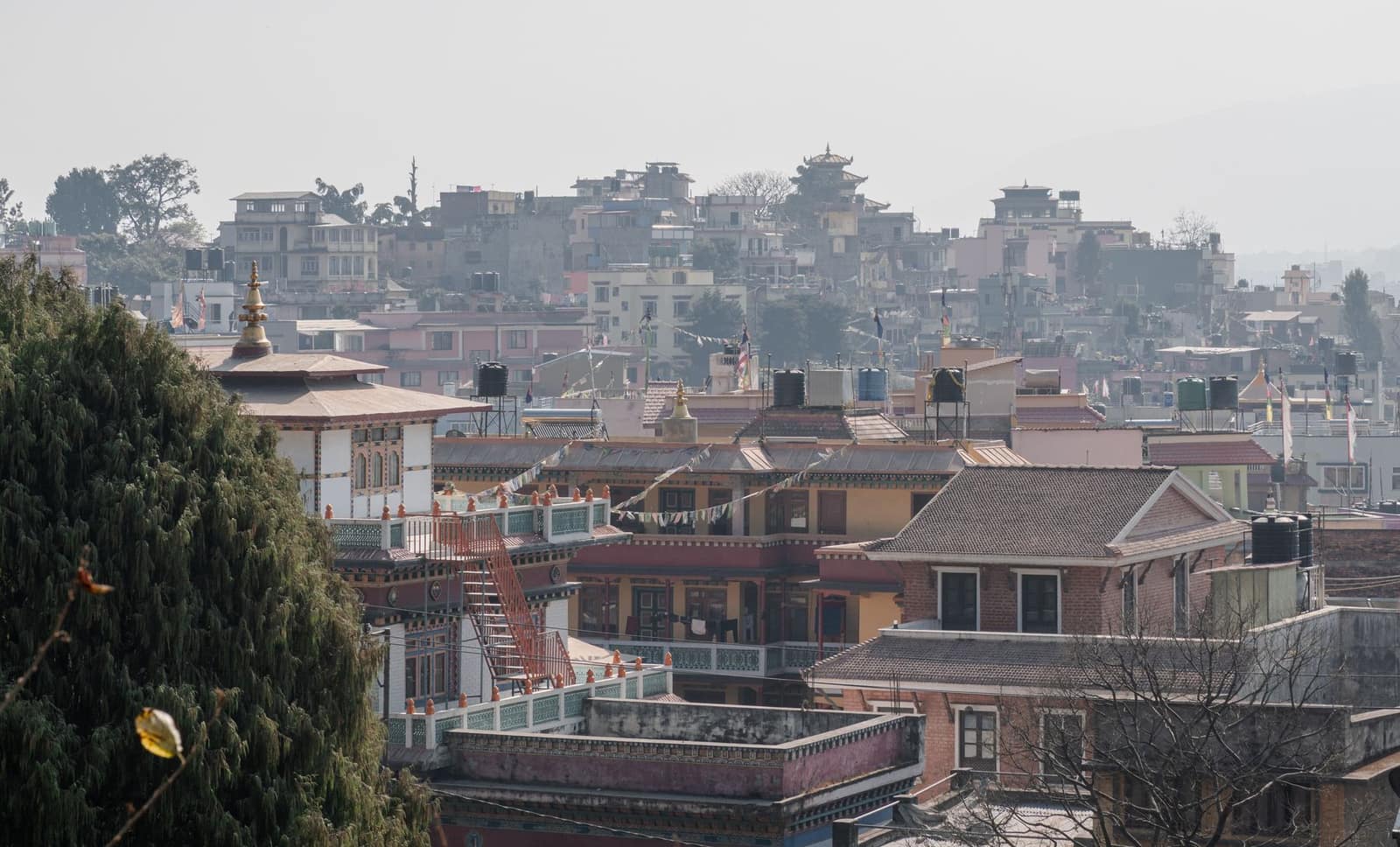 SAFTANPRKathmanduNepalOpen land border, rupee payments and a market that relies on Indian goods — an easy first market by road.From India 2025-26US$ 7.45 bn
 SAFTABDTDhakaBangladeshBig neighbour market for cotton, yarn, food and machinery. Mostly LC-based; land and sea routes.From India 2025-26US$ 10.6 bn
 QARDohaQatarSmall, wealthy Gulf market with a huge Indian workforce. Imports nearly all its food.From India 2025-26US$ 1.62 bn
 KWDKuwait CityKuwaitRich Gulf market with a large Indian community. Buys rice, food, garments and engineering goods.From India 2025-26US$ 1.65 bn
 SARRiyadhSaudi ArabiaLarge Gulf market for rice, food and engineering goods. Strict SFDA food rules and SABER certification for regulated goods.From India 2025-26US$ 10.3 bn
More in farm produce
All products → Free, with conditionsFarm produceBasmati riceIndia’s top agri export by value. Free to export, but every contract must be registered with APEDA first.HS1006.30Exports 2025-26US$ 5.67 bn ↓4.6%
 Free, with conditionsFarm produceNon-basmati riceHigh-volume staple sold mainly to Africa and Bangladesh. Export reopened in 2024–25, but contracts must now be registered with APEDA.HS1006.30Exports 2025-26US$ 5.86 bn ↓10.2%
 Free to exportFarm produceSpicesWhole, ground and blended spices. Spices Board registration (CRES) is compulsory; residue and ethylene oxide tests keep buyers.HS0904–0910Exports 2025-26US$ 3.12 bn ↓5.1%
 Free to exportFarm produceChilliIndia’s largest spice export by volume. Dried red chilli goes to China, Thailand and Bangladesh; aflatoxin is the key test.HS0904.21Exports 2025-26US$ 1.1 bn ↓12.9%