

Farm produce
Export basmati rice
India’s top agri export by value. Free to export, but every contract must be registered with APEDA first.
- HS code
- 1006.30 Milled rice. Basmati has its own 8-digit lines (1006 30 12 and 1006 30 92 in the 2026 ITC(HS) list).
- Export policy
- Free, with conditions Free, subject to conditions. Each export contract needs a Registration-cum-Allocation Certificate (RCAC) from APEDA. Exports to EU countries, the UK, Iceland, Liechtenstein, Norway and Switzerland need a Certificate of Inspection from EIC/EIA (DGFT Notification 07/2026-27, 10 Apr 2026). That notification exempted other European countries only until 1 Oct 2026 — confirm the current position on the APEDA DGFT-notifications page.
- Registrations
- 6 IEC, GST and those below
- India’s exports, 2025-26
- US$ 5.67 bn to 151 countries
What is exported
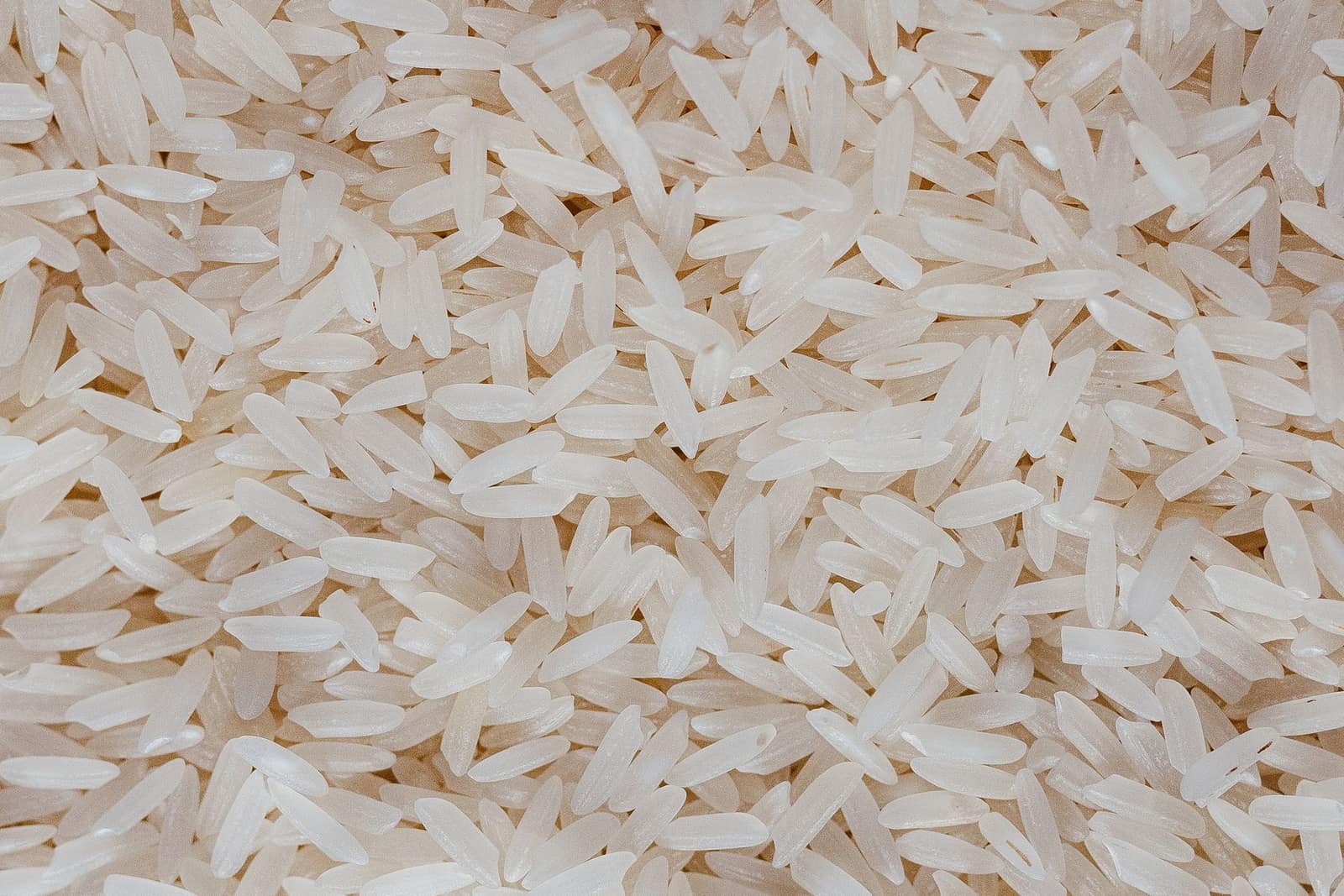
Basmati is the long-grain aromatic rice grown in the GI area of Punjab, Haryana, Himachal Pradesh, Uttarakhand, Delhi, 30 districts of western Uttar Pradesh and 3 districts of Jammu & Kashmir. India exported 6.52 million tonnes worth US$ 5.67 billion in 2025-26. It ships as raw white, steam and parboiled (sella) rice, mostly in 1–40 kg bags. Saudi Arabia, Iran, Iraq, the UAE, Yemen and the USA are the largest buyers.


Varieties, grades and forms
- Pusa Basmati 1121Extra-long grain; the main variety for Gulf and Iran buyers, sold raw, steam and sella.
- Pusa Basmati 1509Short-duration variety; widely traded at a lower price point than 1121.
- Pusa Basmati 1718 and 1885Newer disease-resistant versions of 1121; buyers treat the grain much like 1121.
- Traditional basmati (Basmati 370, Type 3)Shorter grain but strong aroma; a small premium segment, mainly for Europe and the UK.
- Sella (parboiled) and steam basmatiProcessing forms, not varieties: sella stays firm on cooking and is the Gulf favourite.
Where it is grown or made
- PunjabWhole state is in the basmati GI area; large mills around Amritsar, Tarn Taran and Gurdaspur.
- HaryanaWhole state is in the GI area; Karnal, Kaithal and Kurukshetra hold many export mills.
- Uttar Pradesh30 districts of western UP are in the GI area.
- Jammu & KashmirThree districts: Jammu, Kathua and Samba.
- Uttarakhand, Himachal Pradesh and DelhiAlso inside the GI area; smaller volumes.
The quality buyers ask for
- Identity (FSSAI, in force 1 Aug 2023)
- Only varieties notified as basmati under the Seeds Act, 1966; natural fragrance, with no artificial colour, polishing agent or added fragrance
- Moisture
- 14% maximum (FSSAI basmati standard)
- Grain size and cooking
- FSSAI sets average length, length-to-breadth ratio, cooked length and elongation ratio for each type (brown, milled, parboiled); buyers add their own average grain length in the contract
- Non-basmati admixture
- Limited by the FSSAI standard; variety can be confirmed by a DNA (PCR) test
- Broken grains
- Set in the contract (whole-grain lots usually allow only a small percentage); broken basmati is sold under the grade names Tibar, Dubar, Mini Dubar, Mogra and Mini Mogra
- Pesticide residues
- Must meet the destination MRLs; APEDA publishes country-wise rice MRLs, and EU limits for fungicides such as tricyclazole are the hardest to meet
Certificates
- APEDA RCACRequiredRegistration-cum-Allocation Certificate for every basmati export contract, before shipment.
- APEDA RCMCRequiredRegistration with APEDA, issued as an RCMC on the DGFT portal. Since 15 Sep 2026, a consignment up to ₹3 lakh FOB can go without it.
- Phytosanitary certificateRequiredIssued by Plant Quarantine (DPPQS) for each consignment of plant produce, after inspection. Apply on PQMS.
- EIC Certificate of InspectionRequiredNeeded for rice going to the EU, the UK, Iceland, Liechtenstein, Norway and Switzerland (DGFT Notification 07/2026-27).
- SFDA-registered mill (Saudi Arabia)Often askedRice for Saudi Arabia must come from a mill registered with the Saudi Food and Drug Authority.
- FSSAI licenceRequiredCentral licence from FSSAI for the premises where the food is packed or stored for export. Apply on FoSCoS.
- ISO 22000 / FSSC 22000Often askedFood-safety management system certification. FSSC 22000 is recognised by GFSI, which large retailers and brand owners look for.
- BRCGS Food SafetyOften askedGFSI-recognised standard asked for by UK and many EU supermarkets for private-label packing.
Shipping, storage and shelf life
A 20-ft dry container typically carries about 24–26 tonnes of rice in bags — weight, not space, is the limit.
Sea freight, full container load. Gulf ports are about a week from Mundra or Kandla; Europe and the USA take several weeks.
Dry, cool, pest-free godown on pallets. Line containers with kraft paper and use desiccants against condensation; fumigate before stuffing.
Milled rice keeps well; retail packs typically carry 18–24 months best-before. Buyers prefer aged rice.
What goes on the pack and carton
- Bulk bags and cartons: product and grade, crop year, lot number, net and gross weight, “Product of India”, exporter name and the buyer’s shipping marks, matching the invoice and packing list exactly.
- Broken basmati must show its grade name (Tibar, Dubar, Mini Dubar, Mogra or Mini Mogra) prominently; a basmati blend must state the percentage of each rice (FSSAI).
- Gulf countries: Arabic text (Arabic plus English is normal), production and expiry dates, net weight, country of origin and the importer’s details. Confirm the current rules with your importer.
- EU retail packs (Regulation 1169/2011): name of the food, ingredients with allergens highlighted, net quantity, best-before date, storage conditions, the EU importer’s name and address, and origin where required — in the language of the country of sale.
- Lot or batch number on every pack and bag — FSSAI’s Labelling and Display Regulations, 2020 require it, and every importing country uses it to trace and recall.
Residue testing: a lab on APEDA’s list of recognised laboratories (apeda.gov.in → Quality → Recognised Organisations) or an NABL-accredited lab with rice residues in its scope (search nabl-india.org). Rice for Europe is inspected by EIC/EIA, which uses its own and EIC-approved labs — contact the nearest EIA office through eicindia.gov.in.
Benefits of exporting this product
- RoDTEP refund (check the new line)
In Appendix 4R w.e.f. 10 Oct 2024, basmati (then 1006 30 20) and every other milled-rice line carried 0.9% of FOB with no cap. The rice lines were renumbered from 1 May 2025 (RoDTEP alignment Notification 10/2025-26); confirm the rate for 1006 30 12 / 1006 30 92 on the current schedule at dgft.gov.in.
DGFT — Appendix 4R, RoDTEP schedule for DTA exports w.e.f. 10 Oct 2024 (Notification No. 32, 30 Sep 2024) ↗ - Basmati GI
Basmati is a registered GI, and APEDA holds it for India. Only rice grown in the notified GI area may be sold as basmati — this protects your price against look-alike long-grain rice.
APEDA — Catalogue on Agri and Food GI Products (APEDA scheduled) ↗ - APEDA support (Bharat Krishi Niryat Yojana)
APEDA’s financial assistance scheme for 2026-27 to 2030-31 helps registered exporters, FPOs and processors with packhouses, cold chain and treatment plants, lab testing and quality systems, and market development (trade fairs, trial shipments, brand registration, retail listing fees). Read the component conditions before you spend.
APEDA — Bharat Krishi Niryat Yojana 2026-27 to 2030-31, operational guidelines (6 Oct 2026) ↗
Where to register
- APEDARegistration-cum-Membership Certificate (RCMC) for APEDA-scheduled products. Apply on the DGFT portal after you have your IEC.dgft.gov.in ↗
- APEDA (RCAC)Register every basmati export contract online and get a Registration-cum-Allocation Certificate (RCAC) before shipment.apeda.gov.in ↗
- Export Inspection Council (EIC)Certificate of Inspection for rice going to the EU, the UK, Iceland, Liechtenstein, Norway and Switzerland.eicindia.gov.in ↗
- Plant Quarantine (DPPQS)Phytosanitary certificate for each consignment of plant produce, applied for online on PQMS. Some markets also need the farm, packhouse or mill to be registered with Plant Quarantine.pqms.cgg.gov.in ↗
Quality and checks
- Pesticide residues against the buyer country’s MRLs. APEDA publishes country-wise rice MRLs; the EU limit for tricyclazole and other fungicides is the usual cause of rejections.
- Saudi Arabia: rice must come from a mill registered with SFDA (ISO 22000 / HACCP). A merchant exporter must submit a certificate from the registered mill.
- USA and China: only from rice mills registered with Plant Quarantine (DPPQS), following its SOP.
- Grain length, purity (no non-basmati mixing) and moisture, usually tested by an independent surveyor at loading.
Do not try to mill. Buy packed basmati from a mill that is already SFDA-registered or DPPQS-registered for your target market, and start with one 20-ft container to a Gulf buyer on advance payment or LC. Register the contract with APEDA for the RCAC before booking the ship. Since 15 September 2026, a consignment worth up to ₹3 lakh FOB does not need an RCMC (DGFT Notification 36/2026-27). Registrations that a law requires for the product still apply.
Where new exporters go wrong
- Shipping to the EU or UK without checking residues lot by lot — one high tricyclazole result means a border rejection and an alert against your name.
- Signing the sale and loading before the RCAC is issued. Customs will not clear basmati without it.
- Buying from an unregistered mill for Saudi Arabia, the USA or China — the consignment is refused at destination.
Documents this product needs
Schemes that apply
- RoDTEP Remission of Duties and Taxes on Exported Products
- Drawback Duty Drawback (All Industry Rates)
- LUT Letter of Undertaking for zero-rated exports under GST
- ECGC ECGC export credit insurance for small exporters
- Districts as Export Hubs Districts as Export Hubs
- EPM Export Promotion Mission (Niryat Protsahan and Niryat Disha)
Sources (6)
- APEDA — Basmati Rice profile (exports and destinations 2025-26)
- APEDA — Requirements for export of rice
- DGFT Notification 07/2026-27 (10 Apr 2026) — EIC inspection condition for rice to Europe
- APEDA — Residue levels (MRLs) for rice
- APEDA — Register as exporter (RCMC is issued on the DGFT portal)
- DGFT Notification 36/2026-27 (15 Sep 2026) — no RCMC needed for consignments up to ₹3 lakh FOB
Trade data
Indian basmati rice exports in numbers
From the Department of Commerce’s TradeStat, country by country. US$, Indian financial years (April–March).
- Exports in 2025-26
- US$ 5.67 bn +7.1% a year on average, 2020-21 to 2025-26
- Change from 2024-25
- ↓ -4.6% US$ 5.94 bn → US$ 5.67 bn
- Buyer countries
- 151
- Average export price
- US$ 0.87 per kg · 6.52 mn tonnes shipped · US$ 0.98 the year before
The price cycle
India’s average export price per kg each year (total value ÷ total quantity). Highest in 2022-23, lowest in 2020-21 — a 21% swing between them. Keep this swing in mind when you quote.
What next: a projection from the trend
The past trend carried forward — not a forecast by any authority. Sudden changes in policy, prices or demand are not in it.
Likely range US$ 6.3 bn to US$ 9.23 bn.
- Trend
- +10.5% a year
- Fit (R²)
- 0.73
- Based on
- 6 years of official figures
Method: a straight line through the logarithm of yearly exports (log-linear regression); range = ±1 standard error.
Biggest buyer countries
By value in 2025-26. Change is against 2024-25.
Where demand is rising and falling
Only countries that buy at least US$ 1 million or 1% of India’s exports of this product. Change from 2024-25 to 2025-26.
↑ High demand
- BelgiumUS$ 21.3 mn → US$ 68.4 mn↑+220.6%
- ItalyUS$ 38.6 mn → US$ 68 mn↑+76.1%
- NetherlandsUS$ 78.2 mn → US$ 113 mn↑+44.1%
- JordanUS$ 101 mn → US$ 129 mn↑+28.3%
- United Arab EmiratesUS$ 365 mn → US$ 464 mn↑+27.3%
- TürkiyeUS$ 50.2 mn → US$ 63 mn↑+25.4%
- MalaysiaUS$ 71.4 mn → US$ 82.8 mn↑+15.9%
- United KingdomUS$ 191 mn → US$ 217 mn↑+13.4%
↓ Low demand
- QatarUS$ 123 mn → US$ 72.5 mn↓-41%
- IsraelUS$ 101 mn → US$ 65.9 mn↓-34.5%
- IraqUS$ 850 mn → US$ 634 mn↓-25.4%
- Saudi ArabiaUS$ 1.2 bn → US$ 943 mn↓-21.7%
- United States of AmericaUS$ 337 mn → US$ 286 mn↓-15.2%
- OmanUS$ 145 mn → US$ 128 mn↓-11.8%
- EgyptUS$ 72 mn → US$ 64.1 mn↓-11%
Which forms sell, and at what price
India’s exports by 8-digit tariff line, 2025-26. Average price = total value ÷ total quantity (TradeStat): the average of every shipment on that line, not the price of any one deal.
| Tariff line | Value 2025-26 | Change | Quantity | Average price |
|---|---|---|---|---|
Cereals, rice, semi-milled or wholly milled, whether or not polished or glazed — basmati rice1006 30 92 | US$ 2.86 bn | — | 3.14 mn tonnes | US$ 0.91 per kg |
Cereals, rice, semi-milled or wholly milled, whether or not polished or glazed — parboiled basmati rice1006 30 12 | US$ 2.81 bn | — | 3.38 mn tonnes | US$ 0.83 per kg |
Cereals, rice, semi-milled or wholly milled, whether or not polished or glazed — basmati rice1006 30 20 | US$ 0 | ↓-100% | — | — |
The world market
Each country’s own recorded exports and imports in UN Comtrade, 2023 (the latest year nearly every country has reported).
- World imports
- US$ 24.5 bn 2023
- India among exporters
- #1 of 137 countries
- India’s share of world exports
- 35.4% US$ 9.91 bn
- Left for others to win
- US$ 18.1 bn exported by other countries
Top exporters — your competitors
- 1IndiaUS$ 9.91 bn 35.4%
- 2ThailandUS$ 4.58 bn 16.3%
- 3Viet NamUS$ 4.06 bn 14.5%
- 4PakistanUS$ 2.11 bn 7.5%
- 5USAUS$ 1.39 bn 5%
- 6ItalyUS$ 827 mn 3%
- 7ChinaUS$ 771 mn 2.8%
- 8CambodiaUS$ 454 mn 1.6%
- 9MyanmarUS$ 390 mn 1.4%
- 10UruguayUS$ 301 mn 1.1%
Biggest buyers in the world
- 1Saudi ArabiaUS$ 1.65 bn 6.8%
- 2IndonesiaUS$ 1.6 bn 6.5%
- 3PhilippinesUS$ 1.5 bn 6.1%
- 4IranUS$ 1.38 bn 5.6%
- 5USAUS$ 1.33 bn 5.5%
- 6ChinaUS$ 1.04 bn 4.2%
- 7MalaysiaUS$ 816 mn 3.3%
- 8JapanUS$ 737 mn 3%
- 9BeninUS$ 638 mn 2.6%
- 10United Arab EmiratesUS$ 630 mn 2.6%
Opportunity: what these countries buy from the world, and from India
Each country’s own recorded imports in UN Comtrade, latest year it has reported. The long light part of each bar is demand other countries are filling today.
World import figures are for all milled rice (HS 100630); basmati has no separate international code. TradeStat’s 2023-24 quantities are double-counted, so that year is left out of the price. Sources: TradeStat — Export Import Data Bank, Department of Commerce · UN Comtrade database (United Nations Statistics Division) · Figures taken 29 October 2026.
Step by step
How to export basmati rice
Basmati is a geographical-origin rice: only India and Pakistan grow it, so the real competition is Pakistan, with Thai jasmine and other long-grain aromatic rice as substitutes. APEDA’s figures put India far ahead in volume. Demand is steady because basmati is the daily rice of Gulf, Iranian and Iraqi households and of the South Asian diaspora. The openings for a newcomer are residue-compliant rice for the EU and UK, retail packs under the importer’s brand, and brown, organic and traditional basmati for premium shelves.
- 01Pick the market and the mill
Decide the destination first: Saudi Arabia needs an SFDA-registered mill, the USA and China need a DPPQS-registered mill, and Europe needs EIC inspection. Then pick a mill that already meets that rule.
- 02Agree the specification and sample
Send a sealed sample and agree variety, form (raw, steam, sella), average grain length, broken percentage, moisture, crop year and bag size in writing.
- 03Register the contract (RCAC)
Register the signed contract with APEDA online and get the RCAC before you book the vessel.
- 04Test residues lot by lot
Draw samples from the packed lot and test pesticide residues against the buyer country’s MRLs. For Europe, arrange EIC inspection in time.
- 05Fumigate, stuff and survey
Fumigate, stuff the container with an independent surveyor present if the buyer asks, and get the weight and quality survey report.
- 06Customs and certificates
File the shipping bill with the RCAC, then get the phytosanitary certificate, certificate of origin and bill of lading.
- 07Get paid and close the file
Send the original documents through your bank (or to the buyer if paid in advance). Once the money arrives, get the e-BRC and claim RoDTEP and drawback where they apply.
Questions
Questions about exporting basmati rice
Is Pusa 1121 legally basmati?
Can I mix basmati with cheaper rice?
Why are shipments to Europe rejected?
Should I offer sella or raw basmati?
Can I ship before the RCAC is issued?
Sources (8)
- PIB — FSSAI notifies regulatory standards for basmati rice, enforced from 1 Aug 2023 (12 Jan 2023)
- APEDA — Basmati Rice profile
- APEDA — Requirements for export of rice
- APEDA — Residue levels (MRLs) for rice
- DGFT Notification 07/2026-27 (10 Apr 2026) — EIC inspection for rice to Europe
- APEDA — Recognised organisations (list of recognised laboratories, FSMS bodies)
- Export Inspection Council of India (EIC)
- FSSAI — Food Safety and Standards (Labelling and Display) Regulations, 2020 (compendium)
Who buys Indian basmati rice
All countries → SARRiyadhSaudi ArabiaLarge Gulf market for rice, food and engineering goods. Strict SFDA food rules and SABER certification for regulated goods.From India 2025-26US$ 10.3 bn
 CEPAAEDAbu DhabiUnited Arab EmiratesIndia's biggest Gulf buyer and a re-export hub for the Middle East and Africa. CEPA in force since 2022.From India 2025-26US$ 37.4 bn
 USDWashington, D.C.United States of AmericaIndia's largest single-country export market. Strict FDA rules for food; extra 10% US duty on most goods since July 2026.From India 2025-26US$ 87.3 bn
 CETAGBPLondonUnited KingdomNew CETA in force since July 2026 — most Indian goods now enter duty-free. Strong market for garments, food and engineering.From India 2025-26US$ 13.4 bn
 CECASGDSingaporeSingaporeDuty-free trading hub for South-East Asia. Strict food licensing by SFA; big Indian community.From India 2025-26US$ 11.9 bn
 CECAMYRKuala LumpurMalaysiaMulti-ethnic market with a large Indian-origin community. Halal expectations for food; CECA and AITIGA both apply.From India 2025-26US$ 6.83 bn
 CADOttawaCanadaLarge Indian diaspora market. Importer needs a CFIA licence for food; labels in English and French.From India 2025-26US$ 4.67 bn
 KESNairobiKenyaEast Africa's trade gateway via Mombasa. Buys medicines, vehicles, steel and rice; KEBS pre-shipment checks apply.From India 2025-26US$ 4.02 bn
More in farm produce
All products → Free, with conditionsFarm produceNon-basmati riceHigh-volume staple sold mainly to Africa and Bangladesh. Export reopened in 2024–25, but contracts must now be registered with APEDA.HS1006.30Exports 2025-26US$ 5.86 bn ↓10.2%
 Free to exportFarm produceSpicesWhole, ground and blended spices. Spices Board registration (CRES) is compulsory; residue and ethylene oxide tests keep buyers.HS0904–0910Exports 2025-26US$ 3.12 bn ↓5.1%
 Free to exportFarm produceChilliIndia’s largest spice export by volume. Dried red chilli goes to China, Thailand and Bangladesh; aflatoxin is the key test.HS0904.21Exports 2025-26US$ 1.1 bn ↓12.9%
 Free to exportFarm produceTurmericFingers and powder for food and health markets. Lead, residues and Salmonella are the main test points.HS0910.30Exports 2025-26US$ 327 mn ↓4.2%