

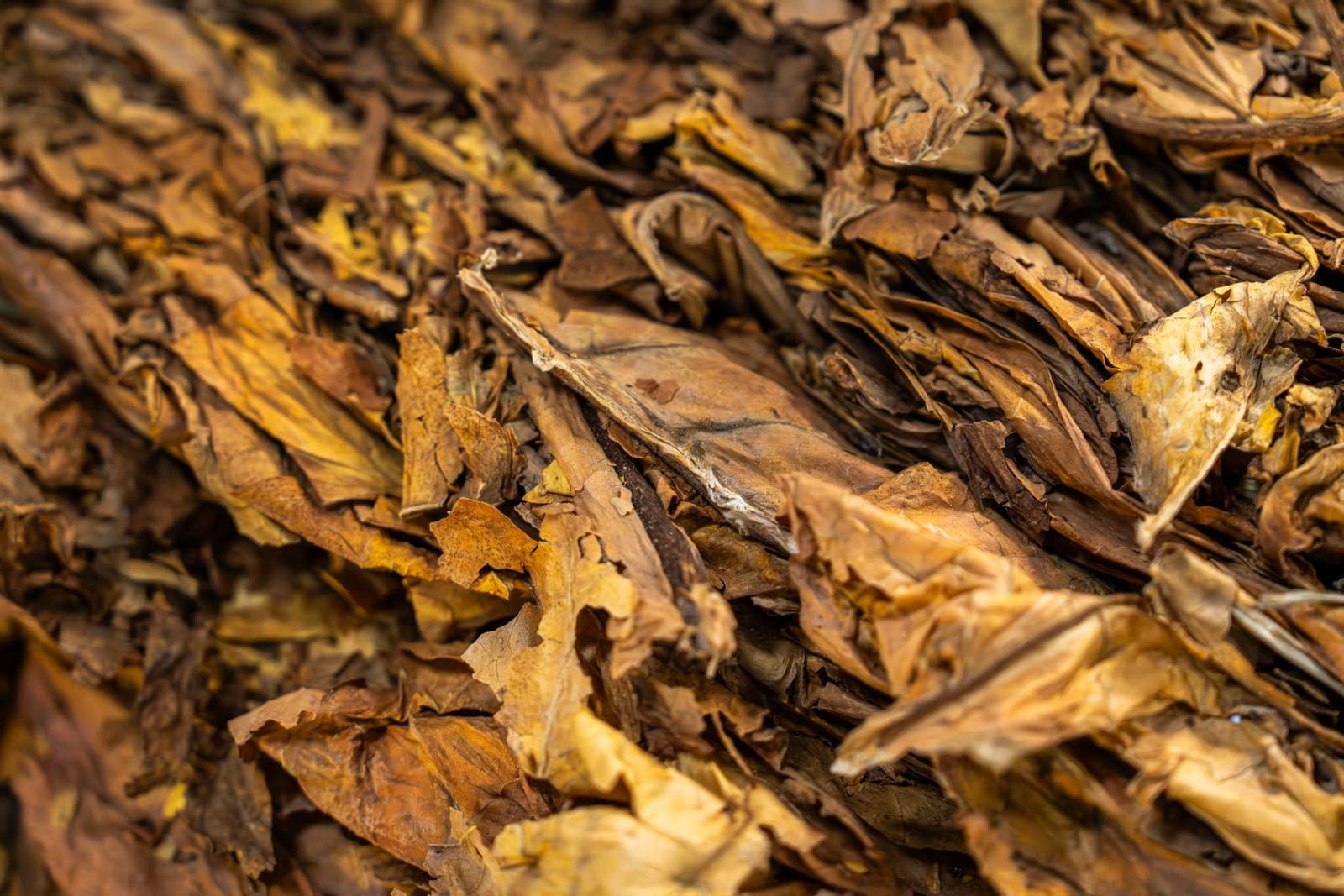
Farm produce
Export unmanufactured tobacco
Leaf tobacco to Belgium, the UAE, Indonesia and Russia. Annual Tobacco Board exporter registration is compulsory.
- HS code
- 2401 Unmanufactured tobacco and tobacco refuse (2401): FCV (flue-cured Virginia), burley, other leaf, stems and scrap. Cigarettes and chewing tobacco are under 2402–2403.
- Export policy
- Free to export Export is Free under ITC(HS), but exporters must be registered with the Tobacco Board for the calendar year (Tobacco Board Act, 1975). Confirm current status on dgft.gov.in.
- Registrations
- 4 IEC, GST and those below
- India’s exports, 2025-26
- US$ 1.37 bn to 70 countries
What is exported
Unmanufactured tobacco exports were about US$ 1.37 billion in 2025-26 (TradeStat). Belgium is the largest buyer, followed by the UAE, Indonesia, Russia, Armenia, the Netherlands and Turkey. The Tobacco Board says India is the world’s second-largest producer and second-largest exporter of unmanufactured tobacco, selling to 127 countries in 2024-25. FCV tobacco is sold through Tobacco Board auctions in Andhra Pradesh and Karnataka.
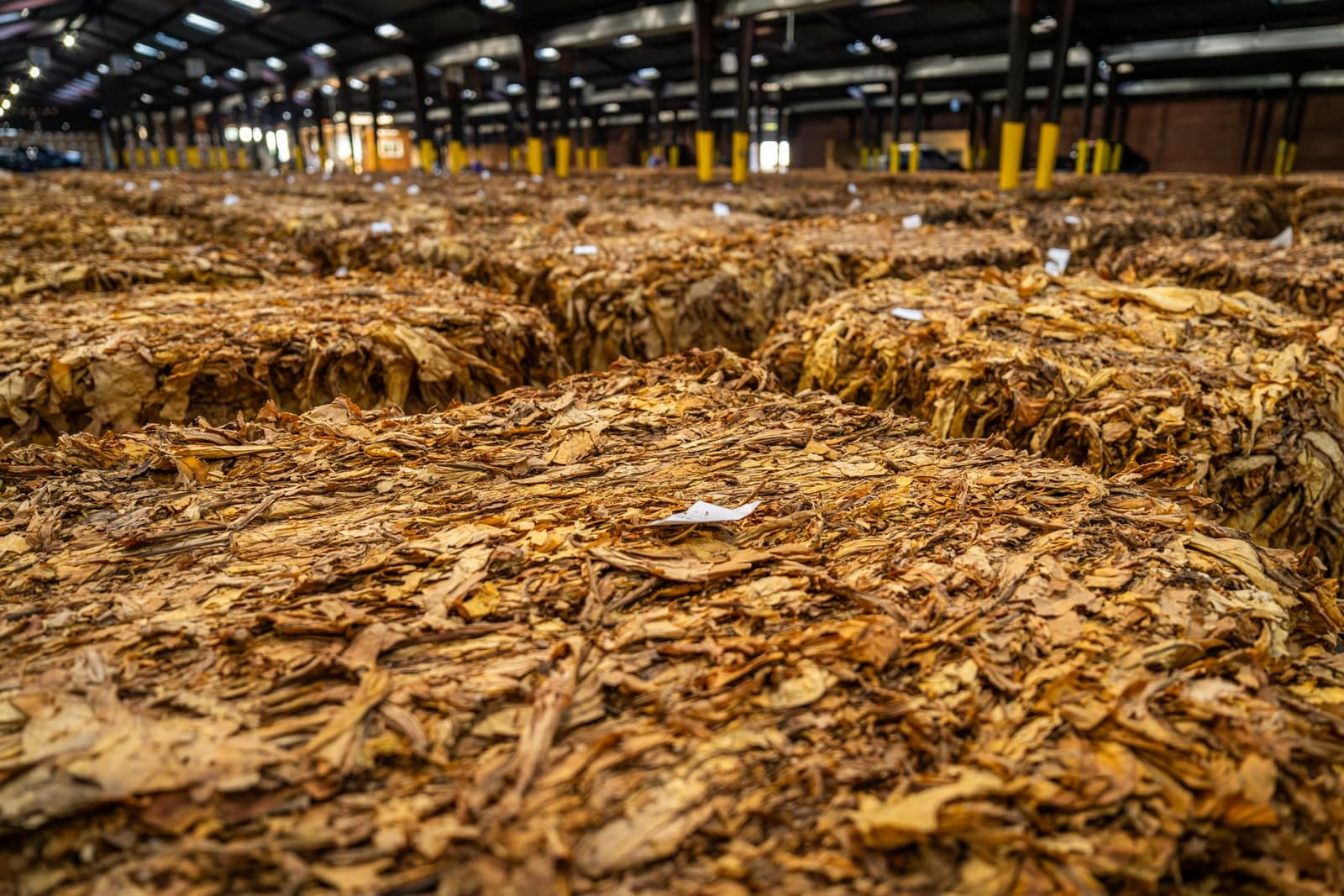
Varieties, grades and forms
- FCV (flue-cured Virginia)Grown in Traditional Black Soils, Northern and Southern Light Soils (Andhra Pradesh) and Karnataka Light Soils; styles range from flavourful to neutral filler (Tobacco Board).
- Burley and NatuAir- and sun-cured types for blends.
- Non-FCV leaf: bidi, chewing, hookah and HDBRGGrown mainly in Gujarat and Karnataka; non-FCV exports grew 75% in US$ in 2024-25 (Tobacco Board).
- Stems and scrapBy-products of threshing, sold to reconstituted-tobacco makers.
Where it is grown or made
- Andhra PradeshPrakasam, Nellore, East and West Godavari; Guntur is the trading and processing centre.
- KarnatakaMysuru and Hassan (FCV auctions); Belagavi and Nipani (bidi tobacco).
- GujaratAnand and Kheda — bidi and chewing tobacco.
The quality buyers ask for
- Type and style
- FCV by soil zone (TBS, NLS, SLS, KLS), burley, natu, non-FCV leaf
- Grade
- Buyer grade by plant position, colour and quality
- Chemistry
- Nicotine and reducing sugars; moisture of threshed strips
- Residues and NTRM
- Crop-protection residues below importers’ limits; free of non-tobacco related material
Certificates
- Tobacco Board exporter registrationRequiredAnnual registration for the calendar year under the Tobacco Board Act and Rules.
- Phytosanitary certificateRequiredIssued by Plant Quarantine (DPPQS) for each consignment after inspection; apply on PQMS.
- ISO 9001Often askedQuality-management certification many industrial buyers expect from suppliers.
Shipping, storage and shelf life
A 40-ft container typically carries about 100–110 cartons of threshed strips.
Sea freight mainly from Chennai, Krishnapatnam and Visakhapatnam.
Conditioned warehouses with humidity control; fumigate against tobacco beetle.
What goes on the pack and carton
- Bulk bags and cartons: product and grade, crop year, lot number, net and gross weight, "Product of India", exporter name and the buyer’s shipping marks, matching the invoice and packing list exactly.
Leaf chemistry and residue testing is done at ICAR-Central Tobacco Research Institute (Rajahmundry) and NABL-accredited private labs (search nabl-india.org). Ask the buyer which lab reports they accept.
Benefits of exporting this product
- No RoDTEP line
Appendix 4R (w.e.f. 10 Oct 2024) has no line for Chapter 24, so unmanufactured tobacco gets no RoDTEP refund. Check duty drawback rates on CBIC instead.
DGFT — Appendix 4R, RoDTEP schedule for DTA exports w.e.f. 10 Oct 2024 (Notification No. 32, 30 Sep 2024) ↗ - Tobacco Board export support
The Tobacco Board runs buyer-seller meets, trade delegations and market information for registered exporters; see its exporters page.
Tobacco Board — Assistance to exporters ↗
Where to register
- Tobacco BoardRegistration as an Exporter of Tobacco under the Tobacco Board Act, 1975 and Rules, 1976. It is granted for a calendar year, filed online, and must be renewed every year.tobaccoboard.in ↗
- Plant Quarantine (DPPQS)Phytosanitary certificate for each consignment of plant produce, applied for online on PQMS. Some markets also want the packhouse or processing unit registered.pqms.cgg.gov.in ↗
Quality and checks
- Crop protection agent (CPA) residues must be below the importing countries’ limits — the Tobacco Board flags this as the main condition buyers now impose.
- Grade, style (filler or flavour), nicotine and sugar content, moisture and freedom from non-tobacco material.
- A phytosanitary certificate from Plant Quarantine for every consignment; some markets add treatment or pest-free-area conditions — check the importing country’s rules first.
Register with the Tobacco Board online for the calendar year, buy graded leaf through the Board’s auction system or a registered dealer, get it processed (threshed and redried) by a registered processor, and sell to a leaf merchant abroad. Since 15 September 2026, a consignment worth up to ₹3 lakh FOB does not need an RCMC (DGFT Notification 36/2026-27); registrations required by a law still apply.
Where new exporters go wrong
- Letting the annual registration lapse — late applications cost more and shipments cannot go meanwhile.
- Residue failures: buy leaf only with residue test results that match the importing country’s limits.
Documents this product needs
Schemes that apply
Sources (5)
- Department of Commerce — TradeStat, India’s exports by commodity and country (2025-26)
- Tobacco Board — Annual Report 2024-25 (exports by region and country)
- Tobacco Board — Criteria for registration as exporter of tobacco for 2027
- DGFT — Appendix 2T, export promotion councils, boards and the products they cover (as on 6 Feb 2023)
- DGFT Notification 36/2026-27 (15 Sep 2026) — no RCMC needed for consignments up to ₹3 lakh FOB
Trade data
Indian unmanufactured tobacco exports in numbers
From the Department of Commerce’s TradeStat, country by country. US$, Indian financial years (April–March).
- Exports in 2025-26
- US$ 1.37 bn +21.4% a year on average, 2020-21 to 2025-26
- Change from 2024-25
- ↓ -7.5% US$ 1.48 bn → US$ 1.37 bn
- Buyer countries
- 70
- Average export price
- US$ 4.28 per kg · 3,19,114 tonnes shipped · US$ 4.57 the year before
The price cycle
India’s average export price per kg each year (total value ÷ total quantity). Highest in 2024-25, lowest in 2020-21 — a 58% swing between them. Keep this swing in mind when you quote.
What next: a projection from the trend
The past trend carried forward — not a forecast by any authority. Sudden changes in policy, prices or demand are not in it.
Likely range US$ 2.06 bn to US$ 3.01 bn.
- Trend
- +25.5% a year
- Fit (R²)
- 0.94
- Based on
- 6 years of official figures
Method: a straight line through the logarithm of yearly exports (log-linear regression); range = ±1 standard error.
Biggest buyer countries
By value in 2025-26. Change is against 2024-25.
Where demand is rising and falling
Only countries that buy at least US$ 1 million or 1% of India’s exports of this product. Change from 2024-25 to 2025-26.
↑ High demand
- BulgariaUS$ 5.6 mn → US$ 14.3 mn↑+155.8%
- PolandUS$ 15.5 mn → US$ 38.1 mn↑+146.8%
- ArmeniaUS$ 32.1 mn → US$ 70.5 mn↑+119.7%
- RussiaUS$ 43.9 mn → US$ 84.8 mn↑+93.1%
- FranceUS$ 20.7 mn → US$ 36.5 mn↑+76.3%
- NigeriaUS$ 18.3 mn → US$ 31.8 mn↑+74%
- GeorgiaUS$ 9.6 mn → US$ 14.9 mn↑+54.7%
- RomaniaUS$ 10.5 mn → US$ 14.3 mn↑+36.4%
↓ Low demand
- EgyptUS$ 115 mn → US$ 33.8 mn↓-70.7%
- JordanUS$ 29.6 mn → US$ 9.4 mn↓-68.4%
- United States of AmericaUS$ 26.1 mn → US$ 12.7 mn↓-51.2%
- South KoreaUS$ 45.7 mn → US$ 24.9 mn↓-45.5%
- ItalyUS$ 14.9 mn → US$ 9.9 mn↓-33.2%
- United Arab EmiratesUS$ 240 mn → US$ 179 mn↓-25.4%
- TürkiyeUS$ 50.8 mn → US$ 39.9 mn↓-21.4%
- GreeceUS$ 32.9 mn → US$ 27.2 mn↓-17.2%
New buyers: Countries that bought nothing from India in 2024-25 and did in 2025-26.
- Singapore · US$ 3.7 mn
Which forms sell, and at what price
India’s exports by 8-digit tariff line, 2025-26. Average price = total value ÷ total quantity (TradeStat): the average of every shipment on that line, not the price of any one deal.
| Tariff line | Value 2025-26 | Change | Quantity | Average price |
|---|---|---|---|---|
Flue cured virginia tobacco partly / whollystmd/stripped2401 20 10 · Tobacco, partly or wholly stemmed or stripped | US$ 878 mn | ↓-1.9% | 1,53,297 tonnes | US$ 5.73 per kgwas US$ 6.12 |
Burley tobaco, partly/wholly stmd/stripped2401 20 40 · Tobacco, partly or wholly stemmed or stripped | US$ 281 mn | ↓-25.4% | 70,234 tonnes | US$ 4.00 per kgwas US$ 4.23 |
Other tobacco no stemmd/stripped2401 10 90 · Tobacco, | US$ 56.4 mn | ↑+2.9% | 22,585 tonnes | US$ 2.50 per kgwas US$ 2.75 |
Sun cured virginia tobacco, partlt/wholly/stripped2401 20 30 · Tobacco, partly or wholly stemmed or stripped | US$ 45 mn | ↑+18.7% | 9,538 tonnes | US$ 4.72 per kgwas US$ 4.81 |
Other tobacco prtly or wholly stemd/strippd2401 20 90 · Tobacco, partly or wholly stemmed or stripped | US$ 43.3 mn | ↑+3.1% | 13,571 tonnes | US$ 3.19 per kgwas US$ 3.41 |
Tobacco refuse — tobacco refuse2401 30 00 | US$ 31.5 mn | ↓-2.3% | 39,882 tonnes | US$ 0.79 per kgwas US$ 0.89 |
Sun cured country(natu) tobacco partly/ wholly stmd/stripped2401 20 20 · Tobacco, partly or wholly stemmed or stripped | US$ 13.5 mn | ↓-39.4% | 3,386 tonnes | US$ 4.00 per kgwas US$ 4.25 |
Flue cured virginia tobocco, npt stmd/ stripped2401 10 10 · Tobacco, | US$ 5.4 mn | ↑+131.6% | 1,754 tonnes | US$ 3.05 per kgwas US$ 2.57 |
Burley tobacco,not stemmed/stripped2401 10 40 · Tobacco, | US$ 4 mn | ↑+1% | 1,523 tonnes | US$ 2.61 per kgwas US$ 2.93 |
Tobacco for manufactr of hokah tobacco , partly /wholly stmd /stripped2401 20 80 · Tobacco, partly or wholly stemmed or stripped | US$ 3.2 mn | ↑+109.8% | 488 tonnes | US$ 6.57 per kgwas US$ 5.85 |
Suncured country (natu) tobacco,not stmd /stripped2401 10 20 · Tobacco, | US$ 2.4 mn | ↓-53.2% | 1,258 tonnes | US$ 1.87 per kgwas US$ 2.66 |
Sun cured virginia tobacco , not stmd / stripped2401 10 30 · Tobacco, | US$ 1.5 mn | ↑+1,116.7% | 400 tonnes | US$ 3.65 per kgwas US$ 1.80 |
Tobacco for mnfr of chwng tobacco, partly/wholly stmd/stripped2401 20 60 · Tobacco, partly or wholly stemmed or stripped | US$ 1.3 mn | ↓-18.7% | 782 tonnes | US$ 1.61 per kgwas US$ 1.56 |
Tobacco for mnfr of hookah tobacco no stmd/stripped2401 10 80 · Tobacco, | US$ 1 mn | ↓-60.2% | 218 tonnes | US$ 4.68 per kgwas US$ 5.01 |
The world market
Each country’s own recorded exports and imports in UN Comtrade, 2023 (the latest year nearly every country has reported).
- World imports
- US$ 11.1 bn 2023
- India among exporters
- #4 of 102 countries
- India’s share of world exports
- 8.7% US$ 969 mn
- Left for others to win
- US$ 10.2 bn exported by other countries
Top exporters — your competitors
- 1BrazilUS$ 2.54 bn 22.7%
- 2ZimbabweUS$ 1.19 bn 10.6%
- 3USAUS$ 1 bn 9%
- 4IndiaUS$ 969 mn 8.7%
- 5ChinaUS$ 470 mn 4.2%
- 6MalawiUS$ 447 mn 4%
- 7GermanyUS$ 401 mn 3.6%
- 8ItalyUS$ 361 mn 3.2%
- 9United Rep. of TanzaniaUS$ 340 mn 3%
- 10BelgiumUS$ 325 mn 2.9%
Biggest buyers in the world
- 1ChinaUS$ 1.7 bn 15.3%
- 2GermanyUS$ 1.08 bn 9.7%
- 3PolandUS$ 797 mn 7.2%
- 4USAUS$ 649 mn 5.8%
- 5IndonesiaUS$ 633 mn 5.7%
- 6United Arab EmiratesUS$ 547 mn 4.9%
- 7Dominican Rep.US$ 500 mn 4.5%
- 8TürkiyeUS$ 450 mn 4.1%
- 9Viet NamUS$ 307 mn 2.8%
- 10Rep. of KoreaUS$ 291 mn 2.6%
Opportunity: what these countries buy from the world, and from India
Each country’s own recorded imports in UN Comtrade, latest year it has reported. The long light part of each bar is demand other countries are filling today.
TradeStat’s 2023-24 quantities are double-counted, so that year is left out of the price. Sources: TradeStat — Export Import Data Bank, Department of Commerce · UN Comtrade database (United Nations Statistics Division) · Figures taken 29 October 2026.
Step by step
How to export unmanufactured tobacco
India is the world’s second-largest producer and second-largest exporter of unmanufactured tobacco (Tobacco Board), competing mainly with Brazil, Zimbabwe and the USA. Indian FCV ranges from flavourful to neutral filler styles and sells to leaf merchants and cigarette makers in Europe, the Gulf, Asia and Africa. Exports reached a record in 2024-25. The main constraint is residue compliance; the Board flags crop-protection residues as the key buyer condition.
- 01Register with the Tobacco Board
File online for the calendar year with PAN, GST, bank certificate, undertaking and fee; renew every year on time.
- 02Buy leaf
Buy FCV through the Board’s auction platforms or from registered dealers; non-FCV from registered traders.
- 03Process
Get the leaf threshed and redried by a registered processor to the buyer’s grade.
- 04Test residues
Test crop-protection residues against the importing country’s limits.
- 05Inspection and phytosanitary certificate
Apply on PQMS; Plant Quarantine inspects the lot (and fumigation or treatment if the importing country requires it) before issuing the certificate.
- 06File the shipping bill and ship
Your customs broker files the shipping bill on ICEGATE with the invoice and packing list. After customs clearance the line issues the bill of lading; get the certificate of origin from the right agency if the buyer needs a trade-agreement rate.
- 07Get paid and close the file
Send original documents through your bank (or to the buyer if paid in advance). When the money arrives, get the e-BRC and claim RoDTEP and drawback where they apply.
Questions
Questions about exporting unmanufactured tobacco
Do I need Tobacco Board registration?
What is the registration fee?
Which countries buy Indian tobacco?
Is RoDTEP available?
Why do buyers reject Indian leaf?
Sources (5)
- Tobacco Board — Annual Report 2024-25 (exports by region and country)
- Tobacco Board — Criteria for registration as exporter of tobacco for 2027
- Department of Commerce — TradeStat, India’s exports by commodity and country (2025-26)
- DGFT — Appendix 4R, RoDTEP schedule for DTA exports w.e.f. 10 Oct 2024 (Notification No. 32, 30 Sep 2024)
- DGFT — Appendix 2T, export promotion councils, boards and the products they cover (as on 6 Feb 2023)
Who buys Indian unmanufactured tobacco
All countries → CEPAAEDAbu DhabiUnited Arab EmiratesIndia's biggest Gulf buyer and a re-export hub for the Middle East and Africa. CEPA in force since 2022.From India 2025-26US$ 37.4 bn
 AITIGAIDRJakartaIndonesiaWorld's fourth most populous country. Buys Indian vehicles, steel, chemicals, groundnuts and meat; halal and BPOM rules for food.From India 2025-26US$ 4.49 bn
 RUBMoscowRussiaGrowing buyer of Indian food, medicines and machinery. Payments need care because of sanctions; EAC certification applies.From India 2025-26US$ 4.49 bn
 EURAmsterdamNetherlandsEurope's main gateway: Rotterdam handles goods for the whole EU. EU food-safety and residue rules apply.From India 2025-26US$ 17.5 bn
 EURParisFranceFashion, food and design market. EU rules plus French-language labels; SIAL Paris is a key food fair.From India 2025-26US$ 7.1 bn
 CEPAKRWSeoulSouth KoreaIndustrial buyer of Indian naphtha, metals, chemicals and yarn. Food plants must register with MFDS first.From India 2025-26US$ 6.01 bn
 UAHKyivUkraineWartime market that still imports Indian medicines, food and machinery. Insurance, routing and payment need extra care.From India 2025-26US$ 220 mn
More in farm produce
All products → Free, with conditionsFarm produceBasmati riceIndia’s top agri export by value. Free to export, but every contract must be registered with APEDA first.HS1006.30Exports 2025-26US$ 5.67 bn ↓4.6%
 Free, with conditionsFarm produceNon-basmati riceHigh-volume staple sold mainly to Africa and Bangladesh. Export reopened in 2024–25, but contracts must now be registered with APEDA.HS1006.30Exports 2025-26US$ 5.86 bn ↓10.2%
 Free to exportFarm produceSpicesWhole, ground and blended spices. Spices Board registration (CRES) is compulsory; residue and ethylene oxide tests keep buyers.HS0904–0910Exports 2025-26US$ 3.12 bn ↓5.1%
 Free to exportFarm produceChilliIndia’s largest spice export by volume. Dried red chilli goes to China, Thailand and Bangladesh; aflatoxin is the key test.HS0904.21Exports 2025-26US$ 1.1 bn ↓12.9%