

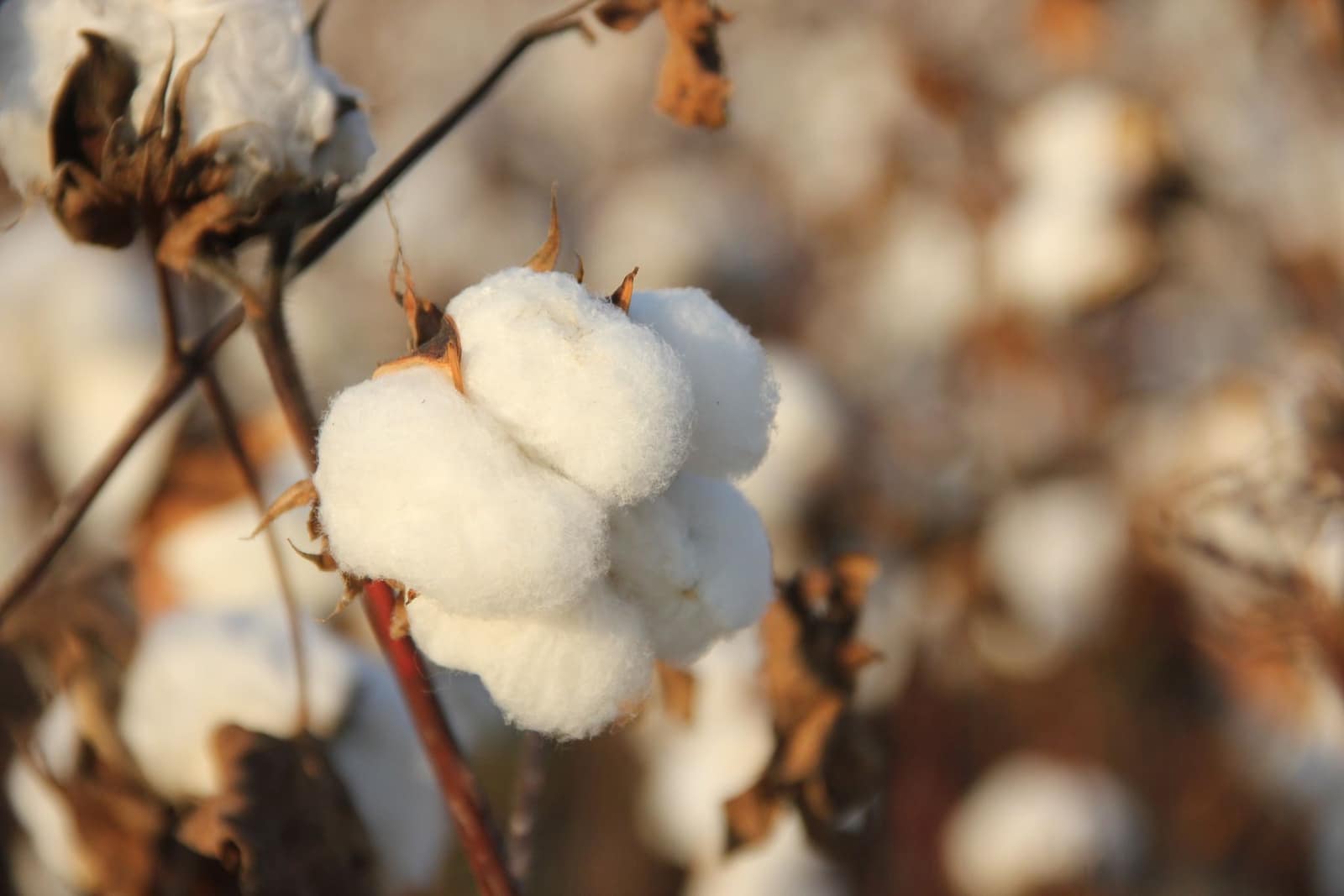
Textiles & apparel
Export raw cotton
Ginned cotton bales from Gujarat, Maharashtra and Telangana, sold mainly to spinning mills in Bangladesh, Vietnam and China.
- HS code
- 5201 Cotton, not carded or combed: ginned lint in bales, classified in the Indian tariff by staple length (for example 28.5 mm and above).
- Export policy
- Free to export Free under ITC(HS); the old requirement to register cotton export contracts was dispensed with (DGFT Notification 102(RE-2013)/2009-14, 8 Dec 2014). Confirm current status on DGFT, as cotton policy has been changed at short notice in past years.
- Registrations
- 3 IEC, GST and those below
- India’s exports, 2025-26
- US$ 436 mn to 23 countries
What is exported
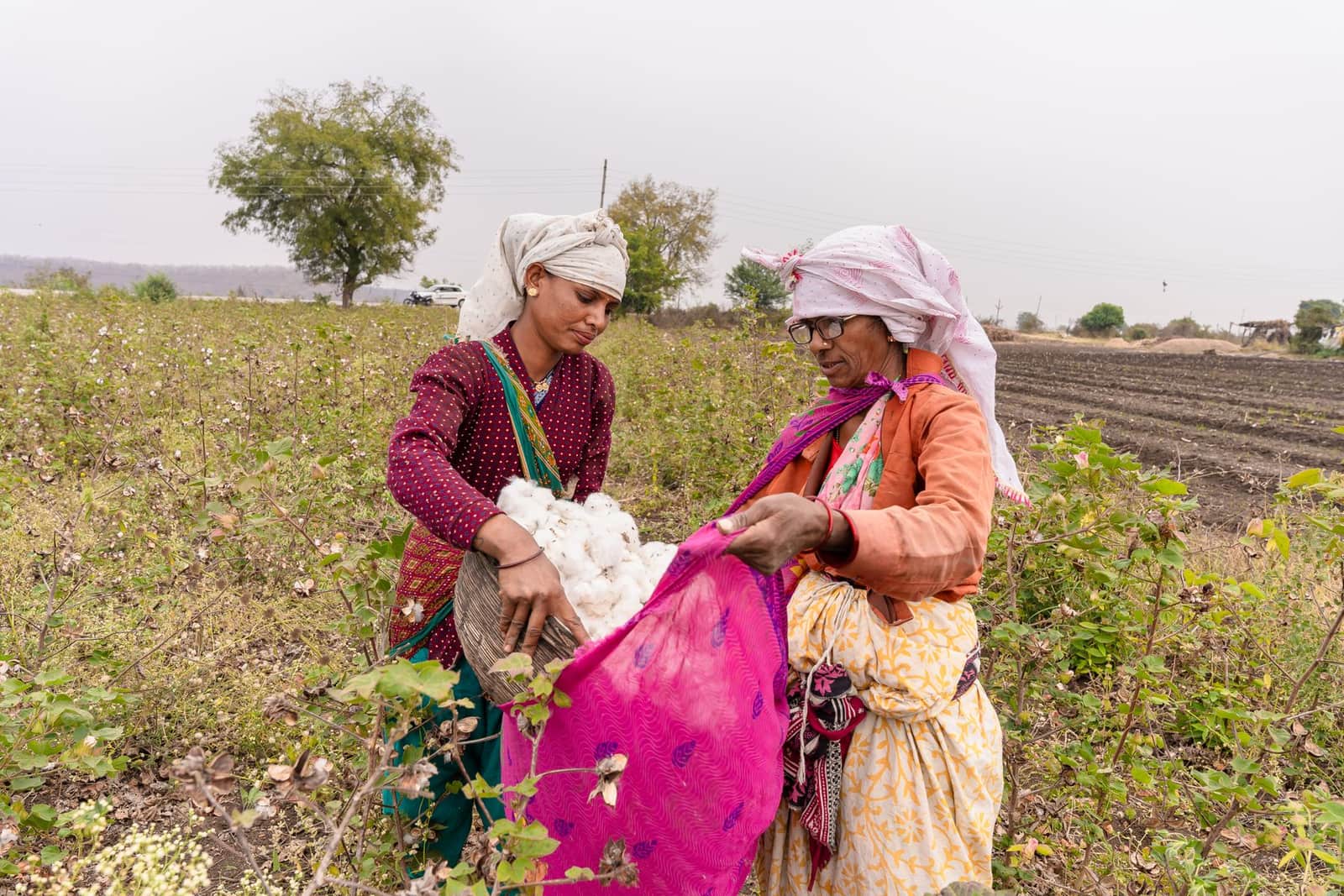
India is one of the world’s largest cotton producers. Ginning factories in Gujarat, Maharashtra, Telangana, Madhya Pradesh and Punjab press lint into bales of about 170 kg. Exports depend on the crop size and the gap between Indian and international prices; in short-crop years India imports more than it exports. Bangladesh, Vietnam and China are the usual buyers.
Varieties, grades and forms
- Long staple (28.5 mm and above)Shankar-6 type and other Gujarat and Maharashtra cottons; the bulk of exports.
- Extra-long staple (32 mm and above)Suvin and DCH-32 types, in small volumes, for fine yarns.
- Short and medium stapleDesi (Gossypium arboreum) cotton for coarse yarn and surgical cotton.
- Kasturi Cotton Bharat and organic cottonBranded, traceable Indian cotton and certified organic cotton at a premium.
Where it is grown or made
- GujaratSaurashtra (Rajkot, Amreli, Bhavnagar) and north Gujarat ginning belts.
- MaharashtraVidarbha (Yavatmal, Akola, Amravati) and Khandesh (Jalgaon).
- Telangana and Andhra PradeshAdilabad, Warangal and Guntur.
- Madhya Pradesh, Punjab, Haryana and RajasthanNimar (Khargone); Bathinda, Sirsa and Sri Ganganagar.
The quality buyers ask for
- Staple length
- Typically 28–30 mm for the main export varieties; longer for ELS
- Micronaire
- Usually about 3.5–4.9 as contracted
- Strength
- Grams per tex measured by HVI, as agreed
- Trash and moisture
- Low trash and moisture (often around 8% or less) to contract
Certificates
- RCMCRequiredRegistration with the export promotion council or board for your product (not needed up to ₹3 lakh FOB per consignment since 15 Sep 2026).
- BCI / Kasturi Cotton BharatOften askedTraceable or responsibly grown cotton programmes that brands ask for.
- Organic (NPOP / USDA NOP / EU)Often askedNeeded only if you sell as organic; certify through an accredited body.
- ICA contract termsOften askedMost international cotton trade follows International Cotton Association bylaws and rules.
Shipping, storage and shelf life
A 40-ft container typically holds about 100–110 bales (around 17–19 tonnes).
Sea freight from Mundra, Pipavav, Nhava Sheva and Kolkata; road and rail to Bangladesh through land ports.
Covered, dry warehouses away from fire risks; keep bales off the ground.
What goes on the pack and carton
- Each bale marked with ginning factory, lot and bale number, and gross and tare weight; HVI data linked to bale numbers.
- Every carton or bag: product, grade, lot or batch number, net and gross weight, exporter name and “Made in India” / “Product of India”, matching the invoice and packing list.
Cotton is tested on HVI machines at ginneries, at the Textiles Committee and CCI labs, at textile research associations (SITRA, NITRA, BTRA, ATIRA) and at NABL-accredited labs (nabl-india.org).
Benefits of exporting this product
- RoDTEP: 2.8% of FOB
Tariff item 5201 00 11 to 5201 00 25 (raw cotton of Indian and other staple lengths) earns 2.8% of FOB value, capped at ₹4.4 per kg, as a duty credit scrip on ICEGATE (Appendix 4R). Rates continue to 31 Dec 2026 (DGFT Notification 41/2026-27). Confirm your exact 8-digit line on DGFT before pricing an order.
DGFT — Appendix 4R, RoDTEP schedule for DTA exports w.e.f. 10 Oct 2024 (Notification 32/2024-25) ↗
Where to register
- TEXPROCILRCMC from the Cotton Textiles Export Promotion Council, which covers raw cotton, cotton yarn, cotton fabrics (including knit fabrics) and cotton made-ups such as towels, bed linen and scarves.texprocil.org ↗
Quality and checks
- HVI test results per bale or lot: staple length, micronaire, strength, uniformity, trash and colour grade.
- Contamination (plastic, jute, hair) and moisture; buyers claim for contaminated bales.
- Contracts usually follow International Cotton Association (ICA) rules and arbitration.
Work with a ginning mill that has HVI-tested, Kasturi Cotton Bharat or BCI-traceable bales and sell one container to a Bangladesh mill on LC at sight, under ICA rules. Since 15 September 2026, a consignment worth up to ₹3 lakh FOB does not need an RCMC (DGFT Notification 36/2026-27). Registrations that a law requires for the product still apply.
Where new exporters go wrong
- Contamination claims from plastic and jute strands in bales.
- Selling forward and then facing a domestic price rise or a sudden policy change.
- Quality on arrival differing from your HVI report; agree the testing lab and tolerance in the contract.
Documents this product needs
Schemes that apply
Sources (5)
- DGFT — ITC(HS) export policy search (Schedule 2)
- TEXPROCIL — The Cotton Textiles Export Promotion Council
- DGFT — Appendix 2T: Export Promotion Councils and the products under each
- DGFT — Appendix 4R, RoDTEP schedule for DTA exports w.e.f. 10 Oct 2024 (Notification 32/2024-25)
- US Customs and Border Protection — Uyghur Forced Labor Prevention Act
Trade data
Indian raw cotton exports in numbers
From the Department of Commerce’s TradeStat, country by country. US$, Indian financial years (April–March).
- Exports in 2025-26
- US$ 436 mn -24.5% a year on average, 2020-21 to 2025-26
- Change from 2024-25
- ↓ -33.9% US$ 660 mn → US$ 436 mn
- Buyer countries
- 23
- Average export price
- US$ 1.78 per kg · 2,45,648 tonnes shipped · US$ 1.94 the year before
The price cycle
India’s average export price per kg each year (total value ÷ total quantity). Highest in 2022-23, lowest in 2020-21 — a 69% swing between them. Keep this swing in mind when you quote.
What next: a projection from the trend
The past trend carried forward — not a forecast by any authority. Sudden changes in policy, prices or demand are not in it.
Likely range US$ 134 mn to US$ 443 mn.
- Trend
- -26.7% a year
- Fit (R²)
- 0.73
- Based on
- 6 years of official figures
Method: a straight line through the logarithm of yearly exports (log-linear regression); range = ±1 standard error.
Biggest buyer countries
By value in 2025-26. Change is against 2024-25.
Where demand is rising and falling
Only countries that buy at least US$ 1 million or 1% of India’s exports of this product. Change from 2024-25 to 2025-26.
↑ High demand
- ChinaUS$ 7 mn → US$ 18.9 mn↑+167.8%
↓ Low demand
- United Arab EmiratesUS$ 11.6 mn → US$ 10k↓-99.9%
- VietnamUS$ 28.2 mn → US$ 8.8 mn↓-68.7%
- IndonesiaUS$ 18.3 mn → US$ 11.7 mn↓-36%
- BangladeshUS$ 587 mn → US$ 393 mn↓-33.1%
Which forms sell, and at what price
India’s exports by 8-digit tariff line, 2025-26. Average price = total value ÷ total quantity (TradeStat): the average of every shipment on that line, not the price of any one deal.
| Tariff line | Value 2025-26 | Change | Quantity | Average price |
|---|---|---|---|---|
Indian cotton of staple length 28.5mm (1.4/32) and above but below 34.5mm5201 00 15 · Cotton, not carded or combed | US$ 413 mn | ↓-32.4% | 2,31,030 tonnes | US$ 1.79 per kgwas US$ 1.96 |
Cotton, other than indian, of staple length exceeding 27.0 mm but not exceeding 32.0 mm5201 00 24 · Cotton, not carded or combed | US$ 6.6 mn | ↓-71.5% | 3,286 tonnes | US$ 2.00 per kgwas US$ 2.22 |
Indian cotton of staple length 34.5mm and above (1.12/32) kgs5201 00 19 · Cotton, not carded or combed | US$ 5.6 mn | ↑+7.9% | 2,277 tonnes | US$ 2.46 per kgwas US$ 2.76 |
Indn cotton of stpl lngth ovr 24.5mm(31/32)to 28mm excludinguding bengal deshi5201 00 14 · Cotton, not carded or combed | US$ 3.4 mn | ↓-56.7% | 2,362 tonnes | US$ 1.46 per kgwas US$ 1.51 |
Cotton, other than indian, of staple length exceeding 32.0 mm5201 00 25 · Cotton, not carded or combed | US$ 3.1 mn | ↑+249.4% | 1,227 tonnes | US$ 2.53 per kgwas US$ 3.77 |
Indn cotton of stpl lngth 20.5mm(25/32) andbelow (e.g. comras etc.)excluding bengal deshi5201 00 12 · Cotton, not carded or combed | US$ 3 mn | ↓-59.8% | 3,277 tonnes | US$ 0.92 per kgwas US$ 1.23 |
Indn cotton of stpl lngth ovr 20.5mm(26/32)and below 24.5mm(30/32)excluding bengal5201 00 13 · Cotton, not carded or combed | US$ 1.5 mn | ↓-65.3% | 1,829 tonnes | US$ 0.83 per kgwas US$ 0.87 |
Cotton, not carded or combed — bengal deshi cotton5201 00 11 | US$ 380k | ↓-40.6% | 349 tonnes | US$ 1.09 per kgwas US$ 1.46 |
Cotton, other than indian, of staple length not exceeding 20.0 mm5201 00 21 · Cotton, not carded or combed | US$ 30k | ↑+50% | 12 tonnes | US$ 2.61 per kgwas US$ 1.20 |
The world market
Each country’s own recorded exports and imports in UN Comtrade, 2023 (the latest year nearly every country has reported).
- World imports
- US$ 13.2 bn 2023
- India among exporters
- #4 of 103 countries
- India’s share of world exports
- 4.6% US$ 756 mn
- Left for others to win
- US$ 15.7 bn exported by other countries
Top exporters — your competitors
- 1USAUS$ 5.99 bn 36.5%
- 2BrazilUS$ 3.07 bn 18.7%
- 3AustraliaUS$ 2.88 bn 17.6%
- 4IndiaUS$ 756 mn 4.6%
- 5TürkiyeUS$ 587 mn 3.6%
- 6BeninUS$ 505 mn 3.1%
- 7GreeceUS$ 452 mn 2.8%
- 8Burkina FasoUS$ 249 mn 1.5%
- 9CameroonUS$ 246 mn 1.5%
- 10EgyptUS$ 211 mn 1.3%
Biggest buyers in the world
- 1ChinaUS$ 4.16 bn 31.5%
- 2Viet NamUS$ 2.62 bn 19.8%
- 3TürkiyeUS$ 1.66 bn 12.6%
- 4PakistanUS$ 913 mn 6.9%
- 5IndonesiaUS$ 815 mn 6.2%
- 6IndiaUS$ 593 mn 4.5%
- 7MalaysiaUS$ 331 mn 2.5%
- 8IranUS$ 292 mn 2.2%
- 9EgyptUS$ 282 mn 2.1%
- 10ThailandUS$ 246 mn 1.9%
Opportunity: what these countries buy from the world, and from India
Each country’s own recorded imports in UN Comtrade, latest year it has reported. The long light part of each bar is demand other countries are filling today.
TradeStat’s 2023-24 quantities are double-counted, so that year is left out of the price. Sources: TradeStat — Export Import Data Bank, Department of Commerce · UN Comtrade database (United Nations Statistics Division) · Figures taken 29 October 2026.
Step by step
How to export raw cotton
The USA, Brazil and Australia are the largest raw cotton exporters; India is among the biggest producers but its exports vary with the crop and domestic mill demand. Indian cotton competes on price and proximity in Bangladesh, Vietnam and China. Traceability is now a selling point, helped by the Kasturi Cotton Bharat brand and programmes such as BCI and organic. Brands sourcing for the USA and EU increasingly ask for proof of origin.
- 01Register with TEXPROCIL
Take the RCMC (needed for consignments above ₹3 lakh FOB).
- 02Contract under ICA rules
Agree variety, staple, micronaire, strength, shipment period and arbitration.
- 03Select bales
Choose HVI-tested, contamination-free bales from reliable ginners.
- 04Inspect and fumigate if asked
Arrange independent inspection and fumigation or phytosanitary papers where the buyer’s country requires them.
- 05Book, stuff and file the shipping bill
Book the container, stuff it at the factory or a CFS, file the shipping bill on ICEGATE with the correct 8-digit code and the RoDTEP/RoSCTL declaration, and get the bill of lading.
- 06Get paid and close the file
Send the original documents through your bank (or to the buyer if paid in advance). Once the money arrives, get the e-BRC and claim RoDTEP, RoSCTL or drawback where they apply.
Questions
Questions about exporting raw cotton
Is raw cotton export free?
What is Kasturi Cotton Bharat?
Why do buyers claim on contamination?
Do I need cotton traceability?
What RoDTEP applies?
Sources (5)
- DGFT — ITC(HS) export policy search (Schedule 2)
- TEXPROCIL — The Cotton Textiles Export Promotion Council
- DGFT — Appendix 4R, RoDTEP schedule for DTA exports w.e.f. 10 Oct 2024 (Notification 32/2024-25)
- US Customs and Border Protection — Uyghur Forced Labor Prevention Act
- Textiles Committee, Ministry of Textiles — testing laboratories
Who buys Indian raw cotton
All countries → SAFTABDTDhakaBangladeshBig neighbour market for cotton, yarn, food and machinery. Mostly LC-based; land and sea routes.From India 2025-26US$ 10.6 bn
 AITIGAVNDHanoiVietnamFast-growing manufacturing economy buying raw materials, yarn, steel, chemicals and feed ingredients from India.From India 2025-26US$ 6.67 bn
 APTACNYBeijingChinaHuge market, but mostly for raw materials. Food plants must be registered with GACC; fresh produce needs a protocol.From India 2025-26US$ 19.5 bn
 AITIGAIDRJakartaIndonesiaWorld's fourth most populous country. Buys Indian vehicles, steel, chemicals, groundnuts and meat; halal and BPOM rules for food.From India 2025-26US$ 4.49 bn
 TRYAnkaraTürkiyeLarge manufacturing economy that buys Indian yarn, chemicals and machinery parts. Extra import duties apply to many goods.From India 2025-26US$ 4.54 bn
More in textiles & apparel
All products →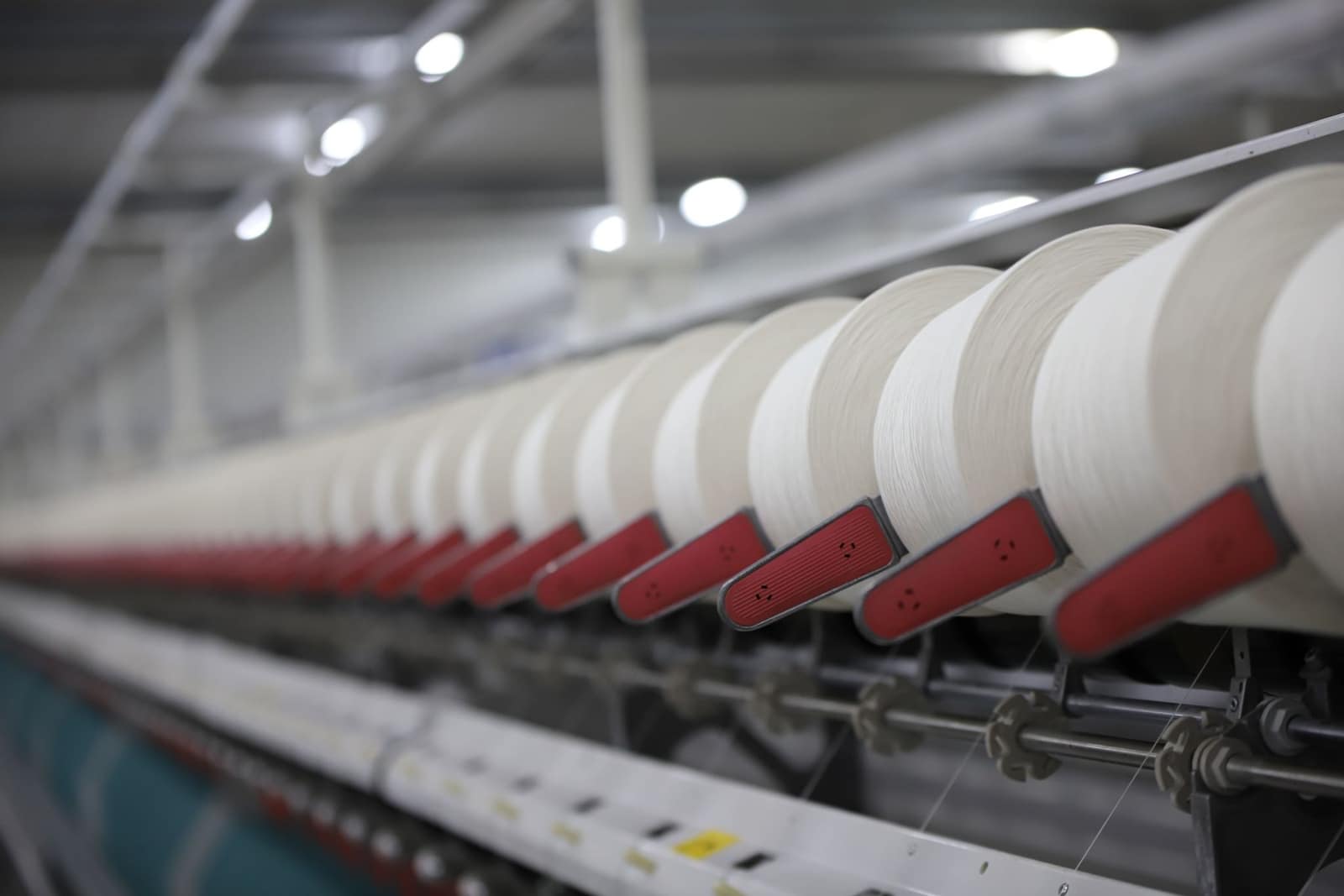 Free to exportTextiles & apparelCotton yarnBulk cotton yarn sold to weaving and knitting mills abroad; Bangladesh is by far the largest buyer.HS5205Exports 2025-26US$ 3.22 bn ↓4.1%
 Free to exportTextiles & apparelReadymade garmentsKnitted and woven clothing for brands and retailers; the USA, UK, UAE and the EU are the big buyers.HS6109.10Exports 2025-26US$ 15.8 bn ↓1.2%
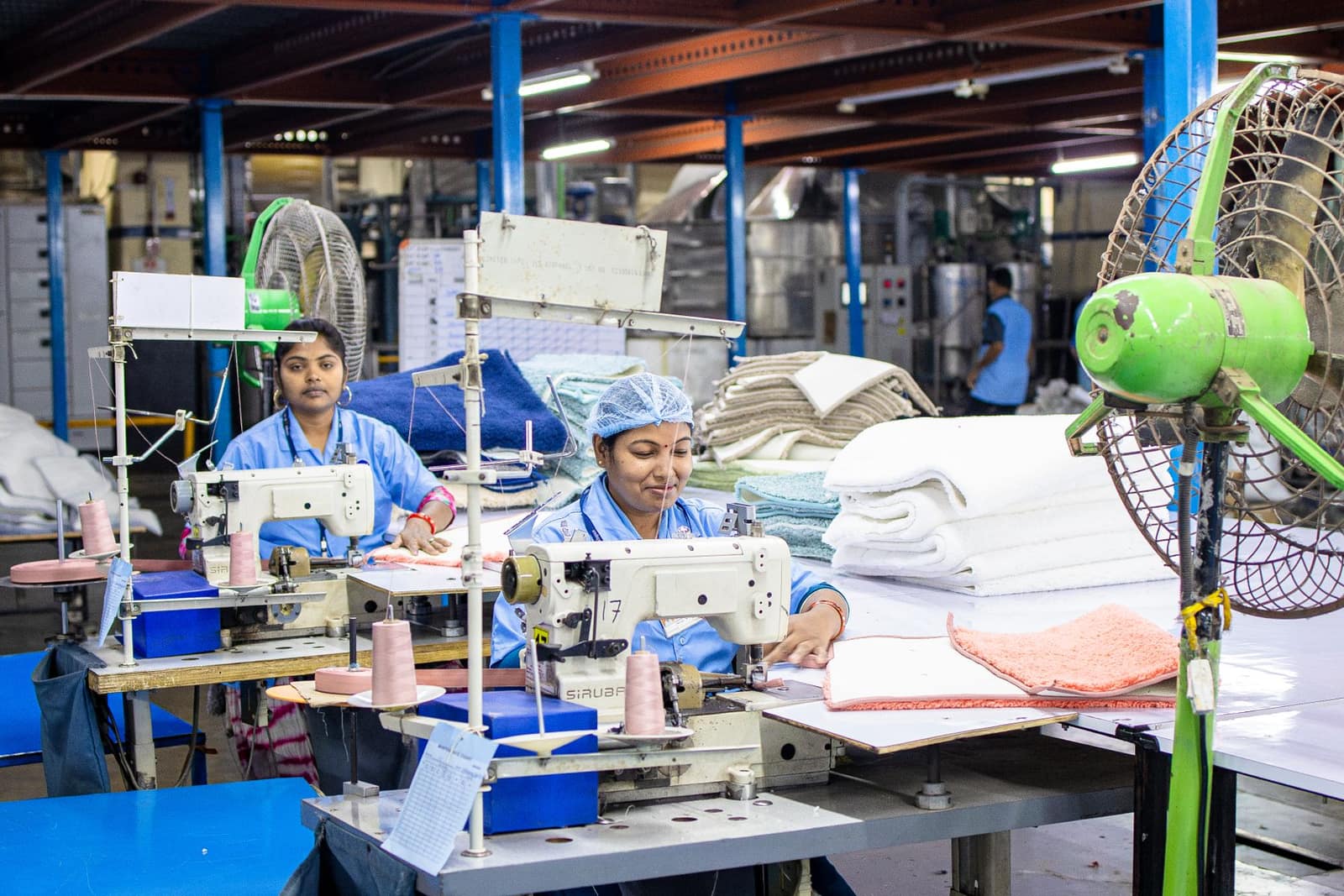
 Free to exportTextiles & apparelHome textiles (bed, bath and kitchen linen)Bedsheets, towels and kitchen linen for retailers; the USA buys more than half of India's exports.HS6302Exports 2025-26US$ 2.01 bn ↓5.7%
 Free to exportTextiles & apparelHandloom productsHand-woven fabrics, stoles and furnishings; buyers pay for craft, story and certified handloom origin.HS6304Exports 2025-26US$ 1.75 bn ↓8.6%