

Farm produce
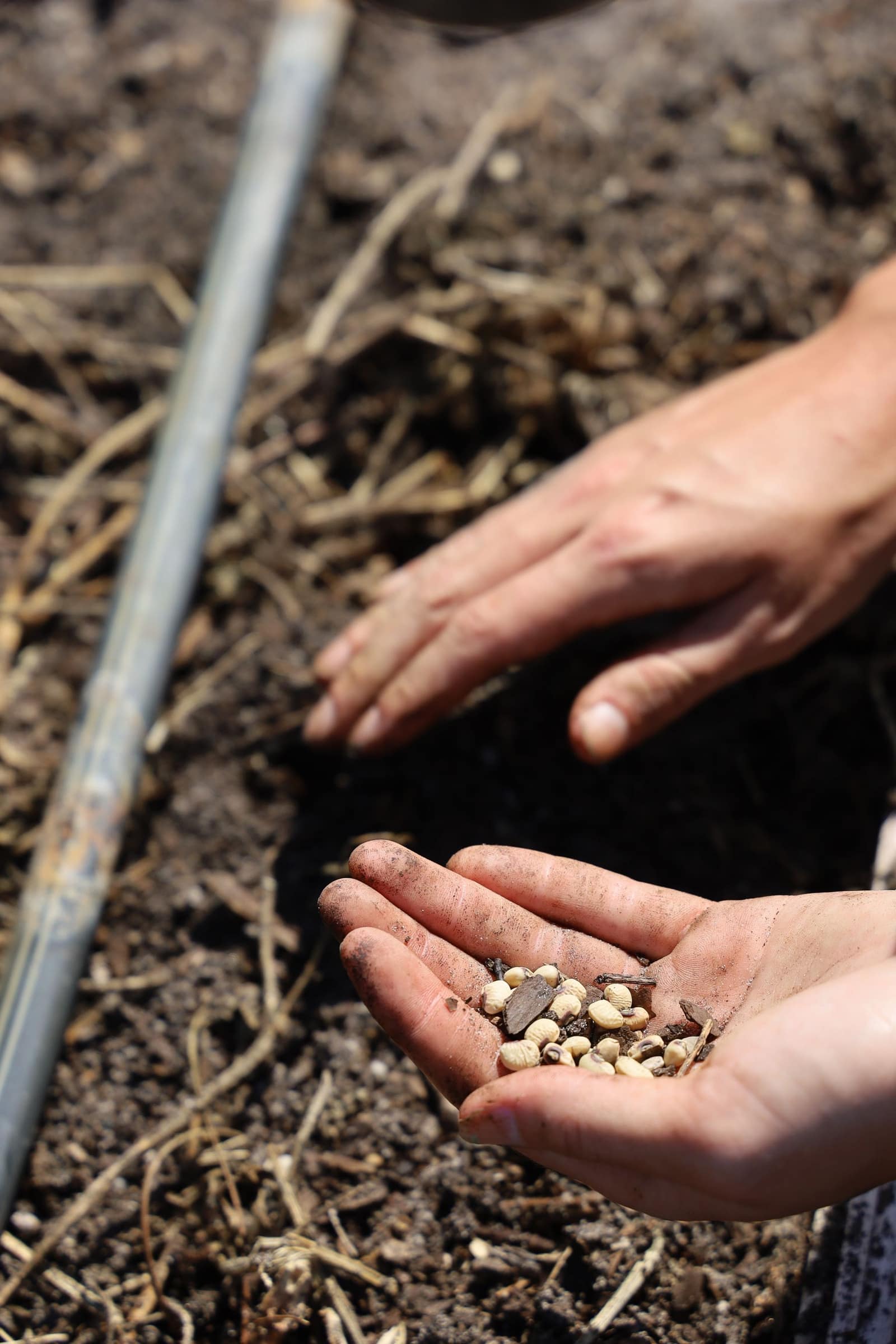
Export seeds for sowing
Hybrid vegetable and flower seed from Karnataka, Telangana and Maharashtra. Some seeds are restricted; others need an affidavit.
- HS code
- 1209 Seeds, fruit and spores of a kind used for sowing: vegetable seeds (1209 91), flower and herbaceous plant seeds (1209 30), forage seeds and other seeds (1209 99).
- Export policy
- Free, with conditions Seeds of trees, hedges, ornamental plants, flowers and vegetables are free, subject to an affidavit that the seed is not breeder, foundation or wild-variety seed, with the source of procurement. Onion seed, berseem seed, neem seed, seeds of forestry species and wild varieties of wheat and paddy have been restricted (export only under licence). Confirm the current status of your seed on DGFT.
- Registrations
- 4 IEC, GST and those below
- India’s exports, 2025-26
- US$ 166 mn to 98 countries
What is exported
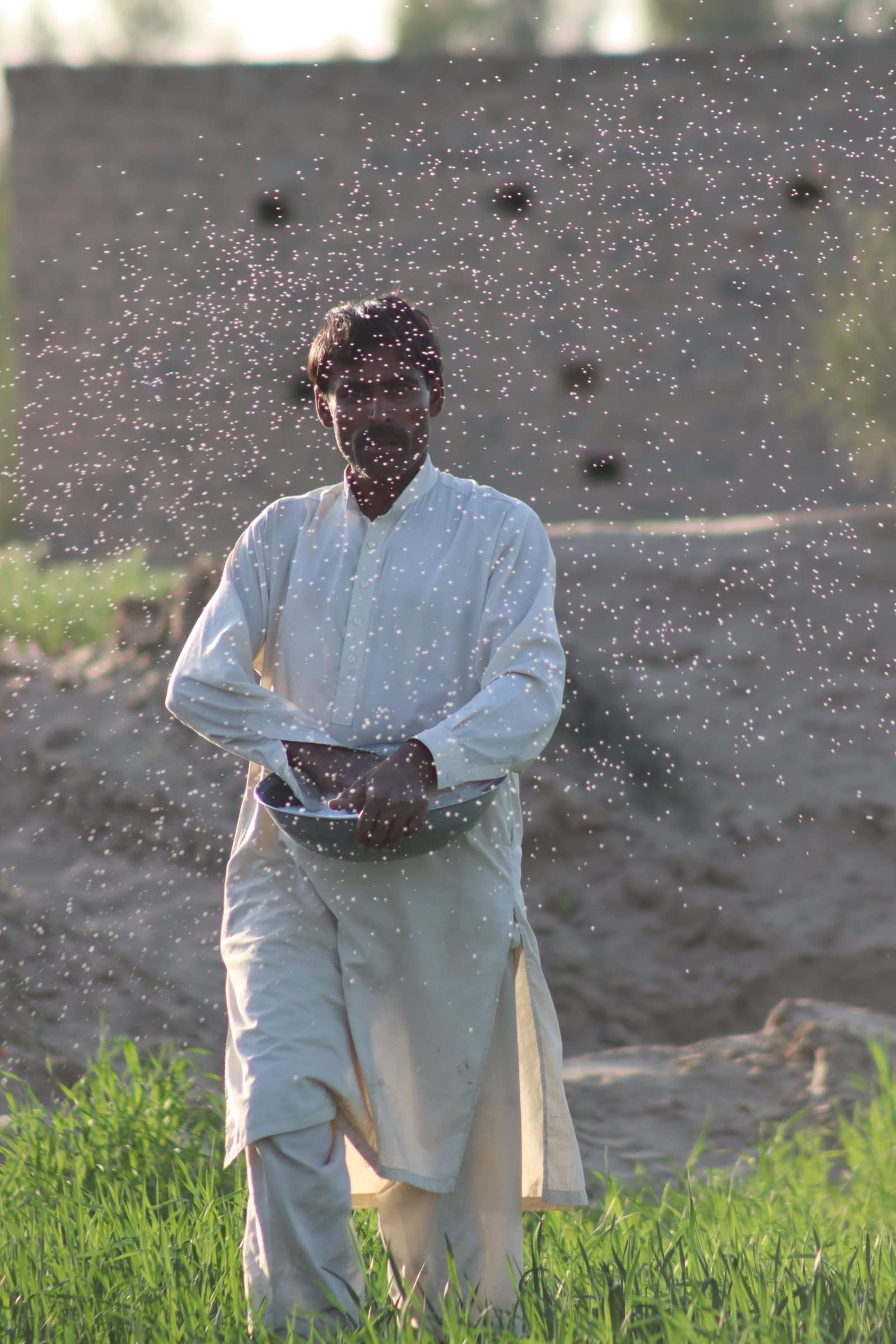
India is a major producer of hybrid vegetable seed — tomato, chilli, okra, gourds, melons — much of it grown by farmers under contract for Indian and multinational seed companies. Seed is exported to neighbouring countries, South-East Asia, Africa and the Middle East, and seed grown for foreign companies goes back to them for processing and sale.
Varieties, grades and forms
- Hybrid vegetable seedTomato, chilli, okra, cucumber, gourds, melons and watermelon.
- Open-pollinated vegetable seedLower-priced seed for neighbouring and African markets.
- Flower seedMarigold, zinnia and other flower seed grown under contract.
- Forage and grass seedSorghum-sudan and other forage seed (berseem is restricted).
Where it is grown or made
- KarnatakaRanebennur (Haveri), Dharwad, Koppal and Ballari — hybrid vegetable seed production.
- Telangana and Andhra PradeshHyderabad seed industry and production in Kurnool, Gadwal and nearby districts.
- MaharashtraJalna and Chhatrapati Sambhajinagar seed companies.
- Gujarat and PunjabVegetable and flower seed growers.
The quality buyers ask for
- Germination
- Minimum germination per crop as agreed (often 80–90% or higher for hybrid vegetables)
- Purity
- Physical purity (often 98% or more) and genetic purity confirmed by grow-out or DNA tests
- Moisture
- Low moisture for storage, often 6–8% for vegetable seed
- Health and treatment
- Free of seed-borne diseases listed by the importer; treatment chemicals declared
Certificates
- Phytosanitary certificateRequiredIssued by Plant Quarantine on PQMS for each consignment of plant material.
- Affidavit (Schedule 2)RequiredDeclaration that the seed is not breeder, foundation or wild-variety seed, with its source, required by DGFT policy.
- ISTA certificateOften askedOrange or Blue International Seed Lot Certificate from an ISTA-accredited lab, asked for by many buyers.
- OECD seed certificationOften askedVarietal certification under the OECD Seed Schemes, which India has joined, for buyers that require it.
- RCMCRequiredRegistration with the export promotion council or board for your product (not needed up to ₹3 lakh FOB per consignment since 15 Sep 2026).
Shipping, storage and shelf life
High-value seed by air in cartons; bulk seed in lined bags in 20-ft containers by sea, away from heat.
Air from Bengaluru and Hyderabad; sea from Chennai, Nhava Sheva and Mundra; road to Nepal and Bangladesh.
Cool, dry conditions (often climate-controlled stores at about 15–20 °C and low humidity).
Typically one to two years in sealed packs, depending on crop.
What goes on the pack and carton
- Packs: crop, variety name, lot number, germination and purity percentages, test date, treatment declaration (with warning if treated), net weight and producer.
- Follow the importing country’s seed labelling law; many need labels in the local language.
For ISTA certificates, use an ISTA-accredited laboratory (list on seedtest.org); State Seed Testing Laboratories and NABL-accredited labs test germination and purity (nabl-india.org). Plant Quarantine inspects seed for the phytosanitary certificate.
Benefits of exporting this product
- RoDTEP: 0.9% of FOB
Tariff item 1209 91 10 to 1209 99 90 (vegetable, fruit and other seeds for sowing) earns 0.9% of FOB value, with no rupee cap, as a duty credit scrip on ICEGATE (Appendix 4R). Flower and herbaceous plant seed (1209 30 00) and forage seeds (1209 21–29) also earn 0.9%. Rates continue to 31 Dec 2026 (DGFT Notification 41/2026-27). Confirm your exact 8-digit line on DGFT before pricing an order.
DGFT — Appendix 4R, RoDTEP schedule for DTA exports w.e.f. 10 Oct 2024 (Notification 32/2024-25) ↗
Where to register
- Plant Quarantine (DPPQS)Phytosanitary certificate for each consignment of plant material, applied for online on PQMS. Some importing countries also ask for an import permit or a registered production site.pqms.cgg.gov.in ↗
- Export promotion council (RCMC)RCMC from the council that covers your seed under Appendix 2T (for example IOPEPC for oilseeds), or from FIEO where no product council applies.dgft.gov.in ↗
Quality and checks
- Germination, physical purity, genetic purity and moisture reports; buyers often ask for ISTA certificates from an ISTA-accredited lab.
- Seed-borne disease testing and seed treatment declarations demanded by the importing country’s plant protection agency.
- Import permit and variety registration in the buying country, where its seed law requires them.
Start by exporting vegetable seed of public or licensed varieties to Nepal or Bangladesh, where the buyer handles local registration. Keep the affidavit, the grower contracts and the lab reports for every lot. Since 15 September 2026, a consignment worth up to ₹3 lakh FOB does not need an RCMC (DGFT Notification 36/2026-27). Registrations that a law requires for the product still apply.
Where new exporters go wrong
- Exporting a restricted seed (such as onion seed) without a DGFT licence.
- Selling a protected variety you have no right to — seed companies enforce plant variety rights abroad.
- Germination falling during a hot, humid voyage; use moisture-proof packs and keep seed dry.
Documents this product needs
Schemes that apply
Sources (5)
- DGFT — ITC(HS) export policy search (Schedule 2)
- DGFT — How to read the ITC(HS) export policy (Schedule 2)
- Plant Quarantine (DPPQS) — PQMS portal for phytosanitary certificates
- International Seed Testing Association (ISTA) — accredited laboratories and certificates
- DGFT — Appendix 4R, RoDTEP schedule for DTA exports w.e.f. 10 Oct 2024 (Notification 32/2024-25)
Trade data
Indian seeds for sowing exports in numbers
From the Department of Commerce’s TradeStat, country by country. US$, Indian financial years (April–March).
- Exports in 2025-26
- US$ 166 mn +5.8% a year on average, 2020-21 to 2025-26
- Change from 2024-25
- ↑ +3.9% US$ 160 mn → US$ 166 mn
- Buyer countries
- 98
- Average export price
- US$ 9.11 per kg · 18,186 tonnes shipped · US$ 7.00 the year before
The price cycle
India’s average export price per kg each year (total value ÷ total quantity). Highest in 2025-26, lowest in 2020-21 — a 135% swing between them. Keep this swing in mind when you quote.
What next: a projection from the trend
The past trend carried forward — not a forecast by any authority. Sudden changes in policy, prices or demand are not in it.
Likely range US$ 163 mn to US$ 213 mn.
- Trend
- +7.5% a year
- Fit (R²)
- 0.75
- Based on
- 6 years of official figures
Method: a straight line through the logarithm of yearly exports (log-linear regression); range = ±1 standard error.
Biggest buyer countries
By value in 2025-26. Change is against 2024-25.
Where demand is rising and falling
Only countries that buy at least US$ 1 million or 1% of India’s exports of this product. Change from 2024-25 to 2025-26.
↑ High demand
↓ Low demand
- United Arab EmiratesUS$ 11.4 mn → US$ 7.7 mn↓-32.8%
- MalaysiaUS$ 5.5 mn → US$ 4.1 mn↓-25.7%
- UgandaUS$ 1.8 mn → US$ 1.4 mn↓-21.3%
- VietnamUS$ 3 mn → US$ 2.5 mn↓-17.8%
- BangladeshUS$ 19.4 mn → US$ 16.2 mn↓-16.3%
- United States of AmericaUS$ 28.5 mn → US$ 24.6 mn↓-13.7%
Which forms sell, and at what price
India’s exports by 8-digit tariff line, 2025-26. Average price = total value ÷ total quantity (TradeStat): the average of every shipment on that line, not the price of any one deal.
| Tariff line | Value 2025-26 | Change | Quantity | Average price |
|---|---|---|---|---|
Vegetable seeds for planting n.e.s.1209 91 90 · Seeds, vegetable seeds, of a kind used for sowing | US$ 77.6 mn | ↑+9.7% | 6,205 tonnes | US$ 12.50 per kgwas US$ 11.02 |
Seeds, vegetable seeds, of a kind used for sowing — tomato seeds1209 91 60 | US$ 34.6 mn | ↑+5.9% | 107 tonnes | US$ 323.28 per kgwas US$ 392.48 |
Seeds, vegetable seeds, of a kind used for sowing — chilly seeds1209 91 70 | US$ 12.4 mn | ↓-15.8% | 2,718 tonnes | US$ 4.57 per kgwas US$ 2.24 |
Other seeds etc. for planting n.e.s1209 99 90 · Seeds in heading 1209, of a kind used for sowing | US$ 10.7 mn | ↓-36.5% | 4,468 tonnes | US$ 2.40 per kgwas US$ 2.81 |
Fruit seeds for planting or sowings1209 99 10 · Seeds in heading 1209, of a kind used for sowing | US$ 10.1 mn | ↑+19.4% | 270 tonnes | US$ 37.51 per kgwas US$ 33.42 |
Lucerne (alfalfa) seed of forage plants1209 21 00 · Seeds of forage plants, lucerne seeds, of a kind used for sowing | US$ 6.1 mn | ↑+108.5% | 1,730 tonnes | US$ 3.54 per kgwas US$ 3.48 |
Onion seeds used for sowing1209 91 30 · Seeds, vegetable seeds, of a kind used for sowing | US$ 3.9 mn | ↑+12.4% | 423 tonnes | US$ 9.19 per kgwas US$ 5.63 |
Seeds of herbaceus plnts cultvtd for flwrs1209 30 00 · Seeds of herbaceous plants, cultivated principally for their flowers, of a kind used for sowing | US$ 3.6 mn | ↓-16.7% | 219 tonnes | US$ 16.58 per kgwas US$ 14.16 |
Cabbage seeds used for sowing1209 91 10 · Seeds, vegetable seeds, of a kind used for sowing | US$ 3.1 mn | ↑+191.4% | 16 tonnes | US$ 187.47 per kgwas US$ 89.41 |
Radish seeds used for sowing1209 91 50 · Seeds, vegetable seeds, of a kind used for sowing | US$ 1.4 mn | ↑0% | 1,132 tonnes | US$ 1.19 per kgwas US$ 1.48 |
Cauliflower seeds used for sowing1209 91 20 · Seeds, vegetable seeds, of a kind used for sowing | US$ 850k | ↓-30.3% | 12 tonnes | US$ 71.81 per kgwas US$ 48.26 |
Other seed of forage plants1209 29 90 · Seeds of forage plants, other than lucerne, clover, fescue, Kentucky blue grass, and rye grass seeds, of a… | US$ 650k | ↑+25% | 415 tonnes | US$ 1.57 per kgwas US$ 1.64 |
Seeds, vegetable seeds, of a kind used for sowing — pea seeds used for sowing1209 91 40 | US$ 530k | ↓-44.8% | 406 tonnes | US$ 1.31 per kgwas US$ 2.42 |
Kentucky blue grass (poa pratensis l) seedof forage plants1209 24 00 · Seeds of forage plants, Kentucky blue grass seeds, of a kind used for sowing | US$ 50k | ↑+400% | 24 tonnes | US$ 2.08 per kgwas US$ 50.00 |
The world market
Each country’s own recorded exports and imports in UN Comtrade, 2023 (the latest year nearly every country has reported).
- World imports
- US$ 8.5 bn 2023
- India among exporters
- #15 of 137 countries
- India’s share of world exports
- 1.5% US$ 128 mn
- Left for others to win
- US$ 8.48 bn exported by other countries
Top exporters — your competitors
- 1NetherlandsUS$ 2.51 bn 29.1%
- 2USAUS$ 997 mn 11.6%
- 3FranceUS$ 803 mn 9.3%
- 4GermanyUS$ 776 mn 9%
- 5DenmarkUS$ 427 mn 5%
- 6ItalyUS$ 369 mn 4.3%
- 7ChileUS$ 198 mn 2.3%
- 8BelgiumUS$ 177 mn 2.1%
- 9IsraelUS$ 169 mn 2%
- 10New ZealandUS$ 162 mn 1.9%
Biggest buyers in the world
- 1NetherlandsUS$ 828 mn 9.7%
- 2USAUS$ 625 mn 7.4%
- 3MexicoUS$ 587 mn 6.9%
- 4GermanyUS$ 502 mn 5.9%
- 5FranceUS$ 491 mn 5.8%
- 6ChinaUS$ 457 mn 5.4%
- 7SpainUS$ 431 mn 5.1%
- 8ItalyUS$ 379 mn 4.5%
- 9CanadaUS$ 292 mn 3.4%
- 10JapanUS$ 210 mn 2.5%
Opportunity: what these countries buy from the world, and from India
Each country’s own recorded imports in UN Comtrade, latest year it has reported. The long light part of each bar is demand other countries are filling today.
TradeStat’s 2023-24 quantities are double-counted, so that year is left out of the price. Sources: TradeStat — Export Import Data Bank, Department of Commerce · UN Comtrade database (United Nations Statistics Division) · Figures taken 29 October 2026.
Step by step
How to export seeds for sowing
The Netherlands, the USA, France and China lead world seed exports; India is a major producer of hybrid vegetable and field-crop seed, with low production costs and skilled contract growers. Multinational and Indian seed companies grow seed in India both for the home market and for export. Demand is strongest in South and South-East Asia, Africa and the Middle East. Openings lie in contract seed production for global companies and in tropical vegetable varieties.
- 01Check policy and rights
Confirm on DGFT that your seed is not restricted and that you have the right to sell the variety.
- 02Check the buyer country’s rules
Find out about import permits, variety registration and phytosanitary conditions for the seed.
- 03Produce and process
Grow under contract with isolation, then clean, grade, treat and dry the seed.
- 04Test and certify
Test germination, purity and health (ISTA lab if asked) and get the phytosanitary certificate.
- 05Pack and ship with the affidavit
Pack in moisture-proof material and file the shipping bill with the affidavit required by DGFT policy.
- 06Get paid and close the file
Send the original documents through your bank (or to the buyer if paid in advance). Once the money arrives, get the e-BRC and claim RoDTEP, RoSCTL or drawback where they apply.
Questions
Questions about exporting seeds for sowing
Can I export any seed freely?
What is the affidavit for?
Do buyers need an ISTA certificate?
Can I sell a variety bred by another company?
What RoDTEP applies?
Sources (6)
- DGFT — ITC(HS) export policy search (Schedule 2)
- DGFT — How to read the ITC(HS) export policy (Schedule 2)
- Plant Quarantine (DPPQS) — PQMS portal for phytosanitary certificates
- International Seed Testing Association (ISTA) — accredited laboratories and certificates
- OECD Seed Schemes
- DGFT — Appendix 4R, RoDTEP schedule for DTA exports w.e.f. 10 Oct 2024 (Notification 32/2024-25)
Who buys Indian seeds for sowing
All countries → SAFTABDTDhakaBangladeshBig neighbour market for cotton, yarn, food and machinery. Mostly LC-based; land and sea routes.From India 2025-26US$ 10.6 bn
 SAFTANPRKathmanduNepalOpen land border, rupee payments and a market that relies on Indian goods — an easy first market by road.From India 2025-26US$ 7.45 bn
 USDWashington, D.C.United States of AmericaIndia's largest single-country export market. Strict FDA rules for food; extra 10% US duty on most goods since July 2026.From India 2025-26US$ 87.3 bn
 EURAmsterdamNetherlandsEurope's main gateway: Rotterdam handles goods for the whole EU. EU food-safety and residue rules apply.From India 2025-26US$ 17.5 bn
 KESNairobiKenyaEast Africa's trade gateway via Mombasa. Buys medicines, vehicles, steel and rice; KEBS pre-shipment checks apply.From India 2025-26US$ 4.02 bn
More in farm produce
All products → Free, with conditionsFarm produceBasmati riceIndia’s top agri export by value. Free to export, but every contract must be registered with APEDA first.HS1006.30Exports 2025-26US$ 5.67 bn ↓4.6%
 Free, with conditionsFarm produceNon-basmati riceHigh-volume staple sold mainly to Africa and Bangladesh. Export reopened in 2024–25, but contracts must now be registered with APEDA.HS1006.30Exports 2025-26US$ 5.86 bn ↓10.2%
 Free to exportFarm produceSpicesWhole, ground and blended spices. Spices Board registration (CRES) is compulsory; residue and ethylene oxide tests keep buyers.HS0904–0910Exports 2025-26US$ 3.12 bn ↓5.1%
 Free to exportFarm produceChilliIndia’s largest spice export by volume. Dried red chilli goes to China, Thailand and Bangladesh; aflatoxin is the key test.HS0904.21Exports 2025-26US$ 1.1 bn ↓12.9%