

Textiles & apparel
Export jute yarn, fabrics and bags
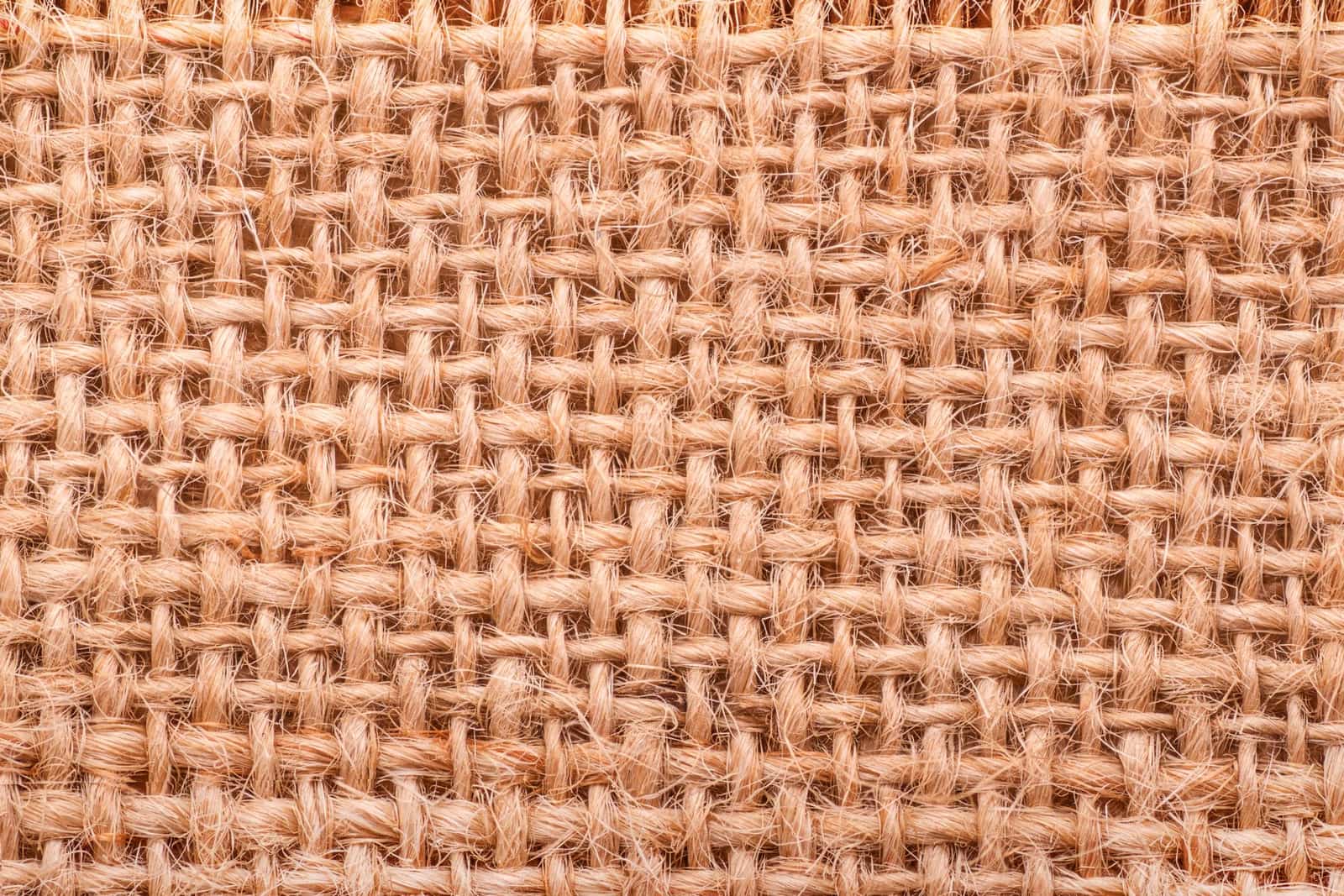
Hessian, sacking, jute yarn and shopping bags from Bengal mills. Natural, biodegradable and in demand as a plastic substitute.
- HS code
- 5307 Jute yarn (5307), woven jute fabrics such as hessian and sacking (5310), and jute sacks and bags (6305 10).
- Export policy
- Free to export Free under ITC(HS) Schedule 2; no licence is needed. Confirm the 8-digit line on the DGFT ITC(HS) search before you ship.
- Registrations
- 3 IEC, GST and those below
- India’s exports, 2025-26
- US$ 206 mn to 124 countries
What is exported
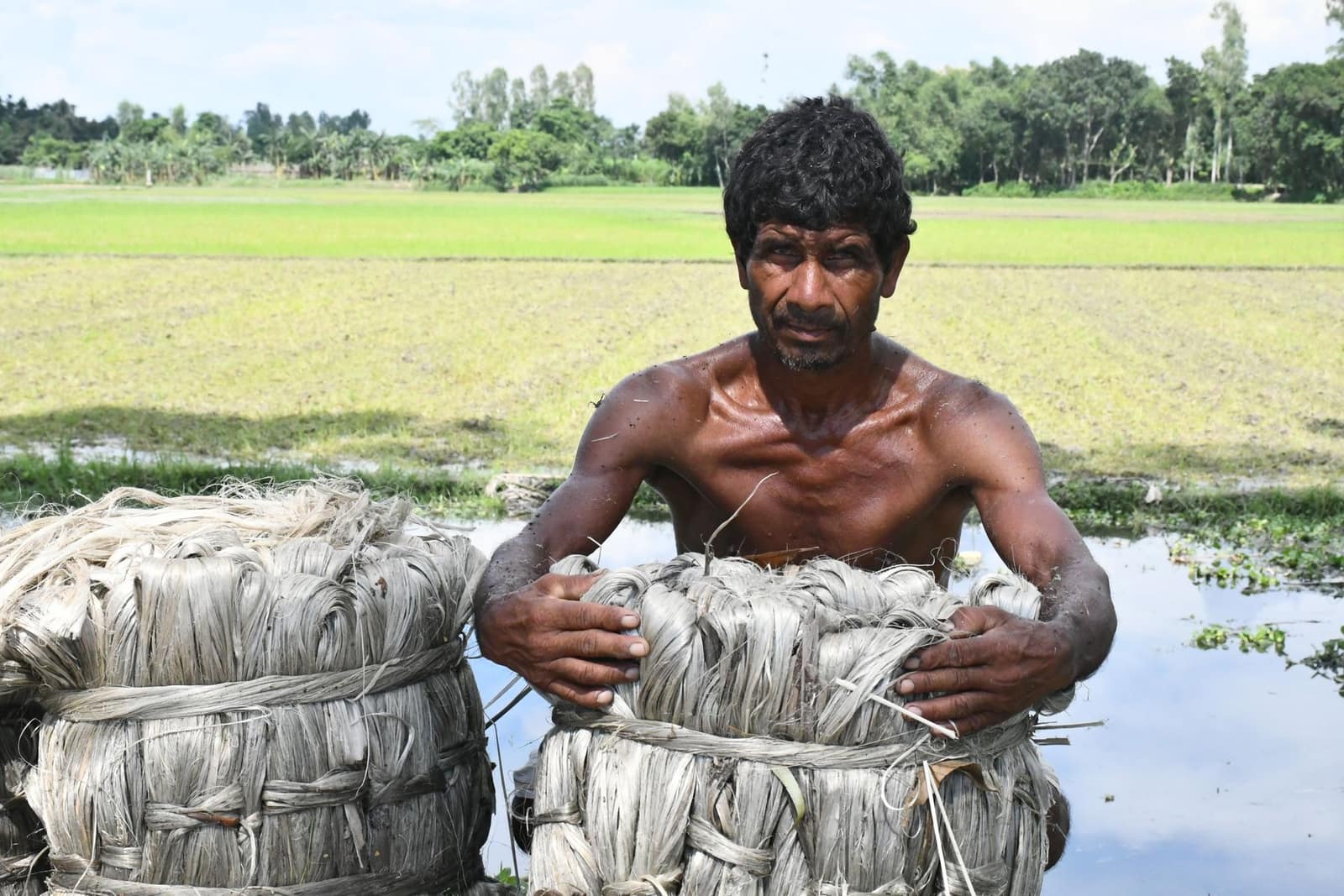
India is the world’s largest jute producer, with most mills in West Bengal along the Hooghly, and others in Andhra Pradesh, Bihar and Assam. Exports include jute yarn for carpet backing and twine, hessian and sacking cloth, food-grade sacks, and diversified products such as shopping bags, wine bags and floor coverings. Buyers in Europe and the USA want jute as a sustainable alternative to plastic.
Varieties, grades and forms
- Jute yarn and twineFor carpet backing, weaving and packaging twine.
- Hessian and sacking clothWoven jute fabric in rolls for packaging and crafts.
- Food-grade sacksHydrocarbon-free sacks for coffee, cocoa, nuts and grains.
- Diversified jute productsShopping, promotional and wine bags, rugs and décor.
Where it is grown or made
- West BengalMills along the Hooghly in North 24 Parganas, Hooghly and Howrah districts; Kolkata port.
- Andhra Pradesh and BiharMills around Eluru and Guntur; Katihar and Purnia.
- Assam and OdishaJute fibre growing and smaller mills.
The quality buyers ask for
- Yarn count
- Measured in lbs per spyndle (e.g. 8 lbs, 10 lbs) for jute yarn
- Fabric
- Weight in oz per 40-inch yard or g/m², porter and shots per inch
- Food grade
- Hydrocarbon-free (vegetable-oil batched) to IJO or buyer standard
- Bags
- Size, gusset, handle type, lamination and print as approved
Certificates
- RCMCRequiredRegistration with the export promotion council or board for your product (not needed up to ₹3 lakh FOB per consignment since 15 Sep 2026).
- Jute MarkOften askedA mark of genuine jute products promoted by the National Jute Board.
- OEKO-TEX STANDARD 100Often askedTests the finished textile for harmful substances; widely asked for by retailers.
- Social audit (SA8000, BSCI/amfori, SMETA, WRAP)Often askedLabour and workplace audit required by most Western retailers before they place orders.
Shipping, storage and shelf life
Bales of yarn, fabric or bags in 20-ft or 40-ft containers; bags are bulky, so cube out before weight.
Sea from Kolkata and Haldia; Visakhapatnam for Andhra mills.
Dry, ventilated storage; jute absorbs moisture and can mould.
What goes on the pack and carton
- Every carton or bag: product, grade, lot or batch number, net and gross weight, exporter name and “Made in India” / “Product of India”, matching the invoice and packing list.
- Retail bags sold in the EU and USA: fibre content and country of origin; printed claims (such as “biodegradable”) must be truthful and supportable.
The National Jute Board and IJIRA (Indian Jute Industries’ Research Association, Kolkata) test jute goods, including hydrocarbon content; NABL-accredited textile labs also test jute (nabl-india.org).
Benefits of exporting this product
- RoDTEP: 0.9% of FOB
Tariff item 5307 10 10 to 5307 20 00 and 5310 10 11 to 5310 90 99 (jute yarn and woven jute fabrics) earns 0.9% of FOB value, with no rupee cap, as a duty credit scrip on ICEGATE (Appendix 4R). Rates continue to 31 Dec 2026 (DGFT Notification 41/2026-27). Confirm your exact 8-digit line on DGFT before pricing an order.
DGFT — Appendix 4R, RoDTEP schedule for DTA exports w.e.f. 10 Oct 2024 (Notification 32/2024-25) ↗ - RoSCTL instead of RoDTEP
Jute sacks and bags (6305 10) fall under the RoSCTL scheme (garments in Chapters 61–62, made-ups in Chapter 63), not RoDTEP; these lines are not in Appendix 4R. The rebate comes as a transferable duty credit scrip at rates and caps notified by the Ministry of Textiles. We could not open the current rate schedule or confirm the latest extension, so check your rate and the scheme’s status on texmin.nic.in and DGFT before pricing.
PIB — RoSCTL guidelines (apparel under Chapters 61–62 and made-ups under Chapter 63) ↗
Where to register
- JPDEPCRCMC from the Jute Products Development & Export Promotion Council, which covers all jute and jute-blended products under Appendix 2T.jpdepc.org ↗
Quality and checks
- Food-grade sacks for coffee, cocoa and nuts must be made with vegetable-oil batching (hydrocarbon-free), as buyers test for mineral-oil residues.
- Fabric weight (g/m² or oz), porter and shots per inch, size and seam strength for bags.
- Printed shopping bags: azo-free inks and REACH compliance for the EU.
Start with printed jute shopping or promotional bags for European retailers and event companies, made by a Kolkata unit that already exports. Send printed samples, then ship a mixed LCL lot. Since 15 September 2026, a consignment worth up to ₹3 lakh FOB does not need an RCMC (DGFT Notification 36/2026-27). Registrations that a law requires for the product still apply.
Where new exporters go wrong
- Mould from damp jute in containers; dry the goods and use desiccants.
- Jute smell and shedding fibres in retail bags without lamination or finishing.
- Claiming RoDTEP on jute bags: bags of Chapter 63 fall under RoSCTL, not RoDTEP.
Documents this product needs
Schemes that apply
Sources (5)
- DGFT — ITC(HS) export policy search (Schedule 2)
- Jute Products Development & Export Promotion Council (JPDEPC)
- DGFT — Appendix 2T: Export Promotion Councils and the products under each
- DGFT — Appendix 4R, RoDTEP schedule for DTA exports w.e.f. 10 Oct 2024 (Notification 32/2024-25)
- PIB — RoSCTL guidelines (apparel under Chapters 61–62 and made-ups under Chapter 63)
Trade data
Indian jute yarn, fabrics and bags exports in numbers
From the Department of Commerce’s TradeStat, country by country. US$, Indian financial years (April–March).
- Exports in 2025-26
- US$ 206 mn +1.1% a year on average, 2020-21 to 2025-26
- Change from 2024-25
- ↑ +0.3% US$ 205 mn → US$ 206 mn
- Buyer countries
- 124
- Average export price
- US$ 0.65 per kg · 3,16,478 tonnes shipped · US$ 0.58 the year before
The price cycle
India’s average export price per kg each year (total value ÷ total quantity). Highest in 2020-21, lowest in 2024-25 — a 67% swing between them. Keep this swing in mind when you quote.
What next: a projection from the trend
The past trend carried forward — not a forecast by any authority. Sudden changes in policy, prices or demand are not in it.
Likely range US$ 144 mn to US$ 248 mn.
- Trend
- -2.5% a year
- Fit (R²)
- 0.08 — weak, read with care
- Based on
- 6 years of official figures
Method: a straight line through the logarithm of yearly exports (log-linear regression); range = ±1 standard error.
Biggest buyer countries
By value in 2025-26. Change is against 2024-25.
Where demand is rising and falling
Only countries that buy at least US$ 1 million or 1% of India’s exports of this product. Change from 2024-25 to 2025-26.
↑ High demand
- EcuadorUS$ 1.3 mn → US$ 3.9 mn↑+207.9%
- TanzaniaUS$ 5 mn → US$ 14 mn↑+181.2%
- ZimbabweUS$ 2 mn → US$ 5.4 mn↑+169%
- DjiboutiUS$ 1.6 mn → US$ 4 mn↑+151.9%
- UnspecifiedUS$ 11.1 mn → US$ 17.5 mn↑+57.3%
- SpainUS$ 2.1 mn → US$ 3 mn↑+42.3%
- AustraliaUS$ 3.4 mn → US$ 4.1 mn↑+19.9%
- United KingdomUS$ 5.9 mn → US$ 6.9 mn↑+17.4%
↓ Low demand
- IndonesiaUS$ 3.7 mn → US$ 1.2 mn↓-68.4%
- NetherlandsUS$ 11.6 mn → US$ 9 mn↓-22.8%
- GhanaUS$ 34.2 mn → US$ 26.5 mn↓-22.3%
- Saudi ArabiaUS$ 4.8 mn → US$ 3.8 mn↓-20.3%
- United States of AmericaUS$ 38.7 mn → US$ 31.2 mn↓-19.5%
- ItalyUS$ 3.1 mn → US$ 2.7 mn↓-12%
- JapanUS$ 2.3 mn → US$ 2.1 mn↓-11.2%
- United Arab EmiratesUS$ 7 mn → US$ 6.3 mn↓-10.6%
Which forms sell, and at what price
India’s exports by 8-digit tariff line, 2025-26. Average price = total value ÷ total quantity (TradeStat): the average of every shipment on that line, not the price of any one deal.
| Tariff line | Value 2025-26 | Change | Quantity | Average price |
|---|---|---|---|---|
Hessian cloth containing 100% by weight of jute.5310 10 13 · Fabrics, woven, of jute or of other textile bast fibres of heading no. 5303, unbleached | US$ 75 mn | ↑+3.7% | 241 mn m² | US$ 0.31 per m²was US$ 0.27 |
Sacks and bags, of a kind used for the packing of goods, of jute or of other textile bast fibres of heading… — jute sacking bags6305 10 40 | US$ 56.7 mn | ↓-9.1% | 34,687 tonnes | US$ 1.63 per kgwas US$ 1.52 |
Sacks and bags, of a kind used for the packing of goods, of jute or of other textile bast fibres of heading… — jute hessian bags6305 10 30 | US$ 37.5 mn | ↑+23.7% | 18,427 tonnes | US$ 2.03 per kgwas US$ 1.99 |
Yarn, of jute or of other textile bast fibres, single — yarn of jute,single5307 10 10 | US$ 13.6 mn | ↑+35.3% | 8,857 tonnes | US$ 1.53 per kgwas US$ 1.34 |
Sacks and bags of other thn jute or of other txtl bast fibres of hdg no.53036305 10 90 · Sacks and bags, of a kind used for the packing of goods, of jute or of other textile bast fibres of heading… | US$ 13.3 mn | ↓-8.5% | 4,109 tonnes | US$ 3.24 per kgwas US$ 3.22 |
Multiple folded or cabled yarn of jute5307 20 00 · Yarn, of jute or of other textile bast fibres, multiple or cabled | US$ 3.9 mn | ↓-52.8% | 2,335 tonnes | US$ 1.66 per kgwas US$ 1.23 |
Plastic coated or paper cum polythene lined jute bags and sacks6305 10 60 · Sacks and bags, of a kind used for the packing of goods, of jute or of other textile bast fibres of heading… | US$ 2 mn | ↑+20.1% | 774 tonnes | US$ 2.55 per kgwas US$ 2.38 |
Other stranded woven fbrcs of 100% jute5310 10 19 · Fabrics, woven, of jute or of other textile bast fibres of heading no. 5303, unbleached | US$ 910k | ↓-23.5% | 1.4 mn m² | US$ 0.64 per m²was US$ 0.54 |
Fabrics, woven, of jute or of other textile bast fibres of heading no. 5303, other than unbleached — other dyed fbrcs5310 90 92 | US$ 580k | ↑+13.7% | 373k m² | US$ 1.55 per m²was US$ 1.22 |
Jute bagging for raw cotton6305 10 10 · Sacks and bags, of a kind used for the packing of goods, of jute or of other textile bast fibres of heading… | US$ 460k | ↑+35.3% | 243 tonnes | US$ 1.89 per kgwas US$ 2.53 |
Crpt bckng clth containing 100% by weight of jute.5310 10 11 · Fabrics, woven, of jute or of other textile bast fibres of heading no. 5303, unbleached | US$ 440k | ↑+29.4% | 1.1 mn m² | US$ 0.39 per m²was US$ 0.51 |
Sacks and bags, of a kind used for the packing of goods, of jute or of other textile bast fibres of heading… — jute soil savers6305 10 80 | US$ 440k | ↓-31.2% | 370 tonnes | US$ 1.19 per kgwas US$ 0.94 |
Jute canvas containing 100% by weight of jute5310 10 14 · Fabrics, woven, of jute or of other textile bast fibres of heading no. 5303, unbleached | US$ 420k | ↑+162.5% | 588k m² | US$ 0.71 per m²was US$ 1.32 |
Others-of-other wovn fabrcs(excluding unblechd)of jute etc.5310 90 99 · Fabrics, woven, of jute or of other textile bast fibres of heading no. 5303, other than unbleached | US$ 190k | ↓-53.7% | 227k m² | US$ 0.84 per m²was US$ 0.69 |
The world market
Each country’s own recorded exports and imports in UN Comtrade, 2023 (the latest year nearly every country has reported).
- World imports
- US$ 977 mn 2023
- India among exporters
- #1 of 128 countries
- India’s share of world exports
- 56.1% US$ 183 mn
- Left for others to win
- US$ 144 mn exported by other countries
Top exporters — your competitors
- 1IndiaUS$ 183 mn 56.1%
- 2Côte d'IvoireUS$ 26.6 mn 8.1%
- 3ChinaUS$ 25.8 mn 7.9%
- 4PakistanUS$ 10 mn 3.1%
- 5TürkiyeUS$ 10 mn 3%
- 6United KingdomUS$ 6.7 mn 2.1%
- 7NetherlandsUS$ 6.6 mn 2%
- 8GermanyUS$ 5.6 mn 1.7%
- 9BelgiumUS$ 5.1 mn 1.6%
- 10PortugalUS$ 5 mn 1.5%
Biggest buyers in the world
- 1IndiaUS$ 199 mn 20.3%
- 2TürkiyeUS$ 153 mn 15.7%
- 3ChinaUS$ 95 mn 9.7%
- 4USAUS$ 53.5 mn 5.5%
- 5IranUS$ 40.9 mn 4.2%
- 6Côte d'IvoireUS$ 40.3 mn 4.1%
- 7UzbekistanUS$ 31.8 mn 3.3%
- 8NetherlandsUS$ 26.8 mn 2.7%
- 9IndonesiaUS$ 17.8 mn 1.8%
- 10MozambiqueUS$ 17.6 mn 1.8%
Opportunity: what these countries buy from the world, and from India
Each country’s own recorded imports in UN Comtrade, latest year it has reported. The long light part of each bar is demand other countries are filling today.
TradeStat’s 2023-24 quantities are double-counted, so that year is left out of the price. Sources: TradeStat — Export Import Data Bank, Department of Commerce · UN Comtrade database (United Nations Statistics Division) · Figures taken 29 October 2026.
Step by step
How to export jute yarn, fabrics and bags
India and Bangladesh grow almost all of the world’s jute; Bangladesh exports more raw jute and yarn, while India has the larger mill sector and a big home market for sacking. India’s exports lean towards fabrics, food-grade sacks and diversified products. Bans and taxes on single-use plastics in Europe and elsewhere support demand for jute bags. Openings lie in printed and laminated retail bags, décor and geotextiles.
- 01Send samples and agree the spec
Send swatches or cones with test reports; fix construction, GSM or count, shade, tolerances, packing and the testing lab in the purchase order.
- 02Approve artwork
For printed bags, get the buyer’s sign-off on artwork, colours and size.
- 03Produce
Weave, laminate if needed, cut, print and stitch; check seam strength.
- 04Dry and pack
Make sure goods are dry before packing; add desiccants for long voyages.
- 05Book, stuff and file the shipping bill
Book the container, stuff it at the factory or a CFS, file the shipping bill on ICEGATE with the correct 8-digit code and the RoDTEP/RoSCTL declaration, and get the bill of lading.
- 06Get paid and close the file
Send the original documents through your bank (or to the buyer if paid in advance). Once the money arrives, get the e-BRC and claim RoDTEP, RoSCTL or drawback where they apply.
Meet buyers
Trade fairs
- January (next: 12–15 January 2027) — check datesHeimtextilFrankfurtheimtextil.messefrankfurt.com ↗
- February — check datesAmbienteFrankfurtambiente.messefrankfurt.com ↗
- Spring and autumn editionsIHGF Delhi Fair (EPCH)Greater Noidaihgfdelhifair.in ↗
- Every two years, spring — check datesTechtextilFrankfurttechtextil.messefrankfurt.com ↗
Questions
Questions about exporting jute yarn, fabrics and bags
Which council handles jute?
What is a food-grade jute sack?
Do jute bags get RoDTEP?
How do I avoid mould?
Who buys jute shopping bags?
Sources (4)
- Jute Products Development & Export Promotion Council (JPDEPC)
- DGFT — Appendix 2T: Export Promotion Councils and the products under each
- DGFT — Appendix 4R, RoDTEP schedule for DTA exports w.e.f. 10 Oct 2024 (Notification 32/2024-25)
- PIB — RoSCTL guidelines (apparel under Chapters 61–62 and made-ups under Chapter 63)
Who buys Indian jute yarn, fabrics and bags
All countries → USDWashington, D.C.United States of AmericaIndia's largest single-country export market. Strict FDA rules for food; extra 10% US duty on most goods since July 2026.From India 2025-26US$ 87.3 bn
 EURAmsterdamNetherlandsEurope's main gateway: Rotterdam handles goods for the whole EU. EU food-safety and residue rules apply.From India 2025-26US$ 17.5 bn
 EURBerlinGermanyEurope's largest economy and India's biggest EU partner. Values quality, certificates and supply-chain transparency.From India 2025-26US$ 11.5 bn
 CETAGBPLondonUnited KingdomNew CETA in force since July 2026 — most Indian goods now enter duty-free. Strong market for garments, food and engineering.From India 2025-26US$ 13.4 bn
 EURParisFranceFashion, food and design market. EU rules plus French-language labels; SIAL Paris is a key food fair.From India 2025-26US$ 7.1 bn
More in textiles & apparel
All products →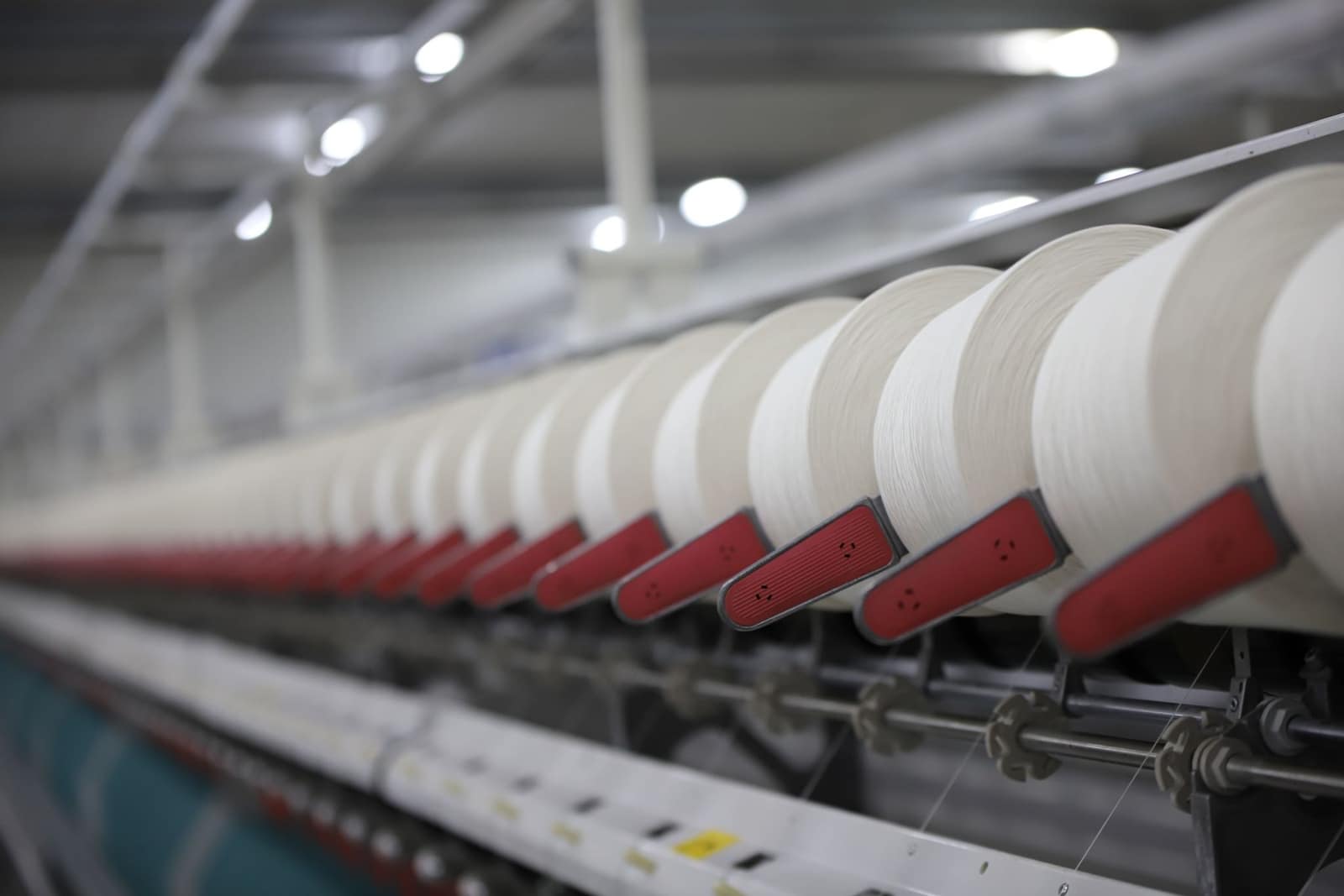 Free to exportTextiles & apparelCotton yarnBulk cotton yarn sold to weaving and knitting mills abroad; Bangladesh is by far the largest buyer.HS5205Exports 2025-26US$ 3.22 bn ↓4.1%
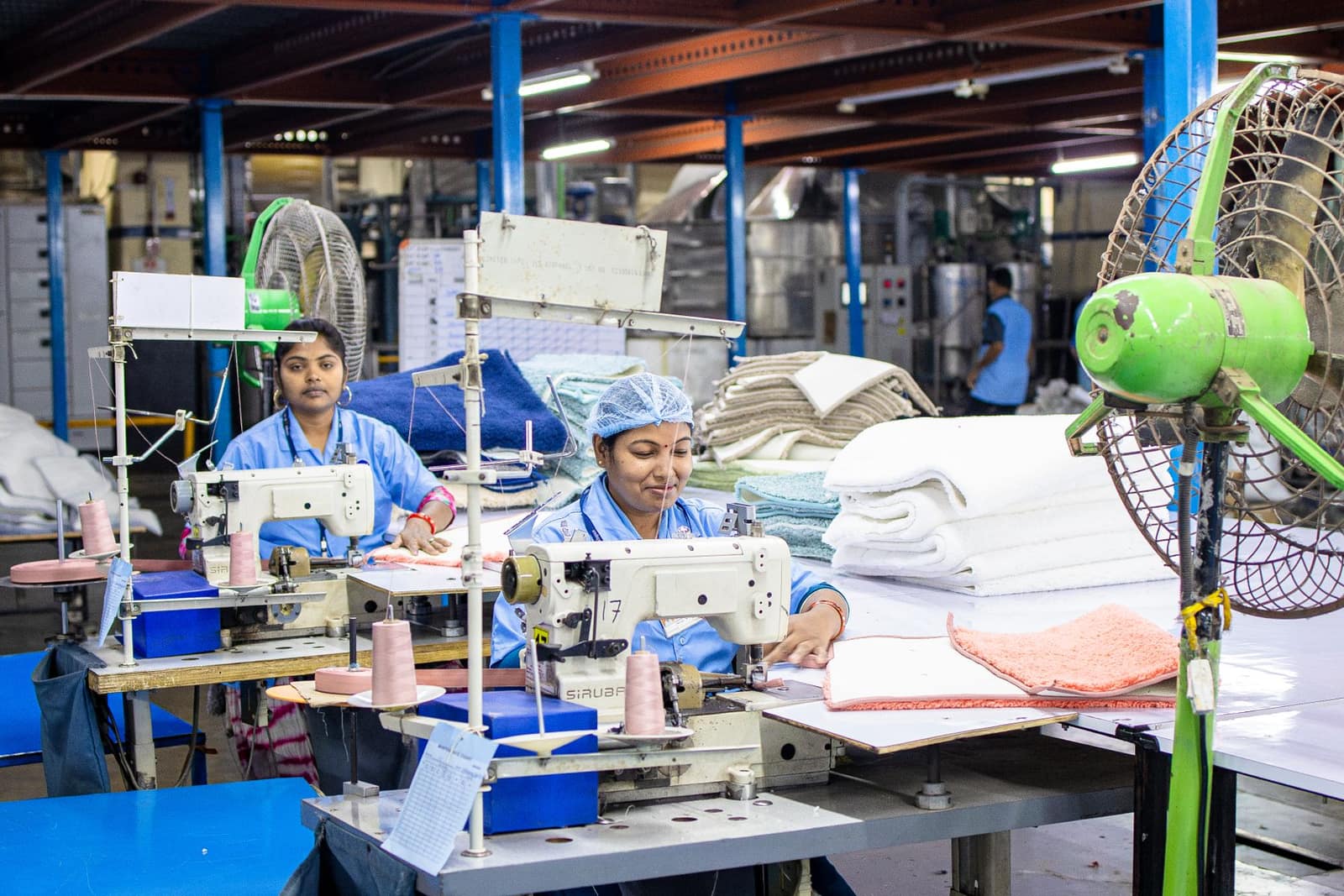 Free to exportTextiles & apparelReadymade garmentsKnitted and woven clothing for brands and retailers; the USA, UK, UAE and the EU are the big buyers.HS6109.10Exports 2025-26US$ 15.8 bn ↓1.2%
 Free to exportTextiles & apparelHome textiles (bed, bath and kitchen linen)Bedsheets, towels and kitchen linen for retailers; the USA buys more than half of India's exports.HS6302Exports 2025-26US$ 2.01 bn ↓5.7%
 Free to exportTextiles & apparelHandloom productsHand-woven fabrics, stoles and furnishings; buyers pay for craft, story and certified handloom origin.HS6304Exports 2025-26US$ 1.75 bn ↓8.6%