

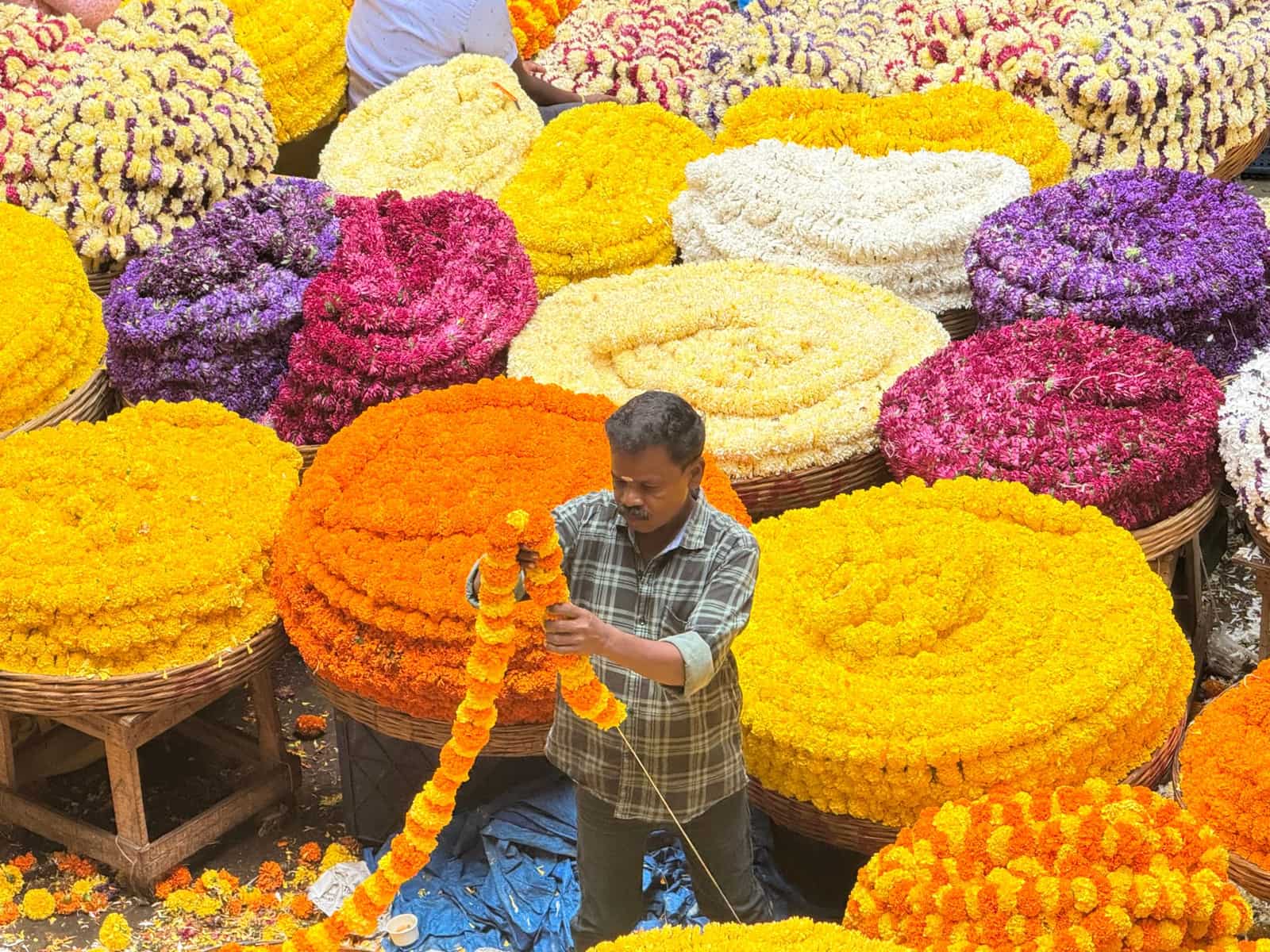
Farm produce
Export cut flowers and foliage
Greenhouse roses, carnations and chrysanthemums, dried flowers and foliage. APEDA product; flown out with a phytosanitary certificate.
- HS code
- 0603 Cut flowers and buds, fresh or dried (0603: roses, carnations, orchids, chrysanthemums, lilies and others) and foliage, branches and grasses (0604).
- Export policy
- Free to export Free under ITC(HS). Plants and plant parts of species in the Wild Life (Protection) Act schedules or CITES Appendix I are prohibited; wild-collected dried material needs proof of legal origin. Confirm the line on DGFT.
- Registrations
- 4 IEC, GST and those below
- India’s exports, 2025-26
- US$ 58 mn to 68 countries
What is exported
India exports fresh cut flowers grown in greenhouses around Bengaluru, Hosur and Pune, and a large trade in dried flowers and plant parts. Fresh roses peak before Valentine’s Day and Mother’s Day and travel by air to the Netherlands, the UK, the Gulf and Japan. Dried and preserved flowers go by sea to Europe and the USA.
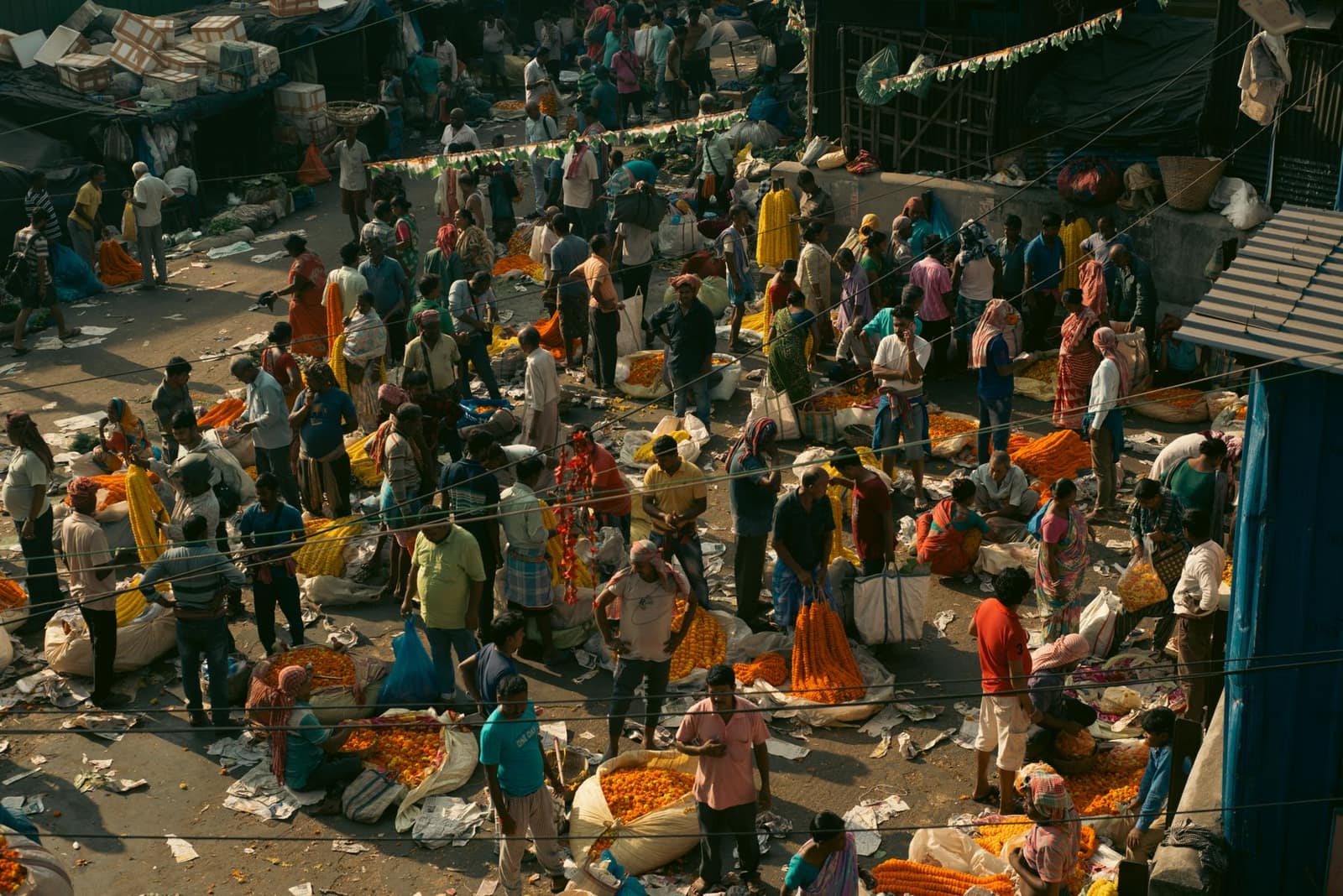
Varieties, grades and forms
- RosesGreenhouse cut roses (red and coloured), graded by stem length.
- Carnations, gerberas and chrysanthemumsGreenhouse flowers for florists and supermarkets.
- Orchids and anthuriumsFrom Kerala and the North-East.
- Dried flowers and plant partsDried, bleached and dyed flowers, pods and leaves for décor and potpourri.
- Foliage (0604)Fresh ferns and leaves, and dried grasses and branches.
Where it is grown or made
- KarnatakaBengaluru Rural, Doddaballapura and Chikkaballapur greenhouses; Bengaluru airport.
- Tamil NaduHosur and Krishnagiri for roses; Nilgiris; Thoothukudi for dried flowers.
- MaharashtraPune, Talegaon and Nashik greenhouse clusters.
- West Bengal and KeralaKolkata dried-flower exporters; Kerala foliage and orchids.
The quality buyers ask for
- Stem length
- Roses graded by length, e.g. 40, 50, 60, 70 cm and above
- Bud and head size
- Uniform within each bunch, to buyer or auction standard
- Vase life
- Buyers expect several days of vase life after arrival; pre-cooling and hydration are essential
- Pest freedom
- Free of thrips, mites, whitefly and other quarantine pests
Certificates
- Phytosanitary certificateRequiredIssued by Plant Quarantine on PQMS for each consignment of plant material.
- RCMCRequiredRegistration with the export promotion council or board for your product (not needed up to ₹3 lakh FOB per consignment since 15 Sep 2026).
- GlobalG.A.P. / MPSOften askedFarm certifications asked for by European retailers and auctions.
- FairtradeOften askedAsked for by some UK and EU supermarkets.
Shipping, storage and shelf life
Fresh flowers go in air-freight boxes on pallets; dried flowers in cartons in 20-ft or 40-ft dry containers by sea.
Air from Bengaluru, Chennai, Mumbai and Delhi for fresh flowers; sea from Thoothukudi, Kolkata and Chennai for dried flowers.
Fresh flowers typically about 1–4 °C with high humidity from cutting to arrival; dried flowers dry and dark.
Fresh flowers last days, so the whole chain must move within 48–72 hours; dried flowers keep for months.
What goes on the pack and carton
- Boxes: variety, colour, stem length, stems per bunch and bunches per box, grower or exporter code, and country of origin.
- Dyed or treated dried flowers: declare treatment and any fumigation on the label and documents.
Plant Quarantine stations inspect consignments before issuing the phytosanitary certificate (pqms.cgg.gov.in). For pesticide residues, use an APEDA-recognised or NABL-accredited lab (apeda.gov.in; nabl-india.org).
Benefits of exporting this product
- RoDTEP: 0.9% of FOB
Tariff item 0603 11 00 to 0603 90 00 and 0604 20 00, 0604 90 00 (fresh and dried cut flowers and foliage) earns 0.9% of FOB value, with no rupee cap, as a duty credit scrip on ICEGATE (Appendix 4R). Rates continue to 31 Dec 2026 (DGFT Notification 41/2026-27). Confirm your exact 8-digit line on DGFT before pricing an order.
DGFT — Appendix 4R, RoDTEP schedule for DTA exports w.e.f. 10 Oct 2024 (Notification 32/2024-25) ↗ - APEDA financial assistance
APEDA supports floriculture exporters (for example for packhouses, cold chain and market development) under its export promotion scheme. Components and rates change each plan period — check the current guidelines on apeda.gov.in.
APEDA — Floriculture and seeds (product profile and exports) ↗
Where to register
- APEDARegistration-cum-Membership Certificate (RCMC) for APEDA-scheduled products such as floriculture and herbal plants. Apply on the DGFT portal after you have your IEC.dgft.gov.in ↗
- Plant Quarantine (DPPQS)Phytosanitary certificate for each consignment of plant material, applied for online on PQMS. Some importing countries also ask for an import permit or a registered production site.pqms.cgg.gov.in ↗
Quality and checks
- Pest-free consignments: EU, UK and Japanese inspectors check for thrips, mites and other quarantine pests and reject or destroy infested lots.
- Stem length, bud size, vase life and uniform grading per bunch, to the buyer or auction specification.
- Pesticide residues within the importing country’s limits.
Tie up with a greenhouse cluster near Bengaluru or Pune and send trial boxes of roses by air to a Gulf wholesaler before the February peak. Dried flowers are easier: ship a mixed carton by sea to a European craft importer. Since 15 September 2026, a consignment worth up to ₹3 lakh FOB does not need an RCMC (DGFT Notification 36/2026-27). Registrations that a law requires for the product still apply.
Where new exporters go wrong
- Breaking the cold chain at the airport — a few hours in the heat cuts vase life and the buyer rejects the lot.
- Thrips or mites found at the EU border, leading to destruction and stricter checks on later shipments.
- Selling on consignment to auctions without understanding the fees and price risk.
Documents this product needs
Schemes that apply
Sources (5)
- DGFT — ITC(HS) export policy search (Schedule 2)
- APEDA — Floriculture and seeds (product profile and exports)
- APEDA — Register as exporter (RCMC is issued on the DGFT portal)
- Plant Quarantine (DPPQS) — PQMS portal for phytosanitary certificates
- DGFT — Appendix 4R, RoDTEP schedule for DTA exports w.e.f. 10 Oct 2024 (Notification 32/2024-25)
Trade data
Indian cut flowers and foliage exports in numbers
From the Department of Commerce’s TradeStat, country by country. US$, Indian financial years (April–March).
- Exports in 2025-26
- US$ 58 mn +2.3% a year on average, 2020-21 to 2025-26
- Change from 2024-25
- ↑ +2.9% US$ 56.3 mn → US$ 58 mn
- Buyer countries
- 68
- Average export price
- US$ 3.78 per kg · 15,315 tonnes shipped · US$ 3.80 the year before
The price cycle
India’s average export price per kg each year (total value ÷ total quantity). Highest in 2021-22, lowest in 2025-26 — a 5% swing between them. Keep this swing in mind when you quote.
What next: a projection from the trend
The past trend carried forward — not a forecast by any authority. Sudden changes in policy, prices or demand are not in it.
Likely range US$ 47 mn to US$ 68.9 mn.
- Trend
- -0.8% a year
- Fit (R²)
- 0.02 — weak, read with care
- Based on
- 6 years of official figures
Method: a straight line through the logarithm of yearly exports (log-linear regression); range = ±1 standard error.
Biggest buyer countries
By value in 2025-26. Change is against 2024-25.
Where demand is rising and falling
Only countries that buy at least US$ 1 million or 1% of India’s exports of this product. Change from 2024-25 to 2025-26.
↑ High demand
- United KingdomUS$ 3.7 mn → US$ 5.1 mn↑+37.6%
- SingaporeUS$ 2.2 mn → US$ 3 mn↑+35.8%
- United Arab EmiratesUS$ 4.7 mn → US$ 6 mn↑+28.1%
↓ Low demand
- CanadaUS$ 3.2 mn → US$ 2.1 mn↓-33.4%
- PolandUS$ 1 mn → US$ 750k↓-27.9%
- NetherlandsUS$ 4.3 mn → US$ 3.3 mn↓-24%
- GermanyUS$ 3.7 mn → US$ 3.2 mn↓-14.1%
Which forms sell, and at what price
India’s exports by 8-digit tariff line, 2025-26. Average price = total value ÷ total quantity (TradeStat): the average of every shipment on that line, not the price of any one deal.
| Tariff line | Value 2025-26 | Change | Quantity | Average price |
|---|---|---|---|---|
Foliage, branches and other parts of plants, without flowers or flower buds, and grasses, mosses and… — other of hdg. 06040604 90 00 | US$ 28 mn | ↓-9.8% | 6,862 tonnes | US$ 4.09 per kgwas US$ 4.69 |
Other cut flwrs and flower buds suitable for boqets/for ornmntl purpses0603 90 00 · Flowers, cut, flowers and flower buds of a kind suitable for bouquets or ornamental purposes, dried, dyed… | US$ 20.1 mn | ↑+38.1% | 5,074 tonnes | US$ 3.96 per kgwas US$ 3.26 |
Flowers, cut, roses, flowers and buds of a kind suitable for bouquets or ornamental purposes, fresh — roses0603 11 00 | US$ 6.3 mn | ↑+0.3% | 1,134 tonnes | US$ 5.53 per kgwas US$ 5.51 |
Other, frsh cut flowers and flower buds0603 19 00 · Flowers, cut, flowers and buds of a kind suitable for bouquets or ornamental purposes, fresh, other than… | US$ 2.6 mn | ↓-27.5% | 1,860 tonnes | US$ 1.39 per kgwas US$ 1.66 |
Foliage, branches and other parts of plants, without flowers or flower buds, and grasses, mosses and… — fresh of hdg. 06040604 20 00 | US$ 780k | ↑+11.4% | 362 tonnes | US$ 2.15 per kgwas US$ 1.68 |
Flowers, cut, chrysanthemums, flowers and buds of a kind suitable for bouquets or ornamental purposes, fresh — chrysanthemums0603 14 00 | US$ 110k | ↑+22.2% | 19 tonnes | US$ 5.76 per kgwas US$ 4.14 |
Flowers, cut, carnations, flowers and buds of a kind suitable for bouquets or ornamental purposes, fresh — carnations0603 12 00 | US$ 40k | ↑+33.3% | 2.6 tonnes | US$ 15.21 per kgwas US$ 18.21 |
Flowers, cut, lilies, flowers and flower buds of a kind suitable for bouquets or ornamental purposes, fresh — lilies (lilium spp.)0603 15 00 | US$ 10k | ↑0% | 0.5 tonnes | US$ 18.83 per kgwas US$ 14.56 |
The world market
Each country’s own recorded exports and imports in UN Comtrade, 2023 (the latest year nearly every country has reported).
- World imports
- US$ 10.9 bn 2023
- India among exporters
- #25 of 135 countries
- India’s share of world exports
- 0.5% US$ 54.9 mn
- Left for others to win
- US$ 12 bn exported by other countries
Top exporters — your competitors
- 1NetherlandsUS$ 5.31 bn 44.2%
- 2ColombiaUS$ 2.1 bn 17.5%
- 3EcuadorUS$ 994 mn 8.3%
- 4KenyaUS$ 664 mn 5.5%
- 5ItalyUS$ 313 mn 2.6%
- 6EthiopiaUS$ 231 mn 1.9%
- 7ChinaUS$ 218 mn 1.8%
- 8CanadaUS$ 216 mn 1.8%
- 9DenmarkUS$ 161 mn 1.3%
- 10NigeriaUS$ 157 mn 1.3%
Biggest buyers in the world
- 1USAUS$ 2.85 bn 26.2%
- 2NetherlandsUS$ 1.47 bn 13.5%
- 3GermanyUS$ 1.43 bn 13.1%
- 4United KingdomUS$ 837 mn 7.7%
- 5FranceUS$ 455 mn 4.2%
- 6JapanUS$ 385 mn 3.5%
- 7SwitzerlandUS$ 243 mn 2.2%
- 8PolandUS$ 232 mn 2.1%
- 9ItalyUS$ 224 mn 2.1%
- 10CanadaUS$ 203 mn 1.9%
Opportunity: what these countries buy from the world, and from India
Each country’s own recorded imports in UN Comtrade, latest year it has reported. The long light part of each bar is demand other countries are filling today.
TradeStat’s 2023-24 quantities are double-counted, so that year is left out of the price. Sources: TradeStat — Export Import Data Bank, Department of Commerce · UN Comtrade database (United Nations Statistics Division) · Figures taken 29 October 2026.
Step by step
How to export cut flowers and foliage
The world cut-flower trade centres on the Netherlands, with Kenya, Colombia, Ecuador and Ethiopia as the main growers for export. India is a small player in fresh flowers but strong in dried flowers and plant parts. Air-freight cost and cold-chain gaps limit fresh exports, while demand peaks around Valentine’s Day and other festivals. Openings lie in nearby markets (the Gulf, Singapore, Japan), in dried and preserved flowers, and in foliage.
- 01Pick crop, market and season
Plan production to hit Valentine’s Day and winter demand in Europe and the Gulf.
- 02Harvest and grade
Cut at the right bud stage, grade by stem length and bunch uniformly.
- 03Pre-cool and pack
Hydrate and pre-cool in a cold room, then pack in ventilated boxes.
- 04Get the phytosanitary certificate
Apply on PQMS for inspection and the certificate before the flight.
- 05Fly with an unbroken cold chain
Use a reefer truck to the airport and a cold store at the cargo terminal; file the shipping bill and air waybill.
- 06Get paid and close the file
Send the original documents through your bank (or to the buyer if paid in advance). Once the money arrives, get the e-BRC and claim RoDTEP, RoSCTL or drawback where they apply.
Questions
Questions about exporting cut flowers and foliage
Which flowers sell best abroad?
Do I need APEDA registration?
Can I sell through the Dutch auction?
Why are fresh flowers rejected?
What RoDTEP applies?
Sources (5)
- APEDA — Floriculture and seeds (product profile and exports)
- APEDA — Register as exporter (RCMC is issued on the DGFT portal)
- Plant Quarantine (DPPQS) — PQMS portal for phytosanitary certificates
- DGFT — Appendix 4R, RoDTEP schedule for DTA exports w.e.f. 10 Oct 2024 (Notification 32/2024-25)
- NABL — laboratory search
Who buys Indian cut flowers and foliage
All countries → EURAmsterdamNetherlandsEurope's main gateway: Rotterdam handles goods for the whole EU. EU food-safety and residue rules apply.From India 2025-26US$ 17.5 bn
 CETAGBPLondonUnited KingdomNew CETA in force since July 2026 — most Indian goods now enter duty-free. Strong market for garments, food and engineering.From India 2025-26US$ 13.4 bn
 USDWashington, D.C.United States of AmericaIndia's largest single-country export market. Strict FDA rules for food; extra 10% US duty on most goods since July 2026.From India 2025-26US$ 87.3 bn
 CEPAAEDAbu DhabiUnited Arab EmiratesIndia's biggest Gulf buyer and a re-export hub for the Middle East and Africa. CEPA in force since 2022.From India 2025-26US$ 37.4 bn
 EURBerlinGermanyEurope's largest economy and India's biggest EU partner. Values quality, certificates and supply-chain transparency.From India 2025-26US$ 11.5 bn
 CEPAJPYTokyoJapanHigh-value, quality-obsessed market. Buys shrimp, chemicals, auto parts and garments; strict food-sanitation checks.From India 2025-26US$ 6.04 bn
More in farm produce
All products → Free, with conditionsFarm produceBasmati riceIndia’s top agri export by value. Free to export, but every contract must be registered with APEDA first.HS1006.30Exports 2025-26US$ 5.67 bn ↓4.6%
 Free, with conditionsFarm produceNon-basmati riceHigh-volume staple sold mainly to Africa and Bangladesh. Export reopened in 2024–25, but contracts must now be registered with APEDA.HS1006.30Exports 2025-26US$ 5.86 bn ↓10.2%
 Free to exportFarm produceSpicesWhole, ground and blended spices. Spices Board registration (CRES) is compulsory; residue and ethylene oxide tests keep buyers.HS0904–0910Exports 2025-26US$ 3.12 bn ↓5.1%
 Free to exportFarm produceChilliIndia’s largest spice export by volume. Dried red chilli goes to China, Thailand and Bangladesh; aflatoxin is the key test.HS0904.21Exports 2025-26US$ 1.1 bn ↓12.9%