

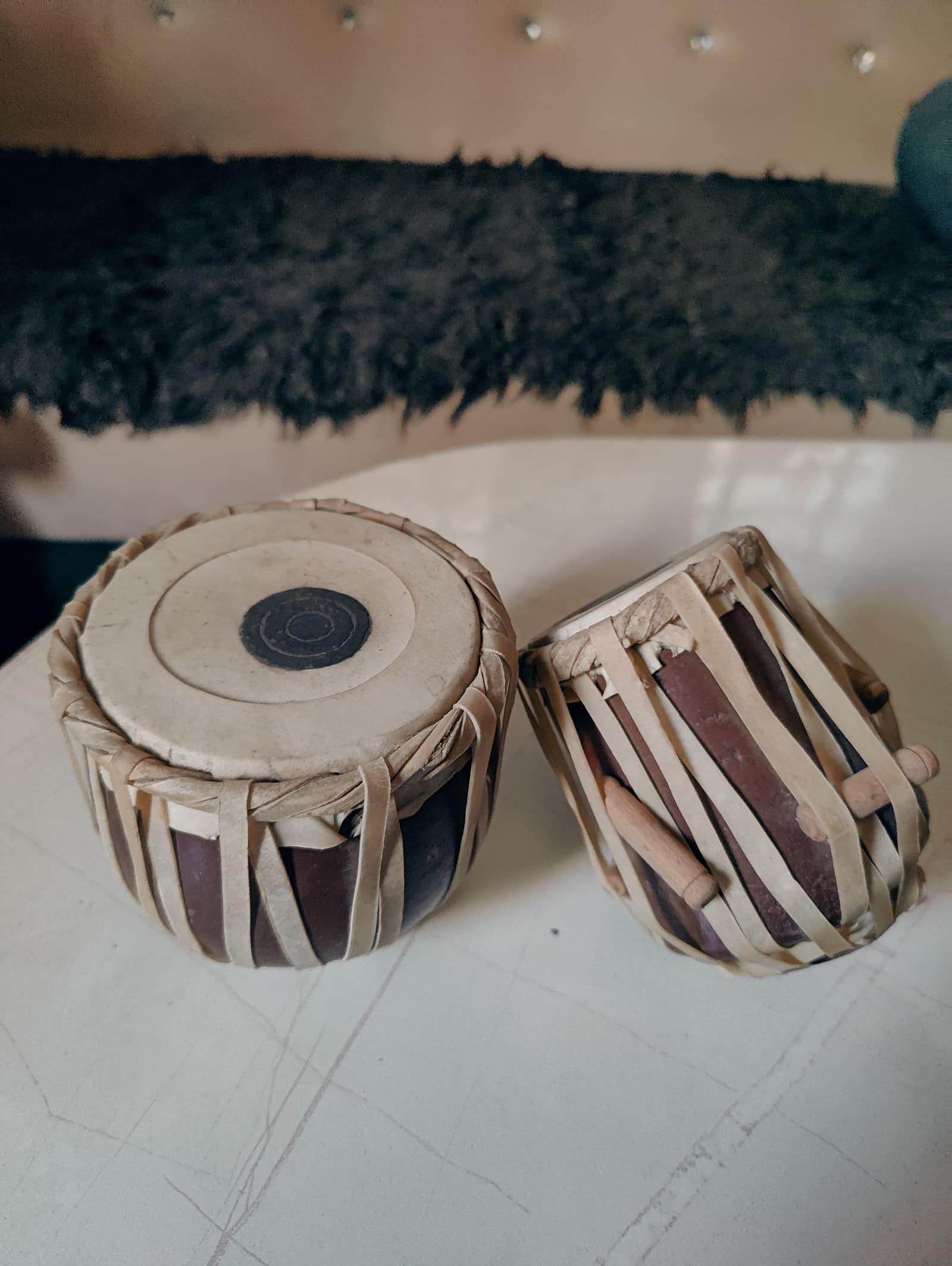
Handicrafts
Export musical instruments
Handmade sitars, tablas, flutes, harmoniums and drums from Miraj, Kolkata, Varanasi and Pilibhit.
- HS code
- 9201 Chapter 92 musical instruments: pianos (9201), string instruments such as sitar, violin and veena (9202), wind instruments such as flutes and shehnai (9205), percussion such as tabla, drums and dholak (9206), electric instruments (9207) and parts and strings (9209).
- Export policy
- Free to export Free to export under ITC(HS) Schedule 2. Instruments that use wildlife parts (ivory, some skins, bone or shell) or restricted timber are a separate matter — check wildlife and CITES rules before export.
- Registrations
- 3 IEC, GST and those below
- India’s exports, 2025-26
- US$ 51.2 mn to 55 countries
What is exported
India exports handmade classical and folk instruments (sitar, tanpura, veena, tabla, harmonium, bansuri, shehnai, dholak), percussion and practice drums, and some band instruments. Buyers are music shops, world-music importers, yoga and wellness retailers and online sellers. In 2025-26 India exported about US$ 53 million of Chapter 92 instruments; the UAE, Germany, the USA, China and Malaysia led.
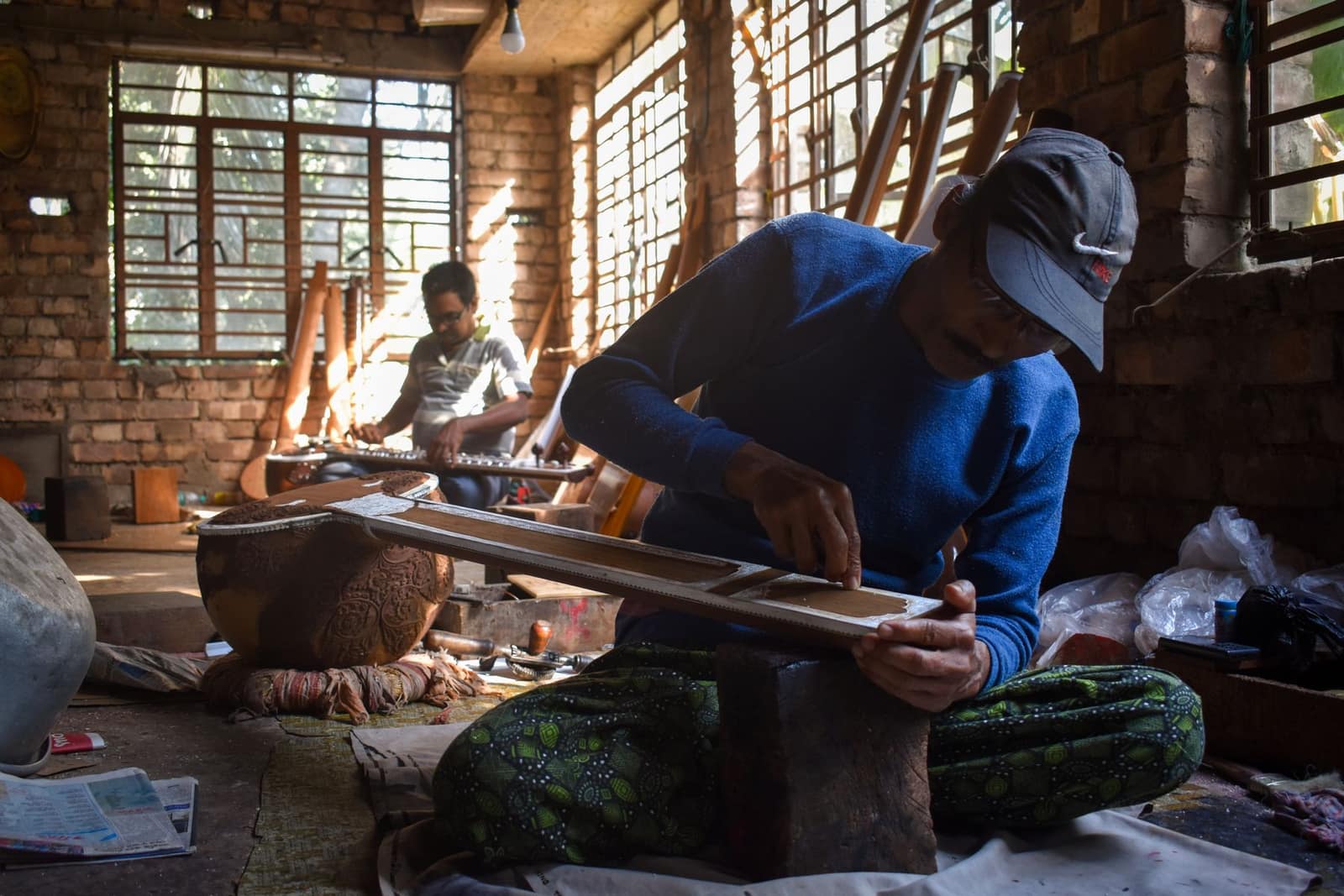
Varieties, grades and forms
- String instrumentsSitar, tanpura, sarod, veena, violin and santoor (HS 9202).
- PercussionTabla, dholak, mridangam, djembe-style drums and frame drums (HS 9206).
- Wind instrumentsBansuri, shehnai and brass band instruments (HS 9205).
- Harmoniums and partsHand harmoniums (classified with keyboard or reed instruments — confirm the code) and strings and parts (HS 9209).
Where it is grown or made
- MaharashtraMiraj (Sangli) — sitar and tanpura makers
- West BengalKolkata — sitars, sarods, harmoniums and tablas
- Uttar PradeshVaranasi (tabla, shehnai), Pilibhit (bansuri), Meerut (brass band instruments)
- Tamil Nadu and Andhra PradeshThanjavur (veena, mridangam) and Bobbili (veena)
- DelhiDaryaganj and other workshops — harmoniums and percussion
The quality buyers ask for
- Wood
- Seasoned wood (tun, sheesham, jackfruit, bamboo for flutes) with species declared
- Tuning and pitch
- Tuned to A=440 Hz or the buyer's pitch; flutes and harmoniums by key (for example C, D, G)
- Heads and strings
- Leather heads tensioned evenly; steel or bronze strings of stated gauge
- Finish
- Smooth, crack-free finish with non-toxic lacquer
Certificates
- CITES permit (where applicable)Often askedNeeded only for instruments containing CITES-listed species not covered by an exemption; check before export.
- Lacey Act declaration (USA)RequiredFor wooden instruments; filed by the US importer with your species data.
- ISPM 15RequiredFor wooden crates and packing.
- GI authorised userOften askedTo sell under names such as Miraj Sitar or Banaras Tabla.
Shipping, storage and shelf life
Mostly air or courier in cartons for small orders; consolidated LCL sea freight for larger orders of percussion and harmoniums.
Air from Delhi, Mumbai, Kolkata or Chennai; sea from Nhava Sheva, Kolkata or Chennai.
Store at stable temperature and humidity; loosen strings for long storage.
What goes on the pack and carton
- Maker's name, model, key or tuning, and "Made in India" on the instrument or case.
- Carton marks: "Fragile", "This way up", item code, quantity and weight.
- Care and tuning instructions in English (and the buyer's language if retail).
Instruments are judged by playing rather than lab tests. For wood species identification, use the Forest Research Institute (Dehradun) or a NABL-accredited wood lab; EPCH can advise members on export rules.
Benefits of exporting this product
- RoDTEP: 0.5% of FOB
Tariff item 9202 90 00 (other string instruments, such as sitar) earns 0.5% of FOB value, with no rupee cap, as a duty credit scrip on ICEGATE. Every Chapter 92 line in Appendix 4R, including percussion (9206 00 00) and strings and parts (9209), carries 0.5%. These rates continue to 31 Dec 2026 (DGFT Notification 41/2026-27). Confirm your exact 8-digit line on the DGFT RoDTEP page before you price an order.
DGFT — Appendix 4R, RoDTEP schedule for DTA exports w.e.f. 10.10.2024 (Notification 32/2024-25); rates continued to 31.12.2026 by Notification 41/2026-27 ↗ - Duty drawback: 1.2% of FOB
Drawback item 9202 (other string musical instruments) has an All Industry Rate of 1.2% of FOB, paid into your bank account. It is not available on exports under Advance Authorisation or from EOU/SEZ units. Headings 9201, 9205, 9206, 9207 and 9209 also get 1.2%. Check the current schedule on the CBIC drawback page before shipping.
Gazette of India — Notification 77/2023-Customs (N.T.) dated 20.10.2023: All Industry Rates of duty drawback ↗ - Registered GI tags
Miraj Sitar and Miraj Tanpura (Maharashtra), Thanjavur Veenai (Tamil Nadu), Bobbili Veena (Andhra Pradesh), Banaras Tabla, Banaras Shehnai and Pilibhit Bansuri (Uttar Pradesh) are registered Geographical Indications. Only registered producers and authorised users may sell under these names, which helps genuine makers stand out and fetch a better price.
IP India (Geographical Indications Registry) — Registration details of Geographical Indications ↗
Where to register
- EPCHHandmade musical instruments fall under miscellaneous handicrafts with EPCH; take your RCMC there.epch.in ↗
Quality and checks
- Timber and wildlife: instruments of rosewood, ebony or with animal parts — check CITES status; rosewood (Dalbergia) instruments have specific CITES rules, and products with ivory or protected species cannot be exported.
- USA: Lacey Act declaration for wooden instruments, naming the species.
- Instruments with leather heads (tabla, dholak) may face animal-product checks in some countries — ask the importer.
- Tuning and playability checked before packing; buyers often ask for a short video of each instrument being played.
Work with a family workshop in Miraj, Kolkata or Varanasi, start with a few popular items (tabla sets, harmoniums, bansuri) and sell through world-music shops abroad or online marketplaces. Ship small cartons by air or courier first, with hard cases and humidity packs.
Where new exporters go wrong
- Cracks and warping from humidity changes in transit — season the wood and pack with humidity control.
- Using bone, ivory-like or shell inlay without checking wildlife law — goods are seized and the exporter is prosecuted.
- Weak packing for long-necked instruments such as sitar and tanpura — breakage claims wipe out the margin.
Documents this product needs
Schemes that apply
Sources (7)
- Department of Commerce, Export Import Data Bank — India's exports of HS 92 by country, 2025-26
- DGFT — Appendix 2T: Export Promotion Councils and the products under each
- DGFT — ITC(HS) export policy search (Schedule 2)
- EPCH (Export Promotion Council for Handicrafts) — official site
- CITES — Convention on International Trade in Endangered Species (checklist and appendices)
- USDA APHIS — Lacey Act plant declaration
- IP India (Geographical Indications Registry) — Registration details of Geographical Indications
Trade data
Indian musical instruments exports in numbers
From the Department of Commerce’s TradeStat, country by country. US$, Indian financial years (April–March).
- Exports in 2025-26
- US$ 51.2 mn +18% a year on average, 2020-21 to 2025-26
- Change from 2024-25
- ↑ +17% US$ 43.8 mn → US$ 51.2 mn
- Buyer countries
- 55
- Average export price
- US$ 21.63 per kg · 2,369 tonnes shipped · US$ 18.54 the year before
The price cycle
India’s average export price per kg each year (total value ÷ total quantity). Highest in 2025-26, lowest in 2020-21 — a 57% swing between them. Keep this swing in mind when you quote.
What next: a projection from the trend
The past trend carried forward — not a forecast by any authority. Sudden changes in policy, prices or demand are not in it.
Likely range US$ 55.4 mn to US$ 89.4 mn.
- Trend
- +14.4% a year
- Fit (R²)
- 0.76
- Based on
- 6 years of official figures
Method: a straight line through the logarithm of yearly exports (log-linear regression); range = ±1 standard error.
Biggest buyer countries
By value in 2025-26. Change is against 2024-25.
Where demand is rising and falling
Only countries that buy at least US$ 1 million or 1% of India’s exports of this product. Change from 2024-25 to 2025-26.
↑ High demand
- SingaporeUS$ 1 mn → US$ 2.1 mn↑+98.1%
- KenyaUS$ 930k → US$ 1.7 mn↑+80.6%
- United KingdomUS$ 1.3 mn → US$ 2.1 mn↑+61.5%
- PanamaUS$ 730k → US$ 1.1 mn↑+53.4%
- United Arab EmiratesUS$ 5.9 mn → US$ 8.5 mn↑+44.5%
- MalaysiaUS$ 2.2 mn → US$ 3.1 mn↑+40.4%
- MexicoUS$ 890k → US$ 1.1 mn↑+28.1%
- BrazilUS$ 1.1 mn → US$ 1.3 mn↑+15.3%
↓ Low demand
No sizeable country falls in this list this year.
Which forms sell, and at what price
India’s exports by 8-digit tariff line, 2025-26. Average price = total value ÷ total quantity (TradeStat): the average of every shipment on that line, not the price of any one deal.
| Tariff line | Value 2025-26 | Change | Quantity | Average price |
|---|---|---|---|---|
Keyboard instruments,other than accordions9207 10 00 · Musical instruments, keyboard,, the sound of which is produced or must be amplified electrically | US$ 26.2 mn | ↑+36.1% | 276k pieces | US$ 94.92 per piecewas US$ 89.59 |
Other string musical instruments9202 90 00 · Musical instruments, string, played other than with a bow | US$ 9.2 mn | ↑+8% | 224k pieces | US$ 41.30 per piecewas US$ 39.38 |
Parts and accessories for the musical instruments of headng no.92029209 92 00 · Musical instruments, parts and accessories for string musical instruments other than keyboard instruments | US$ 6.7 mn | ↓-8.7% | 863 tonnes | US$ 7.81 per kgwas US$ 8.41 |
Percussion musical instrmnt(for exmpl, drumsxylophones,cymbals,castanets, maraccas)9206 00 00 · Musical instruments, percussion | US$ 2.4 mn | ↑+3.1% | 617k pieces | US$ 3.82 per piecewas US$ 6.51 |
Other prtsandaccssors of musical instruments9209 99 00 · Musical instruments, parts and accessories for musical instruments in heading no. 9209, metronomes, tuning… | US$ 2.2 mn | ↓-3.1% | 128 tonnes | US$ 17.33 per kgwas US$ 21.51 |
Other musical instruments of hdg 92079207 90 00 · Musical instruments,, the sound of which is produced or must be amplified electrically | US$ 1.6 mn | ↓-3% | 82k pieces | US$ 19.54 per piecewas US$ 28.48 |
All other wind musical instruments9205 90 90 · Musical instruments, wind, other than brass,, other than fairground organs and mechanical street organs | US$ 1.6 mn | ↑+18.2% | 29k pieces | US$ 53.76 per piecewas US$ 3.71 |
Musical instrument strings9209 30 00 · Musical instrument strings | US$ 410k | ↑+412.5% | 3.9 tonnes | US$ 103.88 per kgwas US$ 13.33 |
Musical instruments, harpsichords and other keyboard stringed instruments in heading no. 9201 — other pianos9201 90 00 | US$ 260k | ↓-36.6% | 19k pieces | US$ 13.64 per piecewas US$ 40.50 |
Strng musical instruments played with a bow9202 10 00 · Musical instruments, string, played with a bow | US$ 210k | ↓-19.2% | 2k pieces | US$ 90.75 per piecewas US$ 96.69 |
Parts and accessories for the musical instruments of heading no.92079209 94 00 · Musical instruments, parts and accessories for the musical instruments the sound of which is produced or… | US$ 180k | ↑+63.6% | 5.8 tonnes | US$ 30.94 per kgwas US$ 29.19 |
Musical instruments, brass-wind, other than fairground organs and mechanical street organs — brass-wind instruments9205 10 00 | US$ 130k | ↑0% | 6k pieces | US$ 20.67 per piecewas US$ 13.12 |
Musical instruments, wind, other than brass,, other than fairground organs and mechanical street organs — flutes9205 90 10 | US$ 60k | ↓-33.3% | 107k pieces | US$ 0.56 per piecewas US$ 0.61 |
Musical instruments, pianos, upright, including automatic pianos — upright pianos9201 10 00 | US$ 50k | — | 2k pieces | US$ 29.26 per piece |
The world market
Each country’s own recorded exports and imports in UN Comtrade, 2023 (the latest year nearly every country has reported).
- World imports
- US$ 7.37 bn 2023
- India among exporters
- #21 of 151 countries
- India’s share of world exports
- 0.6% US$ 42.6 mn
- Left for others to win
- US$ 7.64 bn exported by other countries
Top exporters — your competitors
- 1ChinaUS$ 1.96 bn 25.5%
- 2GermanyUS$ 1.1 bn 14.2%
- 3USAUS$ 910 mn 11.8%
- 4IndonesiaUS$ 649 mn 8.4%
- 5JapanUS$ 622 mn 8.1%
- 6NetherlandsUS$ 313 mn 4.1%
- 7FranceUS$ 302 mn 3.9%
- 8MalaysiaUS$ 236 mn 3.1%
- 9Other Asia, nesUS$ 170 mn 2.2%
- 10ItalyUS$ 169 mn 2.2%
Biggest buyers in the world
- 1USAUS$ 1.58 bn 21.5%
- 2GermanyUS$ 800 mn 10.9%
- 3JapanUS$ 499 mn 6.8%
- 4ChinaUS$ 498 mn 6.8%
- 5United KingdomUS$ 362 mn 4.9%
- 6FranceUS$ 339 mn 4.6%
- 7NetherlandsUS$ 315 mn 4.3%
- 8CanadaUS$ 235 mn 3.2%
- 9Rep. of KoreaUS$ 208 mn 2.8%
- 10AustraliaUS$ 177 mn 2.4%
Opportunity: what these countries buy from the world, and from India
Each country’s own recorded imports in UN Comtrade, latest year it has reported. The long light part of each bar is demand other countries are filling today.
TradeStat’s 2023-24 quantities are double-counted, so that year is left out of the price. Sources: TradeStat — Export Import Data Bank, Department of Commerce · UN Comtrade database (United Nations Statistics Division) · Figures taken 29 October 2026.
Step by step
How to export musical instruments
China dominates the world trade in musical instruments, followed by Japan, Germany, the USA and Indonesia for factory-made pianos, guitars and electronic instruments. India's strength is handmade classical and folk instruments, which have a loyal market among students of Indian music, world-music players and the wellness and sound-therapy sector. Demand is steady rather than large and grows with yoga, kirtan and fusion music abroad. Quality varies widely, so makers who offer consistent tuning, good finish and reliable packing stand out. Openings are in student-grade instruments, percussion and drums for world-music shops, and online sales direct to players.
- 01Select makers
Work with workshops that can deliver consistent quality in your chosen range.
- 02Check materials
Confirm wood species and avoid wildlife parts; keep purchase records.
- 03Register
IEC, GST LUT and RCMC with EPCH.
- 04Test and video
Tune and play-test each instrument; record a short video for the buyer.
- 05Pack
Case, foam and five-ply carton; loosen strings; add humidity packs.
- 06Ship and claim
File the shipping bill, claim RoDTEP (0.5%) and drawback (1.2%).
Meet buyers
Trade fairs
Questions
Questions about exporting musical instruments
Is a CITES permit needed for a rosewood sitar?
Which council covers musical instruments?
How do I stop instruments cracking abroad?
Which GI tags help?
Can I sell through online marketplaces abroad?
Sources (7)
- EPCH (Export Promotion Council for Handicrafts) — official site
- CITES — Convention on International Trade in Endangered Species (checklist and appendices)
- USDA APHIS — Lacey Act plant declaration
- IPPC — ISPM 15, Regulation of wood packaging material in international trade
- IP India (Geographical Indications Registry) — Registration details of Geographical Indications
- DGFT — Appendix 4R, RoDTEP schedule for DTA exports w.e.f. 10.10.2024 (Notification 32/2024-25); rates continued to 31.12.2026 by Notification 41/2026-27
- Gazette of India — Notification 77/2023-Customs (N.T.) dated 20.10.2023: All Industry Rates of duty drawback
Who buys Indian musical instruments
All countries → CEPAAEDAbu DhabiUnited Arab EmiratesIndia's biggest Gulf buyer and a re-export hub for the Middle East and Africa. CEPA in force since 2022.From India 2025-26US$ 37.4 bn
 EURBerlinGermanyEurope's largest economy and India's biggest EU partner. Values quality, certificates and supply-chain transparency.From India 2025-26US$ 11.5 bn
 USDWashington, D.C.United States of AmericaIndia's largest single-country export market. Strict FDA rules for food; extra 10% US duty on most goods since July 2026.From India 2025-26US$ 87.3 bn
 APTACNYBeijingChinaHuge market, but mostly for raw materials. Food plants must be registered with GACC; fresh produce needs a protocol.From India 2025-26US$ 19.5 bn
 CECAMYRKuala LumpurMalaysiaMulti-ethnic market with a large Indian-origin community. Halal expectations for food; CECA and AITIGA both apply.From India 2025-26US$ 6.83 bn
 CETAGBPLondonUnited KingdomNew CETA in force since July 2026 — most Indian goods now enter duty-free. Strong market for garments, food and engineering.From India 2025-26US$ 13.4 bn
 EURParisFranceFashion, food and design market. EU rules plus French-language labels; SIAL Paris is a key food fair.From India 2025-26US$ 7.1 bn
 CECASGDSingaporeSingaporeDuty-free trading hub for South-East Asia. Strict food licensing by SFA; big Indian community.From India 2025-26US$ 11.9 bn
More in handicrafts
All products →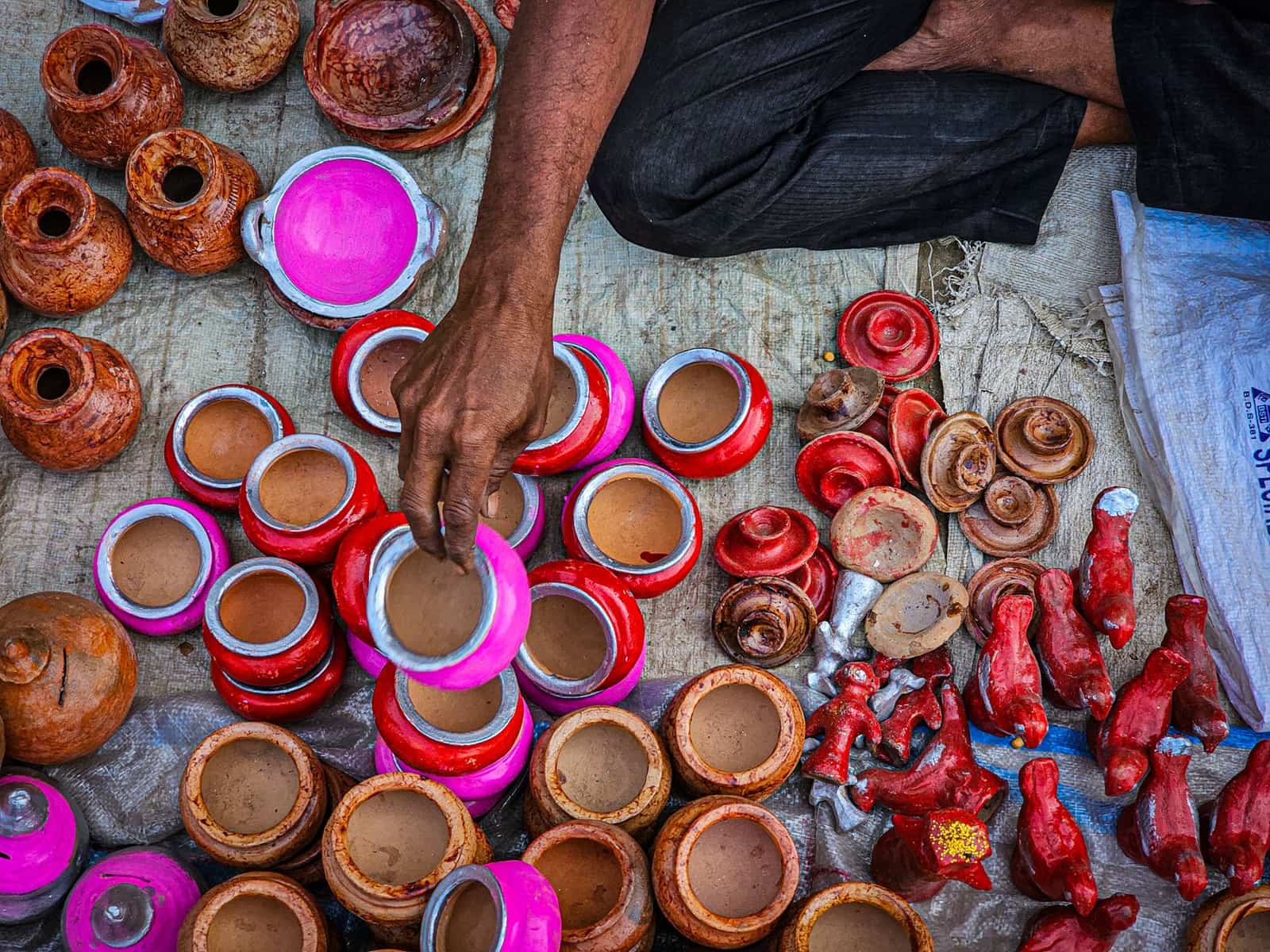 Free to exportHandicraftsHandicrafts (cane, bamboo, jute and natural fibre)Baskets, storage, lamps and décor from cane, bamboo and grasses, sold to home-décor importers.HS4602Exports 2025-26US$ 23.3 mn ↓20.7%
 Free to exportHandicraftsBrass and art metalwareMoradabad-style brass décor, lamps, bells and tableware for gift and home-décor buyers.HS8306Exports 2025-26US$ 36.4 mn ↑11.4%
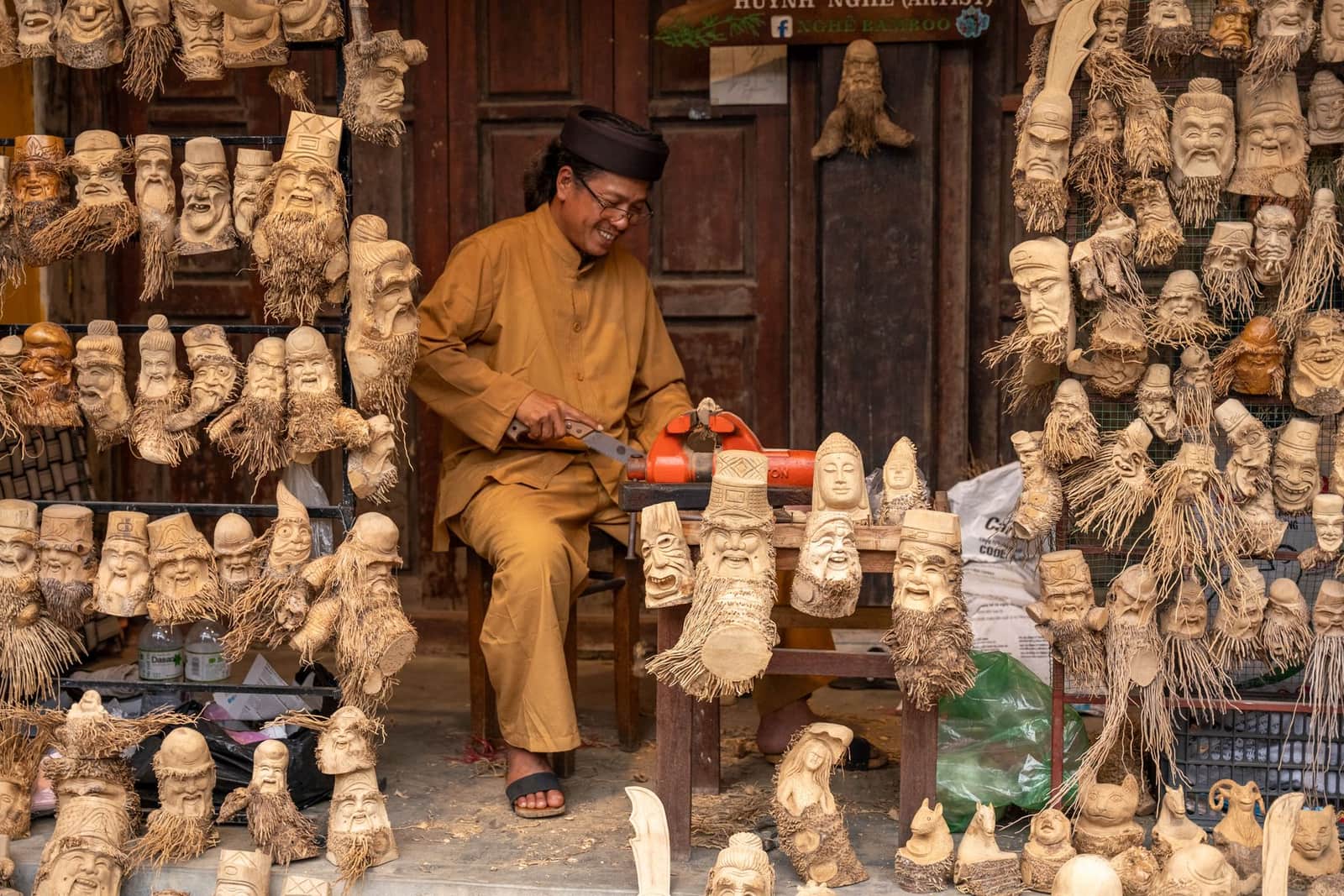 Free, with conditionsHandicraftsWooden handicraftsCarved, inlaid and turned wooden décor, boxes and kitchenware from Saharanpur, Jodhpur and Channapatna.HS4420Exports 2025-26US$ 11.5 mn ↓9%
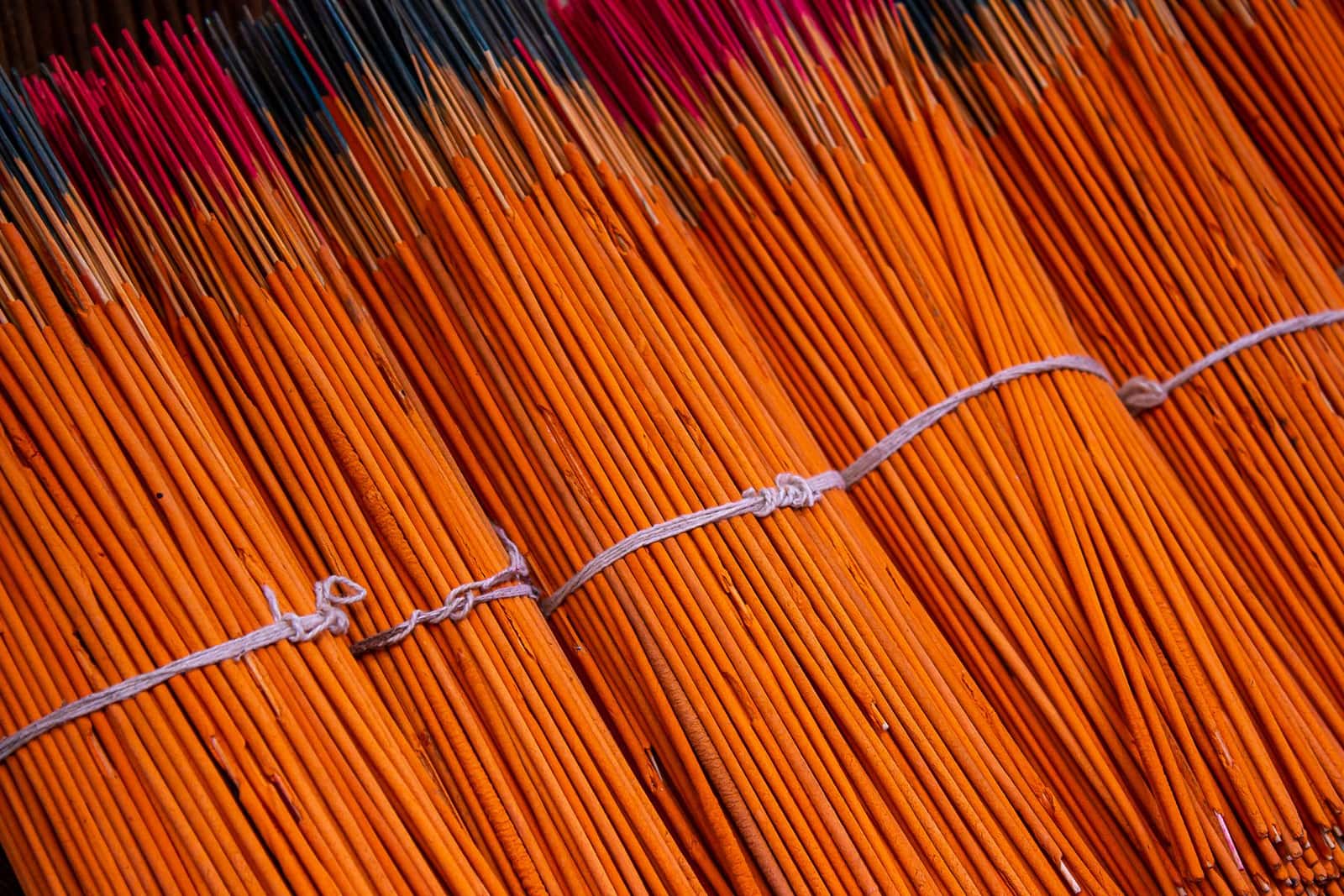 Free to exportHandicraftsIncense sticks (agarbatti) and dhoopMasala and dipped incense sticks, cones and dhoop for the USA, the Gulf, Africa and Latin America.HS3307.41Exports 2025-26US$ 151 mn ↓0.4%