

Handicrafts
Export incense sticks (agarbatti) and dhoop
Masala and dipped incense sticks, cones and dhoop for the USA, the Gulf, Africa and Latin America.
- HS code
- 3307.41 Agarbatti and other odoriferous preparations that work by burning — incense sticks, cones and dhoop.
- Export policy
- Free to export Free to export. (Imports of agarbatti into India are restricted, but that does not affect exports.)
- Registrations
- 3 IEC, GST and those below
- India’s exports, 2025-26
- US$ 151 mn to 135 countries
What is exported
Bengaluru, Mysuru and other centres make masala and perfume-dipped incense, cones and dhoop. Buyers include ethnic grocers, spiritual and wellness stores and private-label brands. In 2025-26 India exported about US$ 151 million under HS 3307.41; the USA was the largest buyer, followed by Nigeria, the UAE, Spain and Malaysia.
Varieties, grades and forms
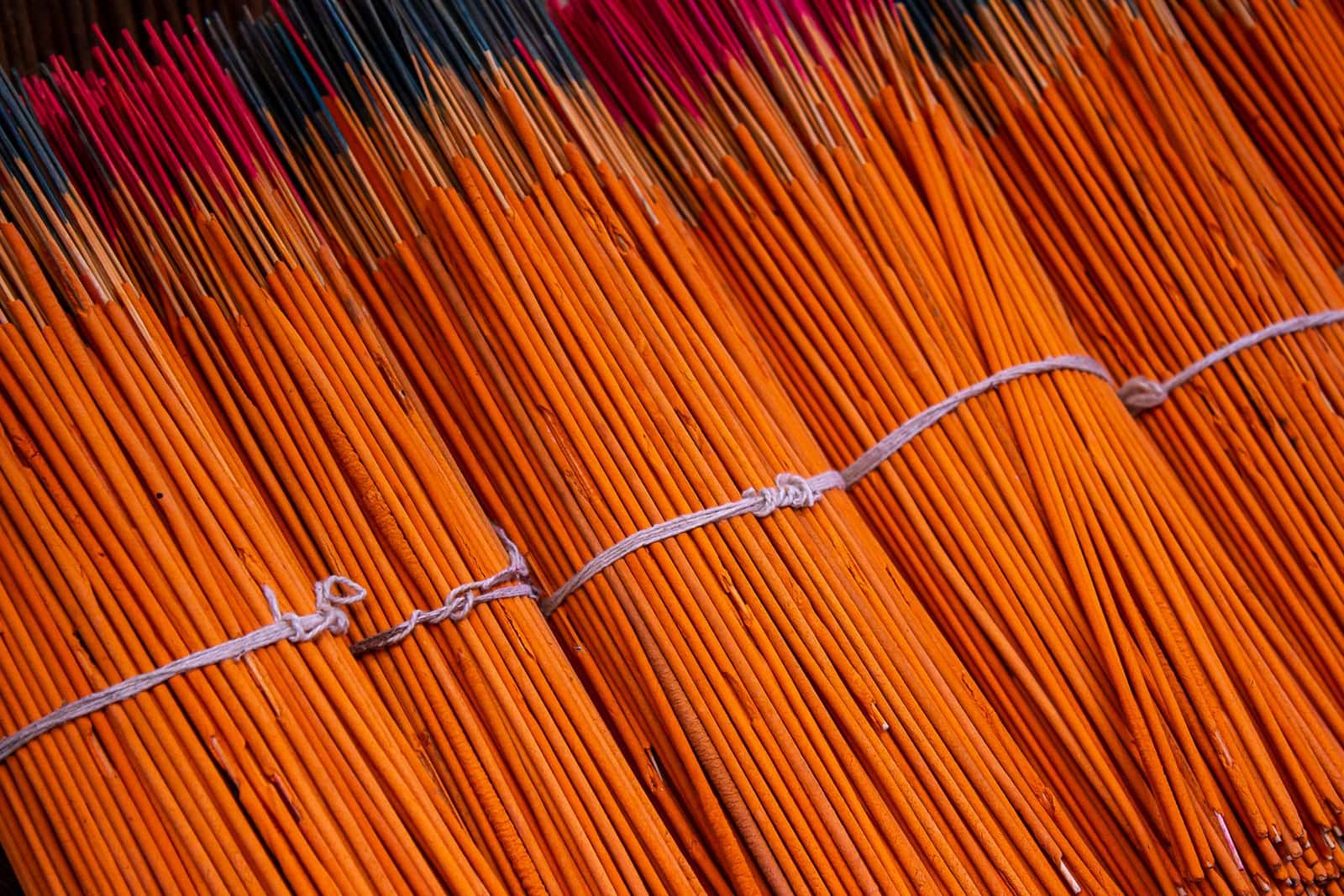
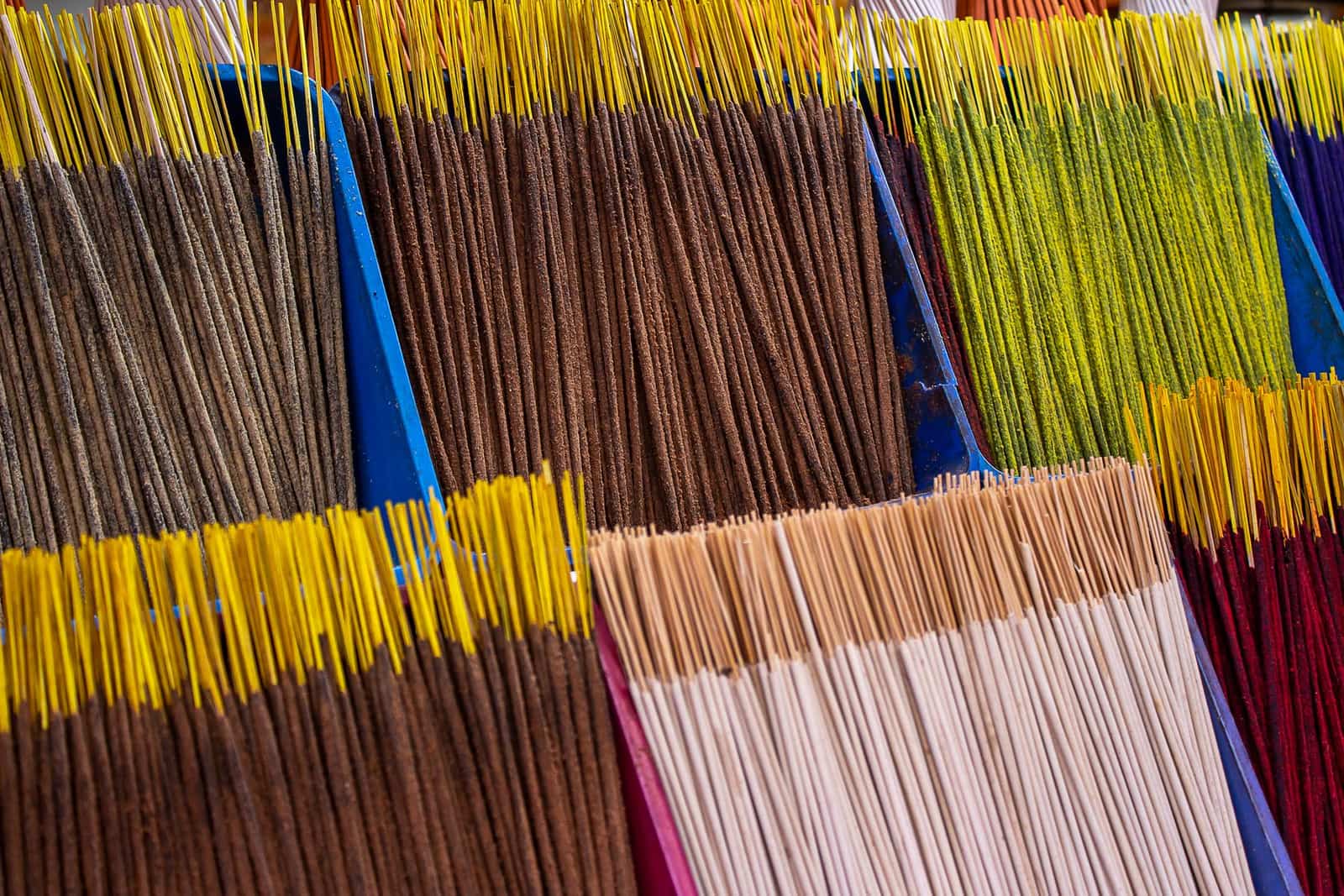
- Masala agarbatti (hand-rolled)Bamboo sticks rolled in a paste of charcoal, resins and herbs — the classic Mysore and Bengaluru style.
- Dipped (perfumed) agarbattiRaw sticks dipped in perfume oil; cheaper, high volume.
- Dhoop sticks and conesStick-less incense made from a thick paste; popular with diaspora buyers.
- Sambrani, loban and resin cupsBenzoin and resin products for home and religious use.
Where it is grown or made
- KarnatakaBengaluru and Mysuru — the largest makers and exporters
- GujaratAhmedabad
- BiharGaya — agarbatti rolling cluster
- Tripura and AssamBamboo stick making for the agarbatti industry
The quality buyers ask for
- Stick length and weight
- Common lengths 8, 9 and 11 inches; weight per stick and sticks per pack
- Burning time
- Minutes per stick, tested in still air
- Moisture
- Low moisture so sticks burn evenly and do not grow mould
- Fragrance materials
- Perfume compounds that follow IFRA Standards, with a safety data sheet from the perfume supplier
- Emissions (EU)
- European test standards for combustible air fresheners (EN 16738 methods and EN 16739 requirements) are used by EU buyers
- Hazard classification
- Classification of the scented mixture under EU CLP, which decides warning pictograms on the pack
Certificates
- Safety data sheet and CLP classificationRequiredEU importers need an SDS and correct CLP hazard labelling for scented incense; without it goods cannot be placed on the market.
- IFRA conformity certificateOften askedCertificate from the perfume supplier that the fragrance meets IFRA limits for the product category.
- Fumigation / phytosanitary (if required)Often askedSome countries ask for fumigation of incense containing plant material; check the importing country's rules.
- ISO 9001Often askedQuality management for larger manufacturers.
- Social compliance auditOften askedAsked for by chain stores, especially where home-workers roll sticks.
Shipping, storage and shelf life
Light and bulky: packs go in master cartons, shipped LCL or in 20-ft and 40-ft containers loaded by volume. Seal inner packs in film to hold fragrance.
Sea freight from Chennai or Bengaluru ICD; air or courier for samples.
Store cool and dry, away from strong smells; fragrance fades with heat.
Keeps for a long time if sealed and dry, but fragrance weakens; buyers usually want stock made within the last year.
What goes on the pack and carton
- EU: CLP label in the local language with hazard pictograms, signal word, hazard and precautionary statements, supplier name and address, and a UFI code where required.
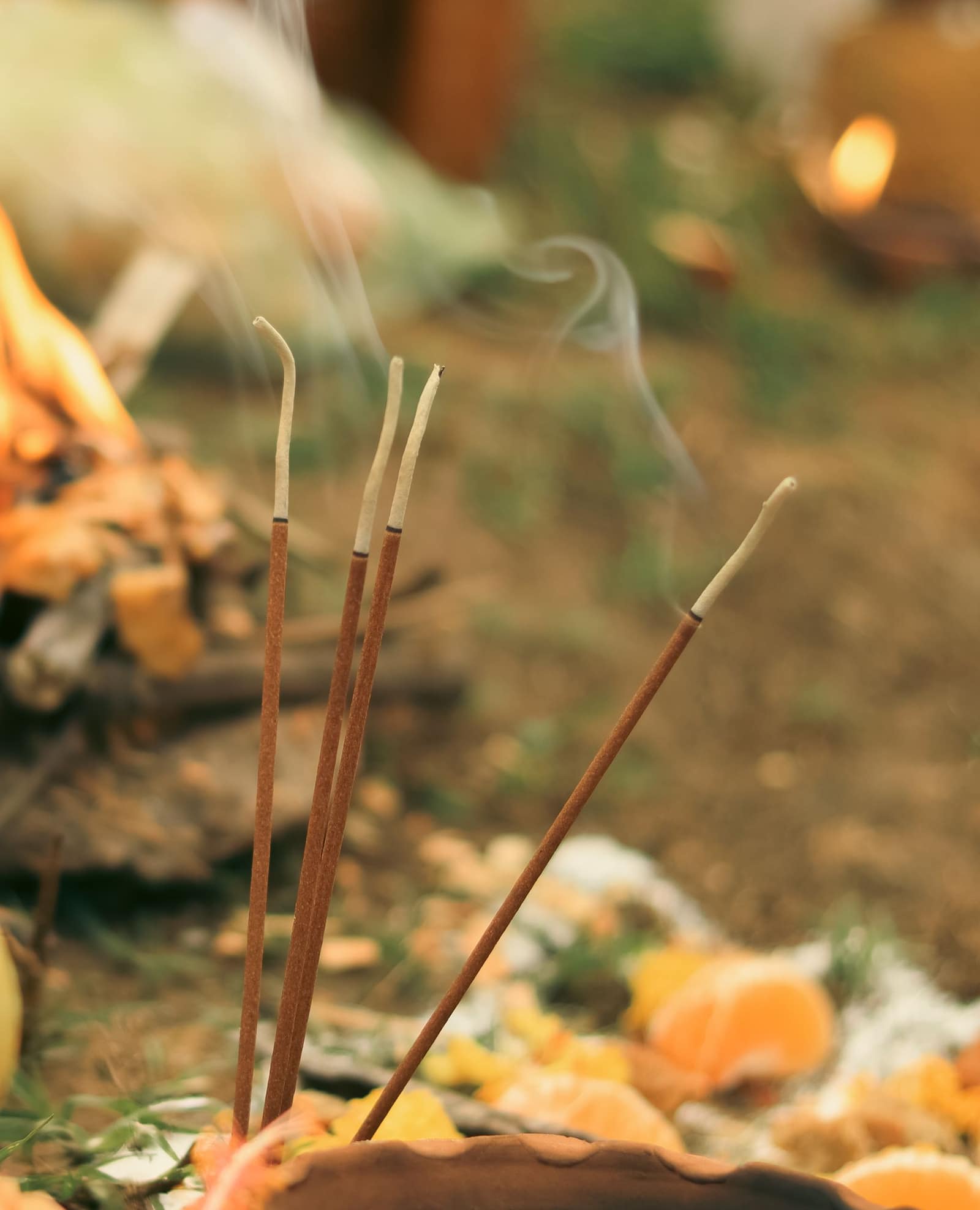
- Safety advice: burn on a heat-proof holder, never leave unattended, keep away from children.
- Net count or weight, 'Made in India', and batch number.
The Fragrance and Flavour Development Centre (FFDC), Kannauj, a Ministry of MSME body, tests incense and fragrances and trains makers. For emission or chemical tests, search the NABL directory under chemical testing. The perfume supplier must give IFRA certificates and SDS data.
Benefits of exporting this product
- RoDTEP: 0.7% of FOB
Tariff item 3307 41 00 (agarbatti and other odoriferous preparations that work by burning) earns 0.7% of FOB value, with no rupee cap, as a duty credit scrip on ICEGATE. These rates continue to 31 Dec 2026 (DGFT Notification 41/2026-27). Confirm your exact 8-digit line on the DGFT RoDTEP page before you price an order.
DGFT — Appendix 4R, RoDTEP schedule for DTA exports w.e.f. 10.10.2024 (Notification 32/2024-25); rates continued to 31.12.2026 by Notification 41/2026-27 ↗ - Duty drawback: 3.9% of FOB
Drawback item 330701 (perfumed agarbatti, incense sticks, dhoop and loban) has an All Industry Rate of 3.9% of FOB, capped at ₹27.9 per kg, paid into your bank account. It is not available on exports under Advance Authorisation or from EOU/SEZ units. Check the current schedule on the CBIC drawback page before shipping.
Gazette of India — Notification 77/2023-Customs (N.T.) dated 20.10.2023: All Industry Rates of duty drawback, in force from 30.10.2023 ↗ - Registered GI tags
Mysore Agarbathi (Karnataka) are registered Geographical Indications. Only registered producers and authorised users may sell under these names, which helps genuine makers stand out and fetch a better price. It was one of the first GIs registered in India.
IP India (Geographical Indications Registry) — Registration details of Geographical Indications ↗
Where to register
- EPCHAgarbatti and attars are under EPCH as per DGFT Appendix 2T; take the RCMC there.epch.in ↗
Quality and checks
- EU: scented products may need hazard labelling under the CLP rules and must respect REACH limits on fragrance chemicals; get a safety data sheet for the perfume you use.
- Burn test, moisture level and fragrance retention — buyers check these on samples.
- Retail labels in the buyer's language with safety warnings ("burn under supervision", "keep away from children").
Start with a small range of masala sticks in retail packs, made by an established manufacturer if you do not own a unit. Register with EPCH, send sample kits to Indian grocery importers in the USA or the Gulf, and ship mixed cartons by LCL.
Where new exporters go wrong
- Sticks absorbing moisture and growing mould at sea — use moisture-proof inner packing.
- Fragrance oils with chemicals restricted in the EU; ask your perfume supplier for compliance documents.
- Copying another brand's name or pack design — trademark claims abroad can seize your goods.
Documents this product needs
Schemes that apply
Trade data
Indian incense sticks (agarbatti) and dhoop exports in numbers
From the Department of Commerce’s TradeStat, country by country. US$, Indian financial years (April–March).
- Exports in 2025-26
- US$ 151 mn +3% a year on average, 2020-21 to 2025-26
- Change from 2024-25
- ↓ -0.4% US$ 152 mn → US$ 151 mn
- Buyer countries
- 135
- Average export price
- US$ 3.50 per kg · 43,152 tonnes shipped · US$ 3.61 the year before
The price cycle
India’s average export price per kg each year (total value ÷ total quantity). Highest in 2020-21, lowest in 2025-26 — a 26% swing between them. Keep this swing in mind when you quote.
What next: a projection from the trend
The past trend carried forward — not a forecast by any authority. Sudden changes in policy, prices or demand are not in it.
Likely range US$ 147 mn to US$ 179 mn.
- Trend
- +2.7% a year
- Fit (R²)
- 0.43 — weak, read with care
- Based on
- 6 years of official figures
Method: a straight line through the logarithm of yearly exports (log-linear regression); range = ±1 standard error.
Biggest buyer countries
By value in 2025-26. Change is against 2024-25.
Where demand is rising and falling
Only countries that buy at least US$ 1 million or 1% of India’s exports of this product. Change from 2024-25 to 2025-26.
↑ High demand
- BeninUS$ 530k → US$ 2 mn↑+284.9%
- BangladeshUS$ 1.1 mn → US$ 2.7 mn↑+142.9%
- SudanUS$ 1.6 mn → US$ 2.8 mn↑+80.9%
- NigeriaUS$ 7.7 mn → US$ 11 mn↑+43.1%
- SenegalUS$ 1.5 mn → US$ 2.1 mn↑+40.7%
- SingaporeUS$ 2.4 mn → US$ 3 mn↑+24.6%
- ChinaUS$ 1.6 mn → US$ 1.9 mn↑+20.6%
- SpainUS$ 5.9 mn → US$ 6.9 mn↑+16%
↓ Low demand
- EthiopiaUS$ 1.9 mn → US$ 710k↓-61.8%
- NetherlandsUS$ 4.2 mn → US$ 2.8 mn↓-33.3%
- Saudi ArabiaUS$ 2.6 mn → US$ 1.8 mn↓-33.2%
- ChileUS$ 5.9 mn → US$ 4.1 mn↓-29.5%
- IndonesiaUS$ 1.8 mn → US$ 1.3 mn↓-25.3%
- VenezuelaUS$ 2.7 mn → US$ 2.1 mn↓-20.2%
- ColombiaUS$ 2 mn → US$ 1.6 mn↓-20.2%
- FranceUS$ 2.4 mn → US$ 2 mn↓-18.7%
Which forms sell, and at what price
India’s exports by 8-digit tariff line, 2025-26. Average price = total value ÷ total quantity (TradeStat): the average of every shipment on that line, not the price of any one deal.
| Tariff line | Value 2025-26 | Change | Quantity | Average price |
|---|---|---|---|---|
Agarbatti and other odoriferous prpns whichoperate by burnin3307 41 00 · Perfumes and deodorizers, perfuming or deodorizing preparations for rooms, agarbatti and other odoriferous… | US$ 151 mn | ↓-0.4% | 43,152 tonnes | US$ 3.50 per kgwas US$ 3.61 |
The world market
Each country’s own recorded exports and imports in UN Comtrade, 2023 (the latest year nearly every country has reported).
- World imports
- US$ 334 mn 2023
- India among exporters
- #2 of 110 countries
- India’s share of world exports
- 27.2% US$ 150 mn
- Left for others to win
- US$ 402 mn exported by other countries
Top exporters — your competitors
- 1ChinaUS$ 230 mn 41.7%
- 2IndiaUS$ 150 mn 27.2%
- 3United Arab EmiratesUS$ 39.3 mn 7.1%
- 4Viet NamUS$ 22.2 mn 4%
- 5FranceUS$ 21.4 mn 3.9%
- 6SpainUS$ 12 mn 2.2%
- 7MalaysiaUS$ 10.4 mn 1.9%
- 8JapanUS$ 9 mn 1.6%
- 9USAUS$ 7.3 mn 1.3%
- 10ThailandUS$ 7.1 mn 1.3%
Biggest buyers in the world
- 1MalaysiaUS$ 42.8 mn 12.8%
- 2USAUS$ 36.2 mn 10.8%
- 3Saudi ArabiaUS$ 18.1 mn 5.4%
- 4JapanUS$ 17.3 mn 5.2%
- 5United Arab EmiratesUS$ 14.7 mn 4.4%
- 6China, Hong Kong SARUS$ 12.4 mn 3.7%
- 7NetherlandsUS$ 11.2 mn 3.4%
- 8Other Asia, nesUS$ 10.5 mn 3.2%
- 9OmanUS$ 9.2 mn 2.8%
- 10SpainUS$ 8 mn 2.4%
Opportunity: what these countries buy from the world, and from India
Each country’s own recorded imports in UN Comtrade, latest year it has reported. The long light part of each bar is demand other countries are filling today.
TradeStat’s 2023-24 quantities are double-counted, so that year is left out of the price. Sources: TradeStat — Export Import Data Bank, Department of Commerce · UN Comtrade database (United Nations Statistics Division) · Figures taken 29 October 2026.
Step by step
How to export incense sticks (agarbatti) and dhoop
India is the world's leading maker and exporter of incense sticks (agarbatti), dhoop and cones, with a long tradition centred on Bengaluru and Mysuru. Competition comes from Vietnam and China, which supply raw bamboo sticks and cheap finished incense, and from smaller makers in Nepal, Thailand and Indonesia. Demand comes from Indian and South Asian communities abroad, wellness and yoga shops, and religious and home-fragrance markets in the USA, Latin America, Africa and the Gulf. Openings are in natural, low-smoke and charcoal-free incense, and in branded packs that meet European chemical labelling rules.
- 01Choose type and fragrance
Decide masala, charcoal or dipped sticks and pick fragrances with IFRA certificates.
- 02Get sticks and raw material
Source bamboo sticks, jigat powder, charcoal and binders; check moisture.
- 03Roll or machine-make
Make sticks by hand or machine; dry fully before scenting.
- 04Scent and cure
Dip or perfume, then cure so fragrance settles.
- 05Prepare SDS and labels
Get the CLP classification for EU-bound packs and print labels in the buyer's language.
- 06Pack and ship
Seal packs, pack master cartons, file the shipping bill and claim RoDTEP.
- 07Payment
Advance or documents against payment with new buyers.
Meet buyers
Trade fairs
- Twice a year: spring (next: 15–19 March 2027) and autumn (October)IHGF Delhi Fair (EPCH)Greater Noida, Indiaihgfdelhifair.in ↗
- February, every year — check datesAmbienteFrankfurt, Germanyambiente.messefrankfurt.com ↗
- Usually April — check datesHong Kong Gifts & Premium Fair (HKTDC)Hong Konghktdc.com ↗
- Late January to early February (next: 29 January–2 February 2027)ChristmasworldFrankfurt, Germanychristmasworld.messefrankfurt.com ↗
Questions
Questions about exporting incense sticks (agarbatti) and dhoop
Why does Europe need hazard labels on incense?
Can I use imported bamboo sticks?
What is the difference between masala and dipped incense?
Which council covers incense?
How do I keep fragrance strong at arrival?
Who buys Indian incense sticks (agarbatti) and dhoop
All countries → USDWashington, D.C.United States of AmericaIndia's largest single-country export market. Strict FDA rules for food; extra 10% US duty on most goods since July 2026.From India 2025-26US$ 87.3 bn
 CEPAAEDAbu DhabiUnited Arab EmiratesIndia's biggest Gulf buyer and a re-export hub for the Middle East and Africa. CEPA in force since 2022.From India 2025-26US$ 37.4 bn
 EURMadridSpainGrowing EU buyer of Indian garments, seafood, chemicals and auto parts; Valencia and Algeciras are key ports.From India 2025-26US$ 6.96 bn
 CECAMYRKuala LumpurMalaysiaMulti-ethnic market with a large Indian-origin community. Halal expectations for food; CECA and AITIGA both apply.From India 2025-26US$ 6.83 bn
 CETAGBPLondonUnited KingdomNew CETA in force since July 2026 — most Indian goods now enter duty-free. Strong market for garments, food and engineering.From India 2025-26US$ 13.4 bn
 CECPAMURPort LouisMauritiusSmall island market with deep Indian roots and a CECPA covering 300+ products.From India 2025-26US$ 474 mn
More in handicrafts
All products → Free to exportHandicraftsHandicrafts (cane, bamboo, jute and natural fibre)Baskets, storage, lamps and décor from cane, bamboo and grasses, sold to home-décor importers.HS4602Exports 2025-26US$ 23.3 mn ↓20.7%
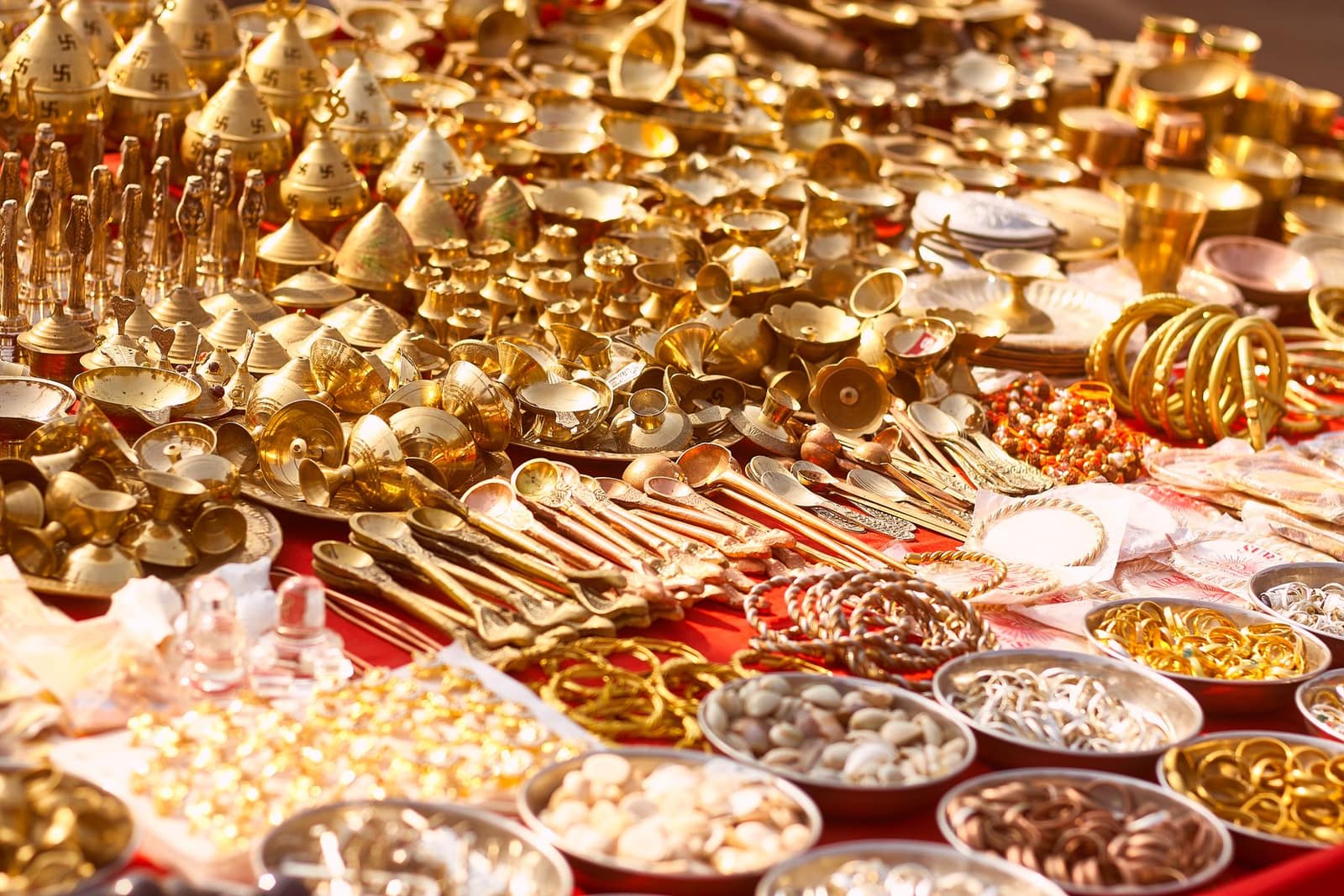 Free to exportHandicraftsBrass and art metalwareMoradabad-style brass décor, lamps, bells and tableware for gift and home-décor buyers.HS8306Exports 2025-26US$ 36.4 mn ↑11.4%
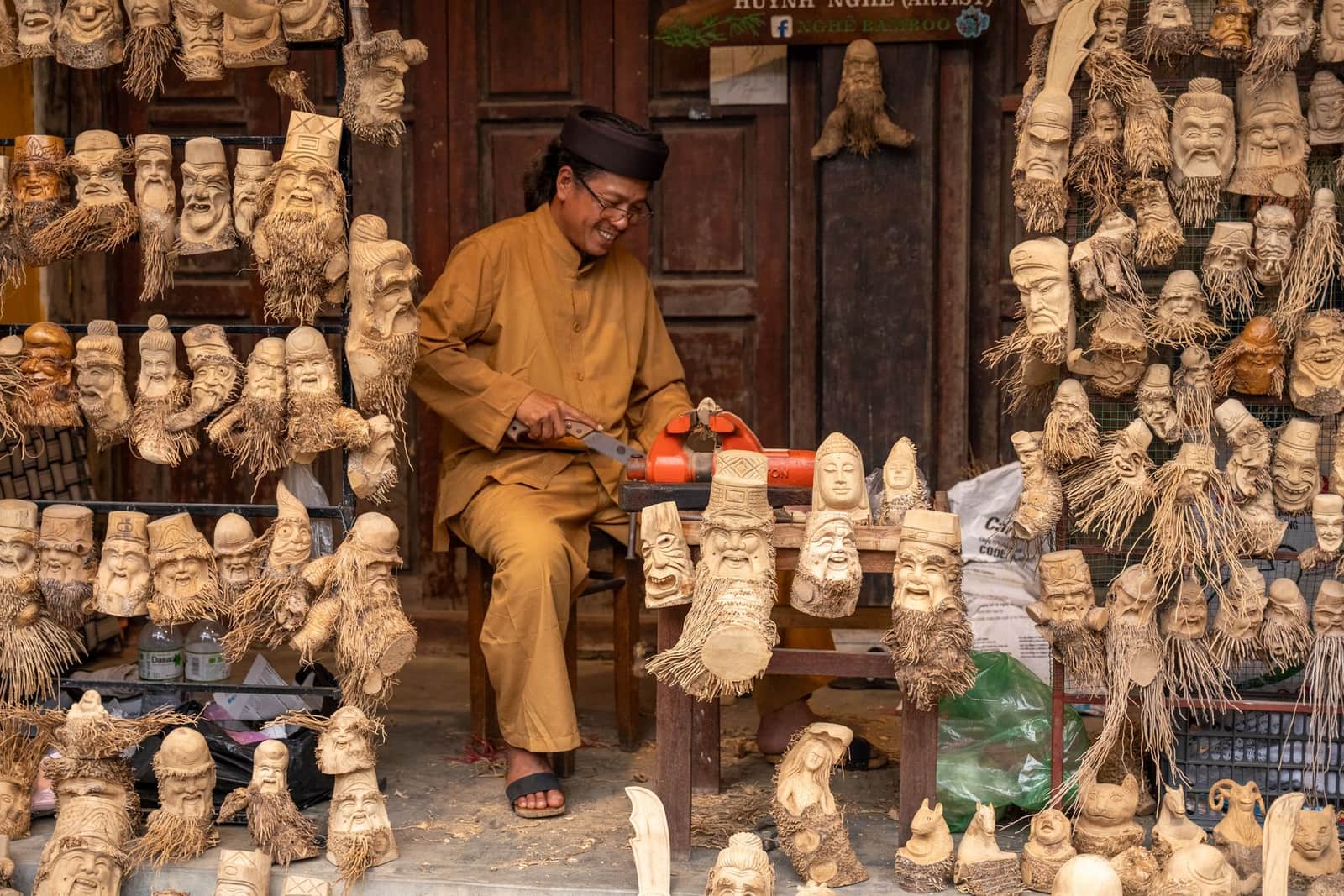 Free, with conditionsHandicraftsWooden handicraftsCarved, inlaid and turned wooden décor, boxes and kitchenware from Saharanpur, Jodhpur and Channapatna.HS4420Exports 2025-26US$ 11.5 mn ↓9%
 Free to exportHandicraftsGlasswareTumblers, tableware and decorative glass from Firozabad and other centres; UAE and USA lead.HS7013Exports 2025-26US$ 55.9 mn ↑47.1%