


Farm produce
Export wheat and meslin
Wheat export is Free again since 24 Aug 2026 after a ban from May 2022. Neighbours and the Gulf are the natural first markets.
- HS code
- 1001 Durum wheat (1001 11 seed, 1001 19 other), other wheat (1001 91 seed, 1001 99 — 1001 99 10 wheat, 1001 99 20 meslin). Flour (atta, maida) is under 1101.
- Export policy
- Free to export Free since 24 Aug 2026 for 1001 19 00 and 1001 99 10 (DGFT Notification 35/2026-27), ending the prohibition under Notification 06/2015-20 of 13 May 2022. Wheat flour has its own notifications (34/2026-27). Policy can change quickly — confirm on dgft.gov.in before you sign a contract.
- Registrations
- 5 IEC, GST and those below
- India’s exports, 2025-26
- US$ 10.3 mn to 6 countries
What is exported
Wheat exports were banned from 13 May 2022 except to meet other governments’ food-security requests, so 2025-26 exports were only about US$ 10 million, mostly to Nepal, the UAE and Bhutan (TradeStat; APEDA also lists Iraq). In 2026 the government first allowed 25 lakh tonnes, then made wheat Free. Buyers are flour mills and government grain agencies in South Asia, the Gulf and East Africa.

Varieties, grades and forms
- Bread wheat (aestivum) — HD 2967, PBW 343, WH 542 and othersAPEDA lists many varieties; buyers specify protein and test weight rather than variety.
- Durum wheat — PDW 233 and othersHard, amber grain for pasta and semolina.
- Sharbati and Lokwan (MP)Premium table wheat from Madhya Pradesh, popular with diaspora atta brands.
Where it is grown or made
- Uttar Pradesh, Punjab and HaryanaThe largest procurement belt; dry ports at Ludhiana and Dadri.
- Madhya PradeshSehore, Vidisha, Indore, Ujjain — close to Kandla and Mundra by rail.
- Rajasthan, Gujarat and BiharKota, Saurashtra; Bihar supplies Nepal by road.
The quality buyers ask for
- Moisture
- FSSAI sets a maximum for wheat; buyers often ask for about 12–13%
- Protein and test weight
- Set by the buyer (for example protein on dry basis, kg per hectolitre)
- Defects
- Foreign matter, damaged, shrivelled and broken grains, other grains — maxima in the contract
- Plant health
- Many importers require freedom from Karnal bunt and live insects
Certificates
- APEDA RCMCRequiredRegistration with APEDA, issued as an RCMC on the DGFT portal; not needed for consignments up to ₹3 lakh FOB since 15 Sep 2026.
- Phytosanitary certificateRequiredIssued by Plant Quarantine (DPPQS) for each consignment after inspection; apply on PQMS.
- FSSAI licenceRequiredCentral licence from FSSAI for the premises where food is packed or stored for export.
- Pre-shipment inspection certificateOften askedQuality and weight certificate by an independent agency named in the contract.
Shipping, storage and shelf life
A 20-ft container typically carries about 25–26 tonnes in bags; large contracts go in bulk vessels.
Kandla and Mundra for bulk; rail and road to Nepal, Bhutan and Bangladesh.
Dry, fumigated, pest-free warehouses; keep moisture low.
A year or more if dry and protected from insects.
What goes on the pack and carton
- Bulk bags and cartons: product and grade, crop year, lot number, net and gross weight, "Product of India", exporter name and the buyer’s shipping marks, matching the invoice and packing list exactly.
Use a laboratory on APEDA’s list of recognised laboratories (apeda.gov.in → Recognised Organisations), an FSSAI-notified lab, or a lab accredited by NABL for the test (nabl-india.org). Ask the buyer which reports they accept before sending samples.
Benefits of exporting this product
- RoDTEP refund on this line
Wheat (1001 99 10), meslin and durum lines carry 0.9% of FOB with no cap. Now that wheat is Free, the refund applies to new shipments. Rate as listed in Appendix 4R (w.e.f. 10 Oct 2024); DGFT Notification 41/2026-27 keeps the rates in force on 30 Sep 2026 unchanged until 31 Dec 2026. Check your exact 8-digit line on dgft.gov.in before you price.
DGFT — Appendix 4R, RoDTEP schedule for DTA exports w.e.f. 10 Oct 2024 (Notification No. 32, 30 Sep 2024) ↗ - APEDA support (Bharat Krishi Niryat Yojana)
APEDA’s financial assistance scheme for 2026-27 to 2030-31 helps registered exporters, FPOs and processors with packhouses, cold chain, testing, quality systems and market development. Read the component conditions before you spend.
APEDA — Bharat Krishi Niryat Yojana 2026-27 to 2030-31, operational guidelines (6 Oct 2026) ↗
Where to register
- APEDARegistration-cum-Membership Certificate (RCMC) for APEDA-scheduled products. Apply on the DGFT portal after you have your IEC.dgft.gov.in ↗
- Plant Quarantine (DPPQS)Phytosanitary certificate for each consignment of plant produce, applied for online on PQMS. Some markets also want the packhouse or processing unit registered.pqms.cgg.gov.in ↗
- FSSAIFood business licence. FSSAI puts food exporters under the Central licence; apply on FoSCoS for the premises you pack from.foscos.fssai.gov.in ↗
Quality and checks
- A phytosanitary certificate from Plant Quarantine for every consignment; some markets add treatment or pest-free-area conditions — check the importing country’s rules first.
- Buyers set moisture, protein, test weight, falling number, gluten, damaged and foreign grains; Karnal bunt freedom is a common phytosanitary demand.
- Pesticide residues must meet the destination country’s MRLs; check them in APEDA’s International Pesticide MRL Database before you buy the crop.
- Mycotoxins (deoxynivalenol, aflatoxin) and fumigant residues; get an independent inspection agency to sample at loading.
Start with containerised wheat in 50 kg bags to a flour mill in Nepal, Bhutan or the Gulf, priced FOB, with pre-shipment inspection by an agency the buyer names. Since 15 September 2026, a consignment worth up to ₹3 lakh FOB does not need an RCMC (DGFT Notification 36/2026-27); registrations required by a law still apply.
Where new exporters go wrong
- Signing long contracts without a policy clause — wheat policy changed four times between 2022 and 2026.
- Mixing lots of different protein or moisture in one shipment; bulk buyers sample by hold or container.
Documents this product needs
Schemes that apply
Sources (6)
- DGFT Notification 35/2026-27 (24 Aug 2026) — export policy of wheat revised from Prohibited to Free
- DGFT Notification 13/2026-27 (27 Apr 2026) — export of additional 25 LMT of wheat permitted
- PIB — Government approves wheat exports and allows additional wheat product and sugar exports (13 Feb 2026)
- APEDA — Wheat product profile (varieties, states, 2025-26 destinations)
- Department of Commerce — TradeStat, India’s exports by commodity and country (2025-26)
- DGFT Notification 36/2026-27 (15 Sep 2026) — no RCMC needed for consignments up to ₹3 lakh FOB
Trade data
Indian wheat and meslin exports in numbers
From the Department of Commerce’s TradeStat, country by country. US$, Indian financial years (April–March).
- Exports in 2025-26
- US$ 10.3 mn -55.2% a year on average, 2020-21 to 2025-26
- Change from 2024-25
- ↑ +406.9% US$ 2 mn → US$ 10.3 mn
- Buyer countries
- 6
- Average export price
- US$ 0.33 per kg · 31,185 tonnes shipped · US$ 0.57 the year before
The price cycle
India’s average export price per kg each year (total value ÷ total quantity). Highest in 2024-25, lowest in 2020-21 — a 116% swing between them. Keep this swing in mind when you quote.
What next: a projection from the trend
The past trend carried forward — not a forecast by any authority. Sudden changes in policy, prices or demand are not in it.
Likely range US$ 26k to US$ 5.7 mn.
- Trend
- -71.7% a year
- Fit (R²)
- 0.69
- Based on
- 6 years of official figures
Method: a straight line through the logarithm of yearly exports (log-linear regression); range = ±1 standard error.
Biggest buyer countries
By value in 2025-26. Change is against 2024-25.
Where demand is rising and falling
Only countries that buy at least US$ 1 million or 1% of India’s exports of this product. Change from 2024-25 to 2025-26.
↑ High demand
- NepalUS$ 110k → US$ 8 mn↑+7,200%
- United Arab EmiratesUS$ 1.2 mn → US$ 1.9 mn↑+60.5%
↓ Low demand
No sizeable country falls in this list this year.
Which forms sell, and at what price
India’s exports by 8-digit tariff line, 2025-26. Average price = total value ÷ total quantity (TradeStat): the average of every shipment on that line, not the price of any one deal.
| Tariff line | Value 2025-26 | Change | Quantity | Average price |
|---|---|---|---|---|
Cereals, wheat and meslin, other than durum wheat, other than seed — wheat1001 99 10 | US$ 10.2 mn | ↑+646.7% | 31,130 tonnes | US$ 0.33 per kgwas US$ 0.51 |
Cereals, wheat and meslin, other than durum wheat, seed — seed1001 91 00 | US$ 50k | ↓-91.1% | 52 tonnes | US$ 0.97 per kgwas US$ 0.74 |
Cereals, wheat and meslin, durum wheat, other than seed — durum wheat; other1001 19 00 | US$ 10k | — | 2.9 tonnes | US$ 3.39 per kg |
Cereals, wheat and meslin, durum wheat, seed — seed1001 11 00 | US$ 0 | ↓-100% | 1.0 tonnes | — |
The world market
Each country’s own recorded exports and imports in UN Comtrade, 2023 (the latest year nearly every country has reported).
- World imports
- US$ 64.1 bn 2023
- India among exporters
- #34 of 102 countries
- India’s share of world exports
- 0.1% US$ 48.2 mn
- Left for others to win
- US$ 49.8 bn exported by other countries
Top exporters — your competitors
- 1AustraliaUS$ 9.28 bn 18.6%
- 2CanadaUS$ 8.85 bn 17.8%
- 3USAUS$ 6.13 bn 12.3%
- 4FranceUS$ 4.01 bn 8%
- 5UkraineUS$ 2.94 bn 5.9%
- 6RomaniaUS$ 2.23 bn 4.5%
- 7GermanyUS$ 1.98 bn 4%
- 8PolandUS$ 1.96 bn 3.9%
- 9KazakhstanUS$ 1.85 bn 3.7%
- 10BulgariaUS$ 1.68 bn 3.4%
Biggest buyers in the world
- 1ChinaUS$ 4.31 bn 6.7%
- 2EgyptUS$ 3.8 bn 5.9%
- 3IndonesiaUS$ 3.76 bn 5.9%
- 4TürkiyeUS$ 3.54 bn 5.5%
- 5ItalyUS$ 3.1 bn 4.8%
- 6SpainUS$ 2.83 bn 4.4%
- 7NigeriaUS$ 2.19 bn 3.4%
- 8PhilippinesUS$ 2 bn 3.1%
- 9JapanUS$ 1.94 bn 3%
- 10MoroccoUS$ 1.91 bn 3%
Opportunity: what these countries buy from the world, and from India
Each country’s own recorded imports in UN Comtrade, latest year it has reported. The long light part of each bar is demand other countries are filling today.
TradeStat’s 2023-24 quantities are double-counted, so that year is left out of the price. Sources: TradeStat — Export Import Data Bank, Department of Commerce · UN Comtrade database (United Nations Statistics Division) · Figures taken 29 October 2026.
Step by step
How to export wheat and meslin
India is the world’s second-largest wheat producer but has usually exported only in surplus years. After the May 2022 ban, exports were limited to government-to-government supplies until 2026, when 25 lakh tonnes were allowed and then the policy became Free (24 Aug 2026). Russia, the EU, Canada, Australia, Ukraine and Argentina dominate world trade. India’s natural markets are Nepal, Bangladesh, Sri Lanka, the Gulf and East Africa, where freight from Kandla is short.
- 01Confirm policy
Check DGFT for the current wheat policy before quoting — it changed four times between 2022 and 2026.
- 02Register
Get your IEC and APEDA RCMC.
- 03Source and clean
Buy from mandis or aggregators in the procurement season; clean and grade to the contract.
- 04Inspection and phytosanitary certificate
Apply on PQMS; Plant Quarantine inspects the lot (and fumigation or treatment if the importing country requires it) before issuing the certificate.
- 05Agree specification, price and payment
Put grade, tests, packing, Incoterm (FOB or CIF), shipment period and payment (advance, LC or documents against payment) in a written contract. Cover the buyer with ECGC if you give credit.
- 06File the shipping bill and ship
Your customs broker files the shipping bill on ICEGATE with the invoice and packing list. After customs clearance the line issues the bill of lading; get the certificate of origin from the right agency if the buyer needs a trade-agreement rate.
- 07Get paid and close the file
Send original documents through your bank (or to the buyer if paid in advance). When the money arrives, get the e-BRC and claim RoDTEP and drawback where they apply.
Questions
Questions about exporting wheat and meslin
Can I export wheat now?
Is wheat flour also free?
Which countries buy Indian wheat?
What is Karnal bunt?
What RoDTEP does wheat get?
Sources (6)
- DGFT Notification 35/2026-27 (24 Aug 2026) — export policy of wheat revised from Prohibited to Free
- DGFT Notification 13/2026-27 (27 Apr 2026) — export of additional 25 LMT of wheat permitted
- PIB — Government approves wheat exports and allows additional wheat product and sugar exports (13 Feb 2026)
- APEDA — Wheat product profile (varieties, states, 2025-26 destinations)
- DGFT — Appendix 4R, RoDTEP schedule for DTA exports w.e.f. 10 Oct 2024 (Notification No. 32, 30 Sep 2024)
- Plant Quarantine (DPPQS) — PQMS portal for phytosanitary certificates
Who buys Indian wheat and meslin
All countries →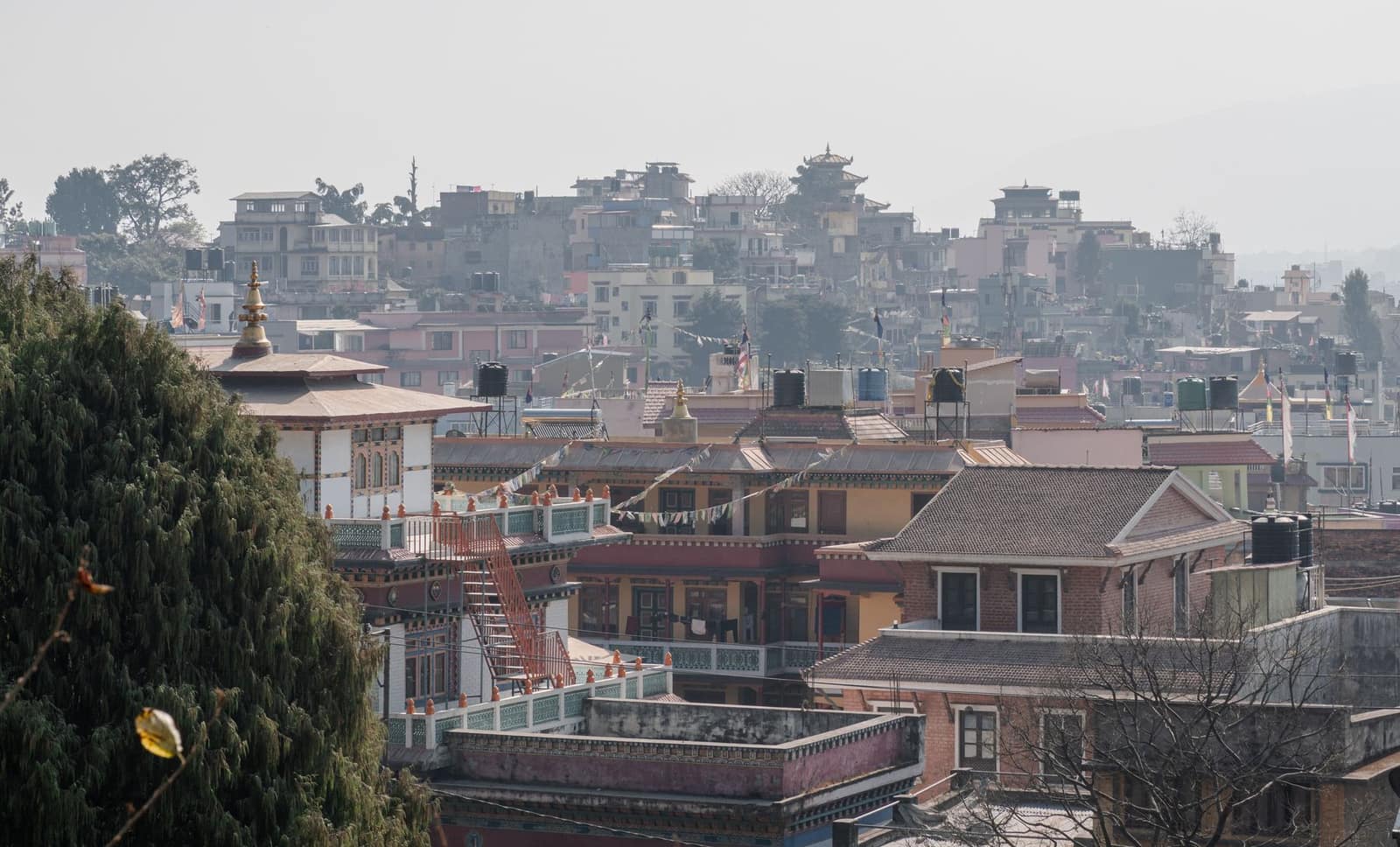 SAFTANPRKathmanduNepalOpen land border, rupee payments and a market that relies on Indian goods — an easy first market by road.From India 2025-26US$ 7.45 bn
 CEPAAEDAbu DhabiUnited Arab EmiratesIndia's biggest Gulf buyer and a re-export hub for the Middle East and Africa. CEPA in force since 2022.From India 2025-26US$ 37.4 bn
 SAFTABTNThimphuBhutanDuty-free, rupee-based neighbour market reached by road from West Bengal and Assam.From India 2025-26US$ 1.25 bn
More in farm produce
All products → Free, with conditionsFarm produceBasmati riceIndia’s top agri export by value. Free to export, but every contract must be registered with APEDA first.HS1006.30Exports 2025-26US$ 5.67 bn ↓4.6%
 Free, with conditionsFarm produceNon-basmati riceHigh-volume staple sold mainly to Africa and Bangladesh. Export reopened in 2024–25, but contracts must now be registered with APEDA.HS1006.30Exports 2025-26US$ 5.86 bn ↓10.2%
 Free to exportFarm produceSpicesWhole, ground and blended spices. Spices Board registration (CRES) is compulsory; residue and ethylene oxide tests keep buyers.HS0904–0910Exports 2025-26US$ 3.12 bn ↓5.1%
 Free to exportFarm produceChilliIndia’s largest spice export by volume. Dried red chilli goes to China, Thailand and Bangladesh; aflatoxin is the key test.HS0904.21Exports 2025-26US$ 1.1 bn ↓12.9%