

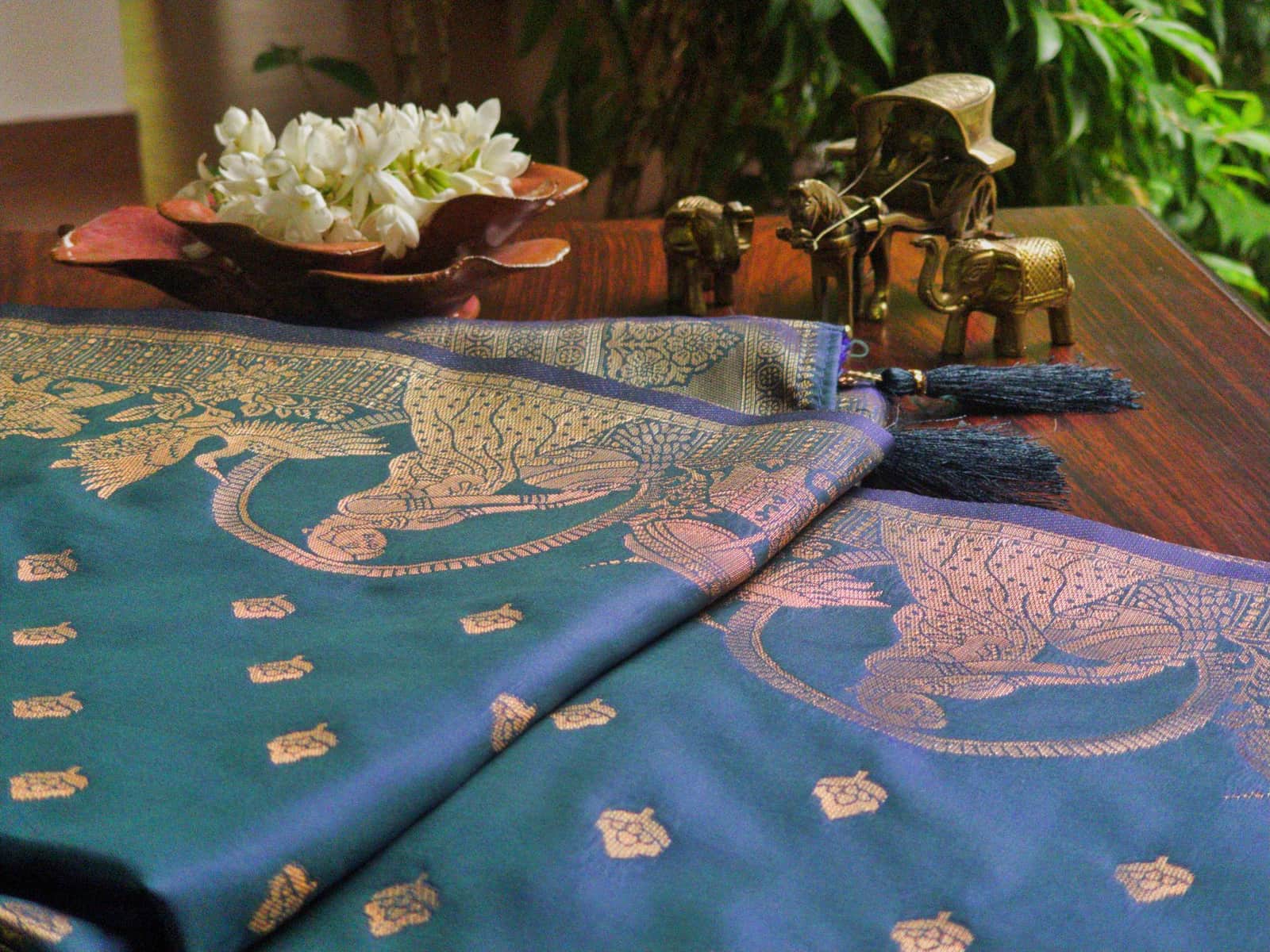
Textiles & apparel
Export silk yarn and fabrics
Mulberry, tasar, eri and muga silk yarn and fabrics — Banaras, Kanchipuram, Mysore and Bhagalpur weaves — for fashion and furnishing buyers.
- HS code
- 5004 Silk yarn not for retail sale (5004), yarn spun from silk waste (5005), silk yarn for retail sale (5006) and woven silk fabrics (5007).
- Export policy
- Free to export Free under ITC(HS) Schedule 2; no licence is needed. Confirm the 8-digit line on the DGFT ITC(HS) search before you ship.
- Registrations
- 3 IEC, GST and those below
- India’s exports, 2025-26
- US$ 222 mn to 71 countries
What is exported
India is the world’s second-largest silk producer and the only country that produces all four commercial silks: mulberry, tasar, eri and muga. Karnataka, Andhra Pradesh, Tamil Nadu, West Bengal, Assam and Jharkhand produce the raw silk; weaving centres such as Varanasi, Kanchipuram, Bhagalpur and Bengaluru turn it into fabric. Silk fabrics, scarves and furnishings sell to the USA, the UAE, Europe and the UK.

Varieties, grades and forms
- Mulberry silk yarn and fabricBivoltine and multivoltine silk from Karnataka and Andhra Pradesh.
- Tasar silkWild silk from Jharkhand, Chhattisgarh and Bhagalpur, with a natural gold colour.
- Eri silkSpun “peace silk” from Assam, used for shawls and stoles.
- Muga silkGolden silk found only in Assam.
- Silk blends, noil and dupion fabricsTextured fabrics for furnishings and fashion.
Where it is grown or made
- KarnatakaRamanagara, Mysuru and Bengaluru — mulberry silk and Mysore silk.
- Uttar PradeshVaranasi — brocades and silk sarees.
- Tamil Nadu and Andhra PradeshKanchipuram, Arani and Salem; Dharmavaram.
- Bihar, Jharkhand, West Bengal and AssamBhagalpur (tasar), Murshidabad and Malda, Sualkuchi (muga and eri).
The quality buyers ask for
- Fibre
- Mulberry, tasar, eri or muga; blends declared by percentage
- Weight
- Momme or g/m² for fabric; denier for yarn
- Weave
- Plain, satin, crepe, brocade, jacquard, noil or dupion
- Colour fastness
- Washing, rubbing, light and perspiration, usually grade 3–4 or better (ISO 105 / AATCC methods)
- Restricted substances
- No banned azo dyes; formaldehyde, pH and heavy metals within REACH and buyer limits
Certificates
- RCMCRequiredRegistration with the export promotion council or board for your product (not needed up to ₹3 lakh FOB per consignment since 15 Sep 2026).
- Silk MarkOften askedQuality label for pure silk from the Silk Mark Organisation of India (Central Silk Board).
- Handloom Mark / India Handloom BrandOften askedMinistry of Textiles labels for genuine handloom products.
- GOTSOften askedGlobal Organic Textile Standard, for goods sold as organic cotton or silk.
- OEKO-TEX STANDARD 100Often askedTests the finished textile for harmful substances; widely asked for by retailers.
Shipping, storage and shelf life
Mostly air freight or courier for high-value lots; LCL sea freight for larger orders.
Air from Bengaluru, Chennai, Delhi, Varanasi and Kolkata.
Cool, dry, dark storage; protect from moths and humidity.
What goes on the pack and carton
- USA: fibre content by percentage, country of origin and the manufacturer’s name or RN number on a permanent label (FTC Textile Act rules); care label for consumer goods.
- EU: fibre names and percentages under Regulation (EU) 1007/2011, in the language of the selling country; care symbols are commonly expected.
- Use the Silk Mark or Handloom Mark only if the product is certified under them.
The Central Silk Board runs silk testing and conditioning houses and the Silk Mark Organisation tests purity (csb.gov.in); textile research associations and NABL-accredited labs test fastness and fibre content (nabl-india.org).
Benefits of exporting this product
- RoDTEP: 1.6% of FOB
Tariff item 5007 10 00 to 5007 90 90 (woven silk fabrics, including handloom) earns 1.6% of FOB value, capped at ₹12.3 per square metre, as a duty credit scrip on ICEGATE (Appendix 4R). Silk yarns (5004 to 5006) earn 0.5%. Rates continue to 31 Dec 2026 (DGFT Notification 41/2026-27). Confirm your exact 8-digit line on DGFT before pricing an order.
DGFT — Appendix 4R, RoDTEP schedule for DTA exports w.e.f. 10 Oct 2024 (Notification 32/2024-25) ↗ - Registered GI tags
Mysore Silk, Kancheepuram Silk, Arani Silk, Bhagalpur Silk, Muga Silk of Assam, Bodo Eri Silk, Murshidabad Silk and Malda Nistari Silk Yarn are registered Geographical Indications. Only registered producers and authorised users may sell under these names, which helps genuine makers stand out and earn a better price.
IP India (Geographical Indications Registry) — Registration details of Geographical Indications ↗
Where to register
- Indian Silk Export Promotion Council (ISEPC)RCMC for natural silk and silk-blend yarns, fabrics, made-ups, garments and carpets under Appendix 2T.silkepc.org ↗
Quality and checks
- Silk Mark label (Silk Mark Organisation of India, under the Central Silk Board) as proof of pure silk, often asked for by buyers.
- Fibre content, colour fastness to washing, rubbing and light, and weight in momme or g/m².
- Zari content declared correctly; real gold or silver zari may change the customs line.
Work with a Silk Mark-authorised weaver cooperative in Varanasi, Bhagalpur or Kanchipuram, and send swatch books to boutique fabric importers and interior designers. Courier samples, then ship by air in small lots. Since 15 September 2026, a consignment worth up to ₹3 lakh FOB does not need an RCMC (DGFT Notification 36/2026-27). Registrations that a law requires for the product still apply.
Where new exporters go wrong
- Selling silk-polyester blends as pure silk — a lab test exposes it and ends the relationship.
- Poor colour fastness on handloom silk, causing returns from retailers.
Documents this product needs
Schemes that apply
Sources (5)
- DGFT — ITC(HS) export policy search (Schedule 2)
- Indian Silk Export Promotion Council (ISEPC)
- Central Silk Board — Ministry of Textiles
- DGFT — Appendix 4R, RoDTEP schedule for DTA exports w.e.f. 10 Oct 2024 (Notification 32/2024-25)
- IP India (Geographical Indications Registry) — Registration details of Geographical Indications
Trade data
Indian silk yarn and fabrics exports in numbers
From the Department of Commerce’s TradeStat, country by country. US$, Indian financial years (April–March).
- Exports in 2025-26
- US$ 222 mn +30.5% a year on average, 2020-21 to 2025-26
- Change from 2024-25
- ↑ +73% US$ 128 mn → US$ 222 mn
- Buyer countries
- 71
- Average export price
- US$ 10.66 per kg · 20,834 tonnes shipped · US$ 11.70 the year before
The price cycle
India’s average export price per kg each year (total value ÷ total quantity). Highest in 2020-21, lowest in 2022-23 — a 26% swing between them. Keep this swing in mind when you quote.
What next: a projection from the trend
The past trend carried forward — not a forecast by any authority. Sudden changes in policy, prices or demand are not in it.
Likely range US$ 196 mn to US$ 385 mn.
- Trend
- +25.4% a year
- Fit (R²)
- 0.82
- Based on
- 6 years of official figures
Method: a straight line through the logarithm of yearly exports (log-linear regression); range = ±1 standard error.
Biggest buyer countries
By value in 2025-26. Change is against 2024-25.
Where demand is rising and falling
Only countries that buy at least US$ 1 million or 1% of India’s exports of this product. Change from 2024-25 to 2025-26.
↑ High demand
- United Arab EmiratesUS$ 76.5 mn → US$ 172 mn↑+125.1%
- FranceUS$ 2.3 mn → US$ 3.2 mn↑+41%
- United States of AmericaUS$ 12.7 mn → US$ 14.3 mn↑+12.4%
↓ Low demand
Which forms sell, and at what price
India’s exports by 8-digit tariff line, 2025-26. Average price = total value ÷ total quantity (TradeStat): the average of every shipment on that line, not the price of any one deal.
| Tariff line | Value 2025-26 | Change | Quantity | Average price |
|---|---|---|---|---|
Items other thn sarees contng >85% by weight of slk etc..5007 20 90 · Silk, woven fabrics, containing 85% or more by weight of silk or of silk waste other than noil silk | US$ 202 mn | ↑+92.6% | 18.5 mn m² | US$ 10.93 per m²was US$ 11.47 |
Sarees contng >=85% by weight of slk/slk wst, other than noil slk.5007 20 10 · Silk, woven fabrics, containing 85% or more by weight of silk or of silk waste other than noil silk | US$ 7.1 mn | ↓-25.1% | 701k m² | US$ 10.09 per m²was US$ 12.87 |
Silk, woven fabrics in heading no. 5007 — other fabrics5007 90 90 | US$ 4.9 mn | ↓-5.8% | 1.2 mn m² | US$ 4.00 per m²was US$ 8.07 |
Other woven fabrics of handloom5007 90 10 · Silk, woven fabrics in heading no. 5007 | US$ 2.2 mn | ↓-20.1% | 209k m² | US$ 10.62 per m²was US$ 12.03 |
Yrn spn frm slk wst other thn noil slk contng >=85% by weight of slk wst.5005 00 11 · Silk, yarn spun from silk waste, not put up for retail sale | US$ 2 mn | ↑+18.6% | 30 tonnes | US$ 65.90 per kgwas US$ 46.45 |
Silk, yarn, not put up for retail sale — mulberry dupion silk yarn5004 00 10 | US$ 930k | ↓-1.1% | 32 tonnes | US$ 29.37 per kgwas US$ 43.61 |
Woven fabrics of noil silk5007 10 00 · Silk, woven fabrics of noil silk | US$ 680k | ↓-37% | 76k m² | US$ 8.92 per m²was US$ 13.48 |
Spun frm slk wst other than noil slk contn <85% by weight of slk5006 00 31 · Silk yarn and yarn spun from silk waste, put up for retail sale, and silk-worm gut | US$ 580k | ↑+114.8% | 3.9 tonnes | US$ 150.45 per kgwas US$ 131.90 |
Yrn spn frm noil slk contng >=85% by weight of slk wst.5005 00 12 · Silk, yarn spun from silk waste, not put up for retail sale | US$ 520k | ↑+67.7% | 25 tonnes | US$ 20.96 per kgwas US$ 20.37 |
Yrn spn frm noil slk contng <85% by weight of silk5005 00 22 · Silk, yarn spun from silk waste, not put up for retail sale | US$ 360k | ↑+350% | 25 tonnes | US$ 14.49 per kgwas US$ 15.24 |
Silk yarn and yarn spun from silk waste, put up for retail sale, and silk-worm gut — slk embroidery thread5006 00 11 | US$ 250k | ↓-30.6% | 16 tonnes | US$ 15.46 per kgwas US$ 17.87 |
Silk, yarn, not put up for retail sale — other yarn5004 00 90 | US$ 170k | ↓-79.5% | 2.5 tonnes | US$ 66.88 per kgwas US$ 59.21 |
Others-of-slk yrn and yrn spun from slk wast put up for retail sale,slk-worm gut5006 00 90 · Silk yarn and yarn spun from silk waste, put up for retail sale, and silk-worm gut | US$ 140k | ↓-6.7% | 5.6 tonnes | US$ 25.21 per kgwas US$ 29.59 |
Other slk yrn contng>=85% by weight of slk5006 00 29 · Silk yarn and yarn spun from silk waste, put up for retail sale, and silk-worm gut | US$ 120k | — | 3.8 tonnes | US$ 31.82 per kg |
The world market
Each country’s own recorded exports and imports in UN Comtrade, 2023 (the latest year nearly every country has reported).
- World imports
- US$ 1.03 bn 2023
- India among exporters
- #4 of 105 countries
- India’s share of world exports
- 6.2% US$ 80.7 mn
- Left for others to win
- US$ 1.21 bn exported by other countries
Top exporters — your competitors
- 1ChinaUS$ 528 mn 40.9%
- 2ItalyUS$ 256 mn 19.8%
- 3RomaniaUS$ 102 mn 7.9%
- 4IndiaUS$ 80.7 mn 6.2%
- 5FranceUS$ 50.9 mn 3.9%
- 6Viet NamUS$ 50.4 mn 3.9%
- 7UzbekistanUS$ 40.5 mn 3.1%
- 8JapanUS$ 26.9 mn 2.1%
- 9Rep. of KoreaUS$ 24.2 mn 1.9%
- 10BrazilUS$ 24 mn 1.9%
Biggest buyers in the world
- 1ItalyUS$ 252 mn 24.4%
- 2FranceUS$ 94.7 mn 9.2%
- 3JapanUS$ 74 mn 7.2%
- 4USAUS$ 55.2 mn 5.3%
- 5IndiaUS$ 54.8 mn 5.3%
- 6TunisiaUS$ 34 mn 3.3%
- 7Sri LankaUS$ 31.6 mn 3.1%
- 8MadagascarUS$ 31.2 mn 3%
- 9RomaniaUS$ 29.7 mn 2.9%
- 10Rep. of KoreaUS$ 27.9 mn 2.7%
Opportunity: what these countries buy from the world, and from India
Each country’s own recorded imports in UN Comtrade, latest year it has reported. The long light part of each bar is demand other countries are filling today.
TradeStat’s 2023-24 quantities are double-counted, so that year is left out of the price. Sources: TradeStat — Export Import Data Bank, Department of Commerce · UN Comtrade database (United Nations Statistics Division) · Figures taken 29 October 2026.
Step by step
How to export silk yarn and fabrics
China is the world’s largest silk producer and exporter; India is second and also a large silk consumer, importing some raw silk. India stands out for its range of wild silks (tasar, eri, muga) and its handloom traditions, which no competitor matches. Buyers are fashion, furnishing and luxury brands and diaspora retailers. Openings lie in eri “peace silk”, GI-tagged weaves and certified organic silk.
- 01Send samples and agree the spec
Send swatches or cones with test reports; fix construction, GSM or count, shade, tolerances, packing and the testing lab in the purchase order.
- 02Secure yarn
Buy raw or twisted silk yarn of consistent quality; Central Silk Board schemes support reelers and weavers.
- 03Weave and finish
Weave on handloom or powerloom, degum, dye and finish.
- 04Certify and test
Get Silk Mark labels and test fastness and fibre content.
- 05Book, stuff and file the shipping bill
Book the container, stuff it at the factory or a CFS, file the shipping bill on ICEGATE with the correct 8-digit code and the RoDTEP/RoSCTL declaration, and get the bill of lading.
- 06Get paid and close the file
Send the original documents through your bank (or to the buyer if paid in advance). Once the money arrives, get the e-BRC and claim RoDTEP, RoSCTL or drawback where they apply.
Meet buyers
Trade fairs
- Spring and autumn editionsIHGF Delhi Fair (EPCH)Greater Noidaihgfdelhifair.in ↗
- Twice a year — check datesTexworld Evolution ParisParistexworld-paris.fr.messefrankfurt.com ↗
- January (next: 12–15 January 2027) — check datesHeimtextilFrankfurtheimtextil.messefrankfurt.com ↗
- January and SeptemberMaison&ObjetParismaison-objet.com ↗
Questions
Questions about exporting silk yarn and fabrics
Which council handles silk?
What is Silk Mark?
What is peace silk?
Which GI silks can I sell?
What RoDTEP applies?
Sources (5)
- Indian Silk Export Promotion Council (ISEPC)
- Central Silk Board — Ministry of Textiles
- DGFT — Appendix 4R, RoDTEP schedule for DTA exports w.e.f. 10 Oct 2024 (Notification 32/2024-25)
- IP India (Geographical Indications Registry) — Registration details of Geographical Indications
- US FTC — Labeling requirements under the Textile and Wool Acts
Who buys Indian silk yarn and fabrics
All countries → USDWashington, D.C.United States of AmericaIndia's largest single-country export market. Strict FDA rules for food; extra 10% US duty on most goods since July 2026.From India 2025-26US$ 87.3 bn
 CEPAAEDAbu DhabiUnited Arab EmiratesIndia's biggest Gulf buyer and a re-export hub for the Middle East and Africa. CEPA in force since 2022.From India 2025-26US$ 37.4 bn
 CETAGBPLondonUnited KingdomNew CETA in force since July 2026 — most Indian goods now enter duty-free. Strong market for garments, food and engineering.From India 2025-26US$ 13.4 bn
 EURParisFranceFashion, food and design market. EU rules plus French-language labels; SIAL Paris is a key food fair.From India 2025-26US$ 7.1 bn
 EURRomeItalyManufacturing buyer of Indian leather, yarn, castings, chemicals and seafood. EU rules apply.From India 2025-26US$ 7.79 bn
More in textiles & apparel
All products →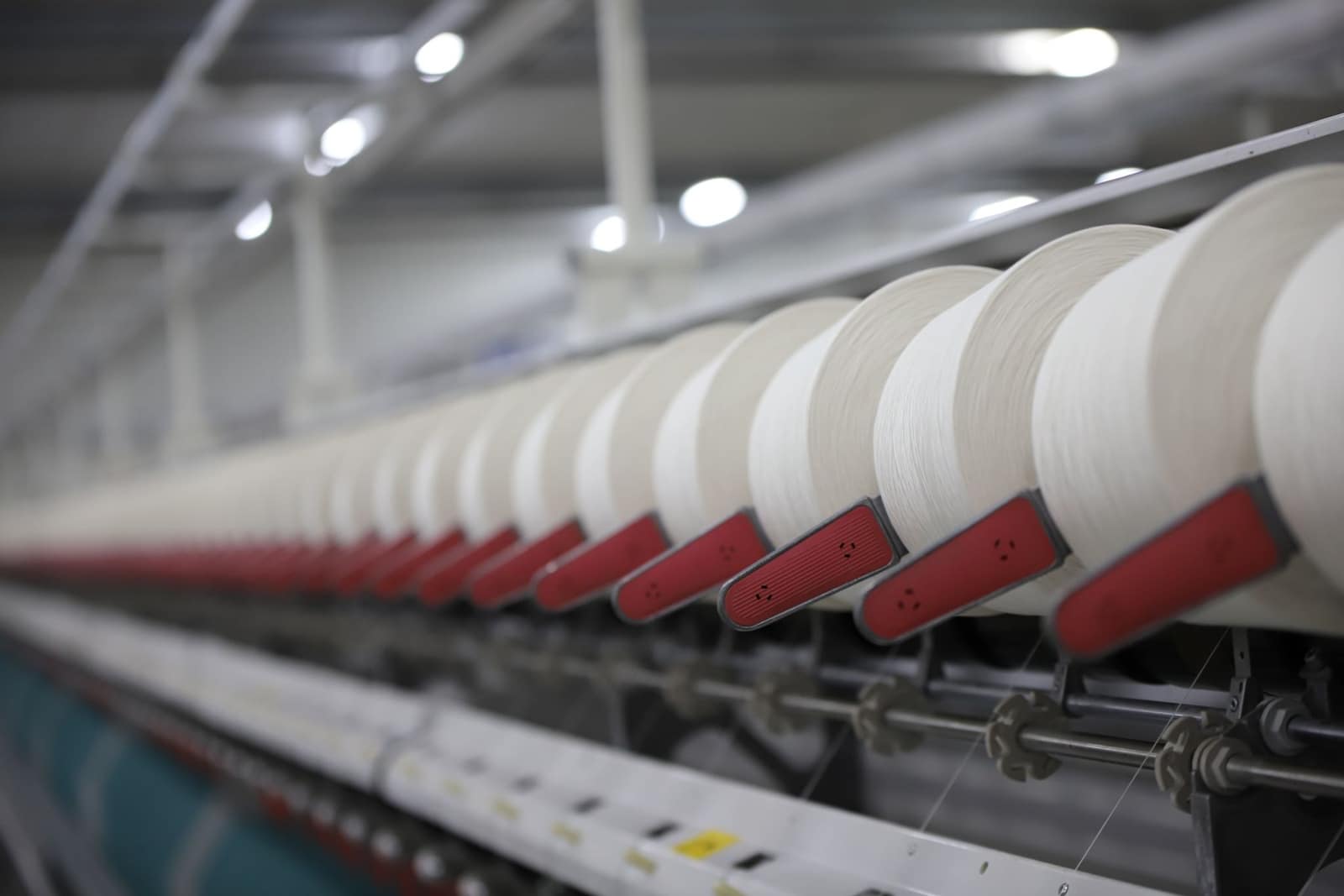 Free to exportTextiles & apparelCotton yarnBulk cotton yarn sold to weaving and knitting mills abroad; Bangladesh is by far the largest buyer.HS5205Exports 2025-26US$ 3.22 bn ↓4.1%
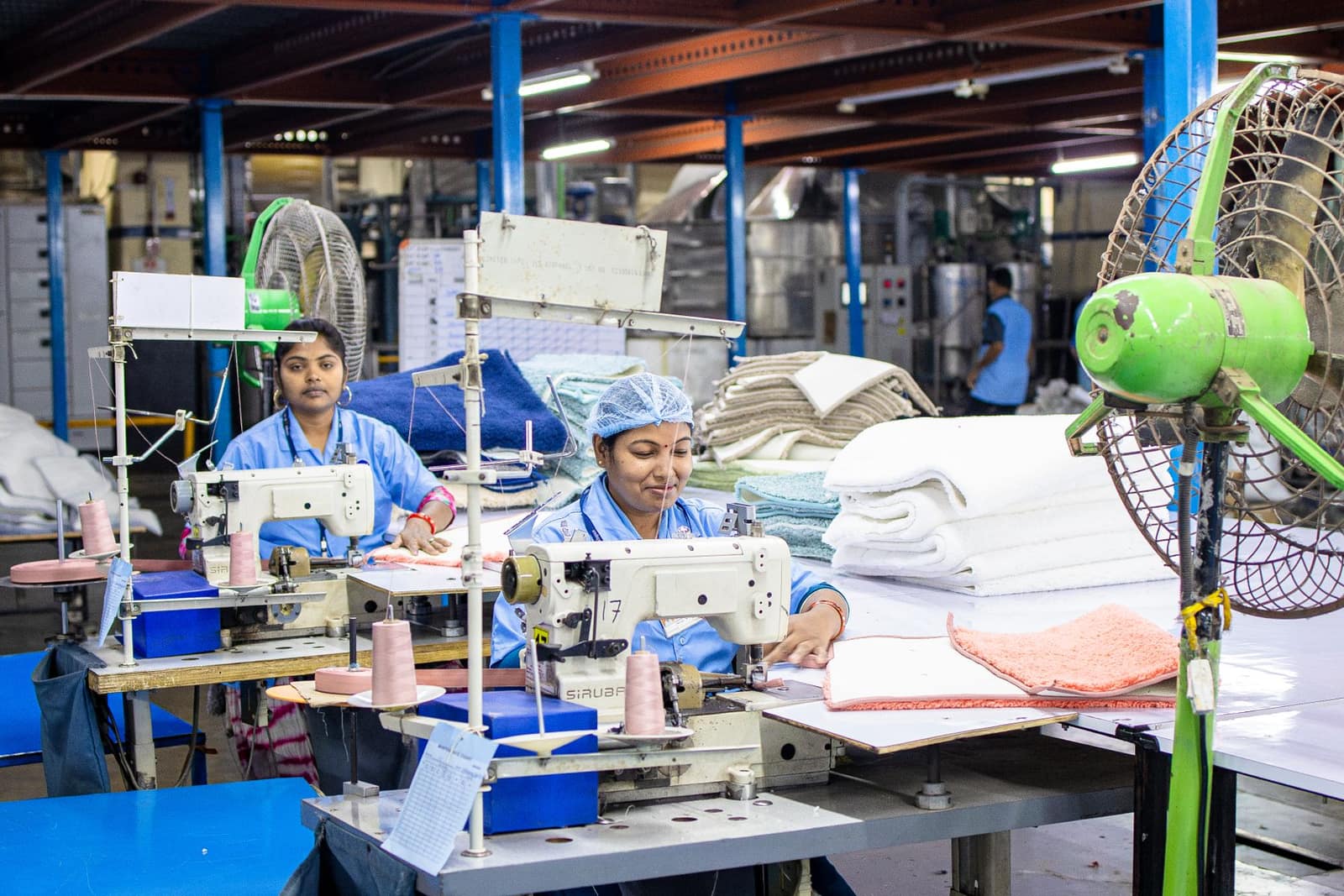 Free to exportTextiles & apparelReadymade garmentsKnitted and woven clothing for brands and retailers; the USA, UK, UAE and the EU are the big buyers.HS6109.10Exports 2025-26US$ 15.8 bn ↓1.2%
 Free to exportTextiles & apparelHome textiles (bed, bath and kitchen linen)Bedsheets, towels and kitchen linen for retailers; the USA buys more than half of India's exports.HS6302Exports 2025-26US$ 2.01 bn ↓5.7%
 Free to exportTextiles & apparelHandloom productsHand-woven fabrics, stoles and furnishings; buyers pay for craft, story and certified handloom origin.HS6304Exports 2025-26US$ 1.75 bn ↓8.6%