

Processed food
Export jaggery (gur)
Cane jaggery blocks and powder, mainly to Africa and Indonesia. Keep it separate from sugar, whose export is controlled.
- HS code
- 1701.13 Non-centrifugal cane sugar, which includes jaggery. Confirm the exact 8-digit jaggery line on ITC(HS) Schedule 2; white and raw sugar are on other lines.
- Export policy
- Free to export Jaggery is Free as far as we could confirm, while white and raw sugar exports are restricted; organic sugar is allowed up to 50,000 tonnes a year (DGFT Notification 51/2025-26). Confirm the jaggery line on DGFT before shipping.
- Registrations
- 4 IEC, GST and those below
- India’s exports, 2025-26
- US$ 24.4 mn to 49 countries
What is exported
India makes more than 70% of the world’s jaggery. APEDA reports jaggery and confectionery exports together: 5.50 lakh tonnes worth US$ 446 million in 2025-26, with Indonesia, Benin, Kenya, Tanzania and Cameroon as top destinations. Jaggery ships as blocks, cubes and powder, and organic jaggery is a niche for Europe and North America.
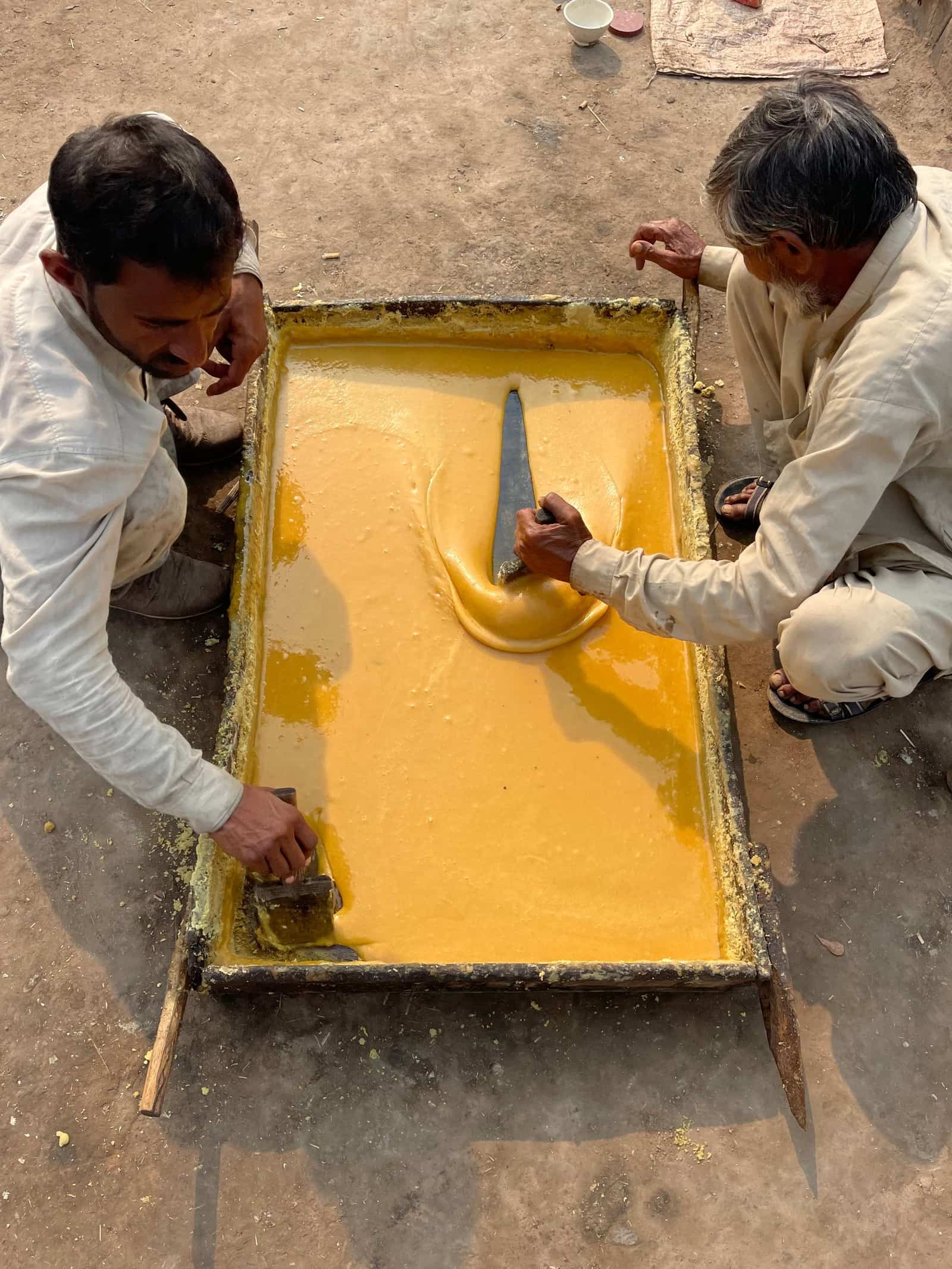
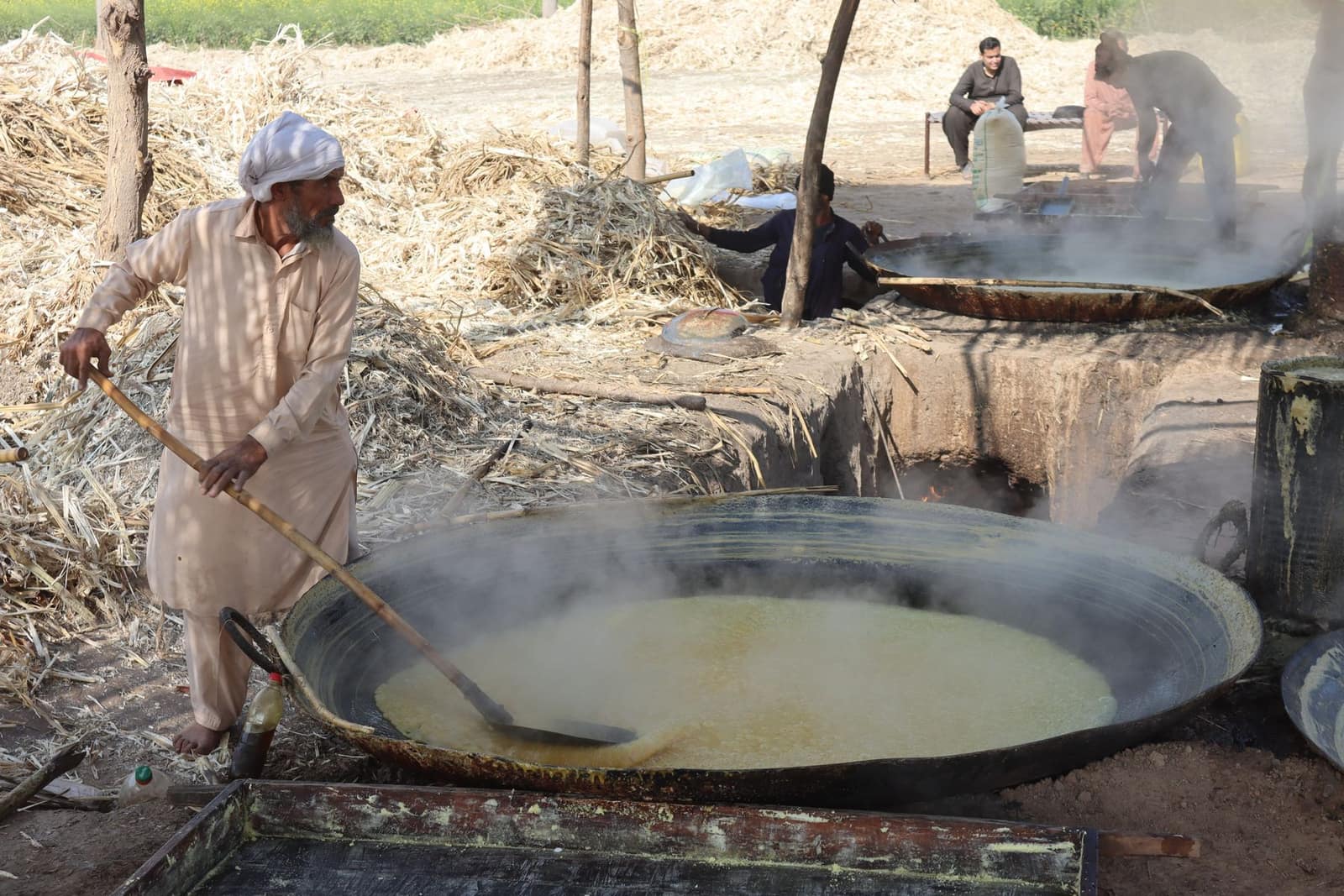
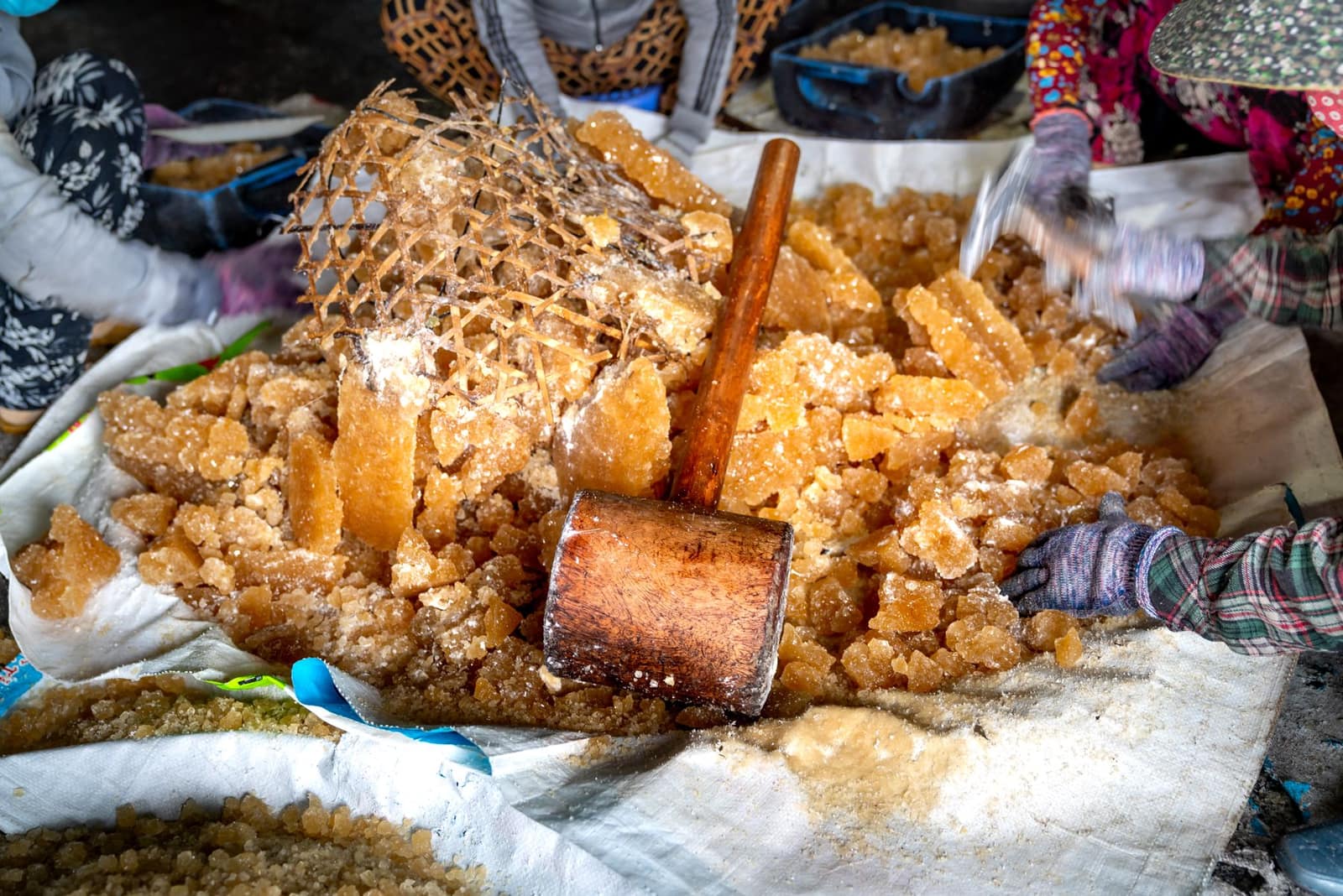
Varieties, grades and forms
- Solid cane jaggery (blocks, cubes)Traditional 1 kg blocks and small cubes.
- Jaggery powderFree-flowing granules for retail and food makers.
- Organic jaggeryNPOP-certified, sold to Europe and North America.
- Palmyra jaggeryFrom palm sap, a niche product from Tamil Nadu.
Where it is grown or made
- Uttar PradeshMuzaffarnagar, Hapur and Meerut — large jaggery markets.
- MaharashtraKolhapur (Kolhapur Jaggery GI) and Sangli.
- KarnatakaMandya and Belagavi.
- KeralaMarayoor (Idukki) and Central Travancore — both GI jaggeries.
The quality buyers ask for
- Standards
- FSSAI standard for jaggery (gur); AGMARK jaggery grades (Jaggery Grading and Marking Rules, as amended 2012)
- Moisture
- Low moisture is essential; damp jaggery melts, ferments and grows mould. Agree the limit with the buyer
- Colour and form
- Golden to dark brown; blocks, cubes, powder or liquid
- Clarificants
- Sulphur dioxide must stay within FSSAI and importer limits; “chemical-free” lots use only plant clarificants
- Cleanliness
- No sand, fibre or insects; insoluble matter tested by the lab
Certificates
- APEDA RCMCRequiredRegistration with APEDA, issued as an RCMC on the DGFT portal. Since 15 Sep 2026, a consignment up to ₹3 lakh FOB can go without it.
- FSSAI licenceRequiredCentral licence from FSSAI for the premises where the food is packed or stored for export. Apply on FoSCoS.
- Organic (NPOP / NOP / EU)Often askedNeeded only if you sell the product as organic: NPOP certification by an accredited body, plus the buyer market’s own organic rules.
- HACCPOften askedA food-safety plan that identifies hazards at each processing step and controls them. Most importers ask for it from the processing unit.
- ISO 22000 / FSSC 22000Often askedFood-safety management system certification. FSSC 22000 is recognised by GFSI, which large retailers and brand owners look for.
- HalalOften askedAsked for by many buyers in the Gulf, Malaysia and Indonesia, especially for processed and animal-origin foods. Use a body the destination recognises.
Shipping, storage and shelf life
Blocks or powder in lined cartons or bags: a 20-ft container typically holds about 18–22 tonnes.
Sea freight from Mundra, Nhava Sheva and Chennai; land routes to Nepal.
Cool and dry; heat and humidity make jaggery sweat and stick. Use moisture-proof liners and desiccants in the container.
Typically 6–12 months in moisture-proof packs.
What goes on the pack and carton
- EU retail packs (Regulation 1169/2011): name of the food, ingredients with allergens highlighted, net quantity, best-before date, storage conditions, the EU importer’s name and address, and origin where required — in the language of the country of sale.
- USA (21 CFR 101): product name, net quantity in both US and metric units, ingredients, allergens, name and place of business of the packer or distributor, Nutrition Facts unless exempt; and “Product of India” marking (19 CFR 134).
- Gulf countries: Arabic text (Arabic plus English is normal), production and expiry dates, net weight, country of origin and the importer’s details. Confirm the current rules with your importer.
- Lot or batch number on every pack and bag — FSSAI’s Labelling and Display Regulations, 2020 require it, and every importing country uses it to trace and recall.
Use a laboratory on APEDA’s list of recognised laboratories (apeda.gov.in → Quality → Recognised Organisations). For any other test, search the NABL directory (nabl-india.org) for a lab accredited for that test, or use an FSSAI-notified lab. Ask the buyer which lab reports they accept before you send samples.
Benefits of exporting this product
- RoDTEP refund on this line
Cane jaggery (1701 13 10 and 1701 14 10): 0.5% of FOB, no value cap. Rate as listed in Appendix 4R (w.e.f. 10 Oct 2024); DGFT Notification 41/2026-27 keeps the rates in force on 30 Sep 2026 unchanged until 31 Dec 2026. Check your exact 8-digit line on dgft.gov.in before you price.
DGFT — Appendix 4R, RoDTEP schedule for DTA exports w.e.f. 10 Oct 2024 (Notification No. 32, 30 Sep 2024) ↗ - Jaggery GIs
Kolhapur Jaggery, Marayoor Jaggery and Central Travancore Jaggery are registered GIs listed by APEDA.
APEDA — Catalogue on Agri and Food GI Products (APEDA scheduled) ↗ - APEDA support (Bharat Krishi Niryat Yojana)
APEDA’s financial assistance scheme for 2026-27 to 2030-31 helps registered exporters, FPOs and processors with packhouses, cold chain and treatment plants, lab testing and quality systems, and market development (trade fairs, trial shipments, brand registration, retail listing fees). Read the component conditions before you spend.
APEDA — Bharat Krishi Niryat Yojana 2026-27 to 2030-31, operational guidelines (6 Oct 2026) ↗
Where to register
- APEDARegistration-cum-Membership Certificate (RCMC) for APEDA-scheduled products. Apply on the DGFT portal after you have your IEC.dgft.gov.in ↗
- FSSAIFood business licence. FSSAI rules put food exporters under the Central licence; apply on FoSCoS and keep it valid for the premises you pack from.foscos.fssai.gov.in ↗
Quality and checks
- No added colour, hydros (sodium hydrosulphite) or washing soda — buyers and FSSAI standards reject chemically cleared jaggery.
- Moisture and sucrose content as per contract; moisture-proof packing for sea voyages.
- Microbiology and heavy metals if selling to retail chains.
Buy chemical-free jaggery from a hygienic unit in Kolhapur, Muzaffarnagar or Mandya, get it lab-tested and ship one container to an East African importer on LC, or packaged powder to Indian stores in the Gulf. Since 15 September 2026, a consignment worth up to ₹3 lakh FOB does not need an RCMC (DGFT Notification 36/2026-27). Registrations that a law requires for the product still apply.
Where new exporters go wrong
- Declaring sugar as jaggery, or jaggery under a sugar line — customs treats misclassification seriously because sugar is restricted.
- Jaggery sweating and melting in a hot container; use moisture barriers and avoid summer loading without protection.
Documents this product needs
Schemes that apply
Sources (4)
- APEDA — Jaggery and Confectionery profile (exports and destinations 2025-26)
- DGFT Notification 51/2025-26 (29 Dec 2025) — export of 50,000 MT organic sugar per year
- APEDA — DGFT notifications for APEDA products
- DGFT Notification 36/2026-27 (15 Sep 2026) — no RCMC needed for consignments up to ₹3 lakh FOB
Trade data
Indian jaggery (gur) exports in numbers
From the Department of Commerce’s TradeStat, country by country. US$, Indian financial years (April–March).
- Exports in 2025-26
- US$ 24.4 mn -8.1% a year on average, 2020-21 to 2025-26
- Change from 2024-25
- ↓ -55.9% US$ 55.4 mn → US$ 24.4 mn
- Buyer countries
- 49
- Average export price
- US$ 0.69 per kg · 35,377 tonnes shipped · US$ 0.63 the year before
The price cycle
India’s average export price per kg each year (total value ÷ total quantity). Highest in 2025-26, lowest in 2020-21 — a 44% swing between them. Keep this swing in mind when you quote.
What next: a projection from the trend
The past trend carried forward — not a forecast by any authority. Sudden changes in policy, prices or demand are not in it.
Likely range US$ 17.8 mn to US$ 92.7 mn.
- Trend
- +3.3% a year
- Fit (R²)
- 0.02 — weak, read with care
- Based on
- 6 years of official figures
Method: a straight line through the logarithm of yearly exports (log-linear regression); range = ±1 standard error.
Biggest buyer countries
By value in 2025-26. Change is against 2024-25.
Where demand is rising and falling
Only countries that buy at least US$ 1 million or 1% of India’s exports of this product. Change from 2024-25 to 2025-26.
↑ High demand
No sizeable country falls in this list this year.
↓ Low demand
- ThailandUS$ 4.1 mn → US$ 0↓-100%
- DjiboutiUS$ 8.4 mn → US$ 80k↓-99%
- SomaliaUS$ 9.7 mn → US$ 460k↓-95.3%
- TanzaniaUS$ 2.9 mn → US$ 530k↓-81.8%
- KenyaUS$ 3.6 mn → US$ 820k↓-77.2%
- SingaporeUS$ 3.7 mn → US$ 960k↓-73.9%
- United States of AmericaUS$ 5.2 mn → US$ 4 mn↓-23.8%
- CanadaUS$ 1.6 mn → US$ 1.4 mn↓-12%
Which forms sell, and at what price
India’s exports by 8-digit tariff line, 2025-26. Average price = total value ÷ total quantity (TradeStat): the average of every shipment on that line, not the price of any one deal.
| Tariff line | Value 2025-26 | Change | Quantity | Average price |
|---|---|---|---|---|
Sugars, cane sugar, raw, in solid form, as specified in Subheading Note 2 to this chapter, not containing… — cane jaggery1701 13 10 | US$ 20.2 mn | ↓-3.9% | 28,605 tonnes | US$ 0.71 per kgwas US$ 0.76 |
Sugars, cane sugar, raw, in solid form, as specified in Subheading Note 2 to this chapter, not containing… — khandsari sugar1701 13 20 | US$ 2.7 mn | ↓-86.4% | 4,742 tonnes | US$ 0.57 per kgwas US$ 0.54 |
Other cane sugar specified in note 21701 13 90 · Sugars, cane sugar, raw, in solid form, as specified in Subheading Note 2 to this chapter, not containing… | US$ 1.6 mn | ↓-89.4% | 2,029 tonnes | US$ 0.76 per kgwas US$ 0.62 |
The world market
Each country’s own recorded exports and imports in UN Comtrade, 2023 (the latest year nearly every country has reported).
- World imports
- US$ 2.83 bn 2023
- India among exporters
- #7 of 93 countries
- India’s share of world exports
- 4.2% US$ 33 mn
- Left for others to win
- US$ 757 mn exported by other countries
Top exporters — your competitors
- 1EswatiniUS$ 194 mn 24.6%
- 2United Arab EmiratesUS$ 98.8 mn 12.5%
- 3MauritiusUS$ 94.6 mn 12%
- 4Dominican Rep.US$ 89.5 mn 11.3%
- 5ZimbabweUS$ 55.9 mn 7.1%
- 6HondurasUS$ 48.7 mn 6.2%
- 7IndiaUS$ 33 mn 4.2%
- 8NicaraguaUS$ 28.9 mn 3.7%
- 9South AfricaUS$ 26.1 mn 3.3%
- 10PanamaUS$ 24.3 mn 3.1%
Biggest buyers in the world
- 1Saudi ArabiaUS$ 1.01 bn 35.6%
- 2United Arab EmiratesUS$ 514 mn 18.2%
- 3IranUS$ 380 mn 13.4%
- 4UzbekistanUS$ 376 mn 13.3%
- 5South AfricaUS$ 190 mn 6.7%
- 6EgyptUS$ 116 mn 4.1%
- 7NigeriaUS$ 114 mn 4%
- 8USAUS$ 16.2 mn 0.6%
- 9SpainUS$ 15.3 mn 0.5%
- 10LesothoUS$ 9.9 mn 0.3%
Opportunity: what these countries buy from the world, and from India
Each country’s own recorded imports in UN Comtrade, latest year it has reported. The long light part of each bar is demand other countries are filling today.
TradeStat’s 2023-24 quantities are double-counted, so that year is left out of the price. Sources: TradeStat — Export Import Data Bank, Department of Commerce · UN Comtrade database (United Nations Statistics Division) · Figures taken 29 October 2026.
Step by step
How to export jaggery (gur)
APEDA says more than 70% of the world’s jaggery is made in India, which makes it the leading exporter. Colombia (panela), Pakistan and Brazil make similar products. Most buyers are South Asian and African communities in the Gulf, Nepal, Sri Lanka, the USA, the UK and East Africa, plus health-food buyers looking for an unrefined sweetener. The openings are chemical-free and organic jaggery, jaggery powder and cubes in retail packs, and jaggery-based sweets.
- 01Find a clean unit
Buy from an FSSAI-licensed jaggery unit with covered boiling, clean moulds and controlled clarification — not open village kolhus.
- 02Agree form and pack
Fix block size or powder mesh, colour, moisture and pack size with the buyer.
- 03Test
Test moisture, sulphur dioxide, insoluble matter and microbes for each lot.
- 04Pack against moisture
Seal in food-grade liners, carton, and load with desiccants.
- 05Ship and certify
File the shipping bill, get the certificate of origin and any health certificate the buyer needs.
- 06Get paid and close the file
Send the original documents through your bank (or to the buyer if paid in advance). Once the money arrives, get the e-BRC and claim RoDTEP and drawback where they apply.
Questions
Questions about exporting jaggery (gur)
Why does my jaggery melt in the container?
What is “chemical-free” jaggery?
Is jaggery export allowed when sugar is restricted?
Powder or blocks — which is better?
Can I sell organic jaggery?
Who buys Indian jaggery (gur)
All countries → AITIGAIDRJakartaIndonesiaWorld's fourth most populous country. Buys Indian vehicles, steel, chemicals, groundnuts and meat; halal and BPOM rules for food.From India 2025-26US$ 4.49 bn
 KESNairobiKenyaEast Africa's trade gateway via Mombasa. Buys medicines, vehicles, steel and rice; KEBS pre-shipment checks apply.From India 2025-26US$ 4.02 bn
 SAFTABDTDhakaBangladeshBig neighbour market for cotton, yarn, food and machinery. Mostly LC-based; land and sea routes.From India 2025-26US$ 10.6 bn
More in processed food
All products → Free to exportProcessed foodTeaAssam, Darjeeling, Nilgiri and CTC tea. You need a Tea Board exporter licence; residues and GI rules matter.HS0902Exports 2025-26US$ 899 mn ↑8%
 Free to exportProcessed foodCoffeeArabica and Robusta green beans, monsooned and instant coffee. Coffee Board registration and an export permit for every shipment.HS0901.11Exports 2025-26US$ 1.41 bn ↑13%
 Free, with conditionsProcessed foodNatural honeyMustard, multiflora and other honeys, mostly to the USA. A minimum export price of US$ 1,400/tonne applies till 31 Dec 2026.HS0409.00Exports 2025-26US$ 208 mn ↑0.7%
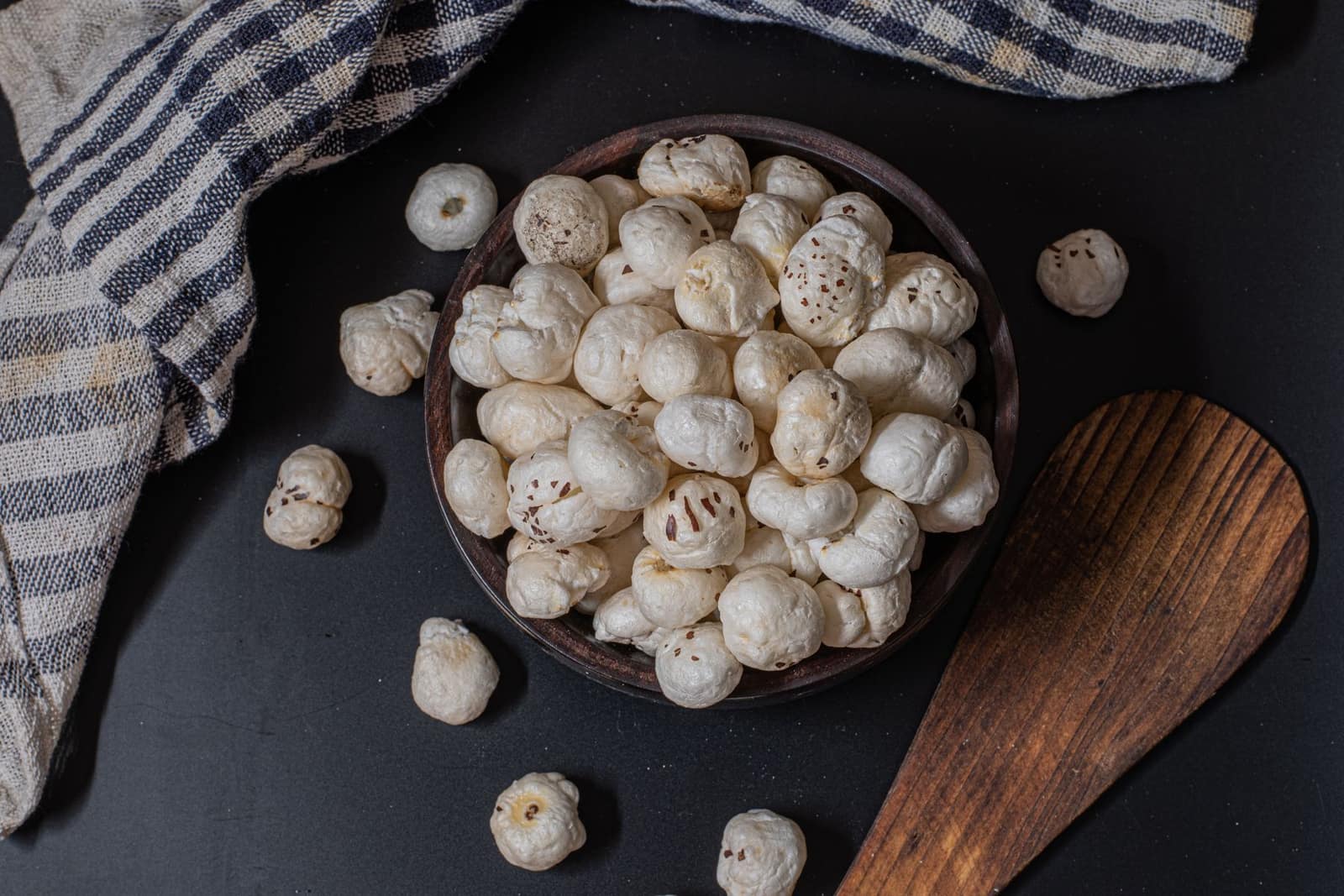 Free to exportProcessed foodMakhana (fox nut)Popped and flavoured makhana from Bihar for health-snack shelves in the USA, UK and Middle East. Small volumes, strong packaging needs.HS2008.19Exports 2025-26US$ 21.8 mn