

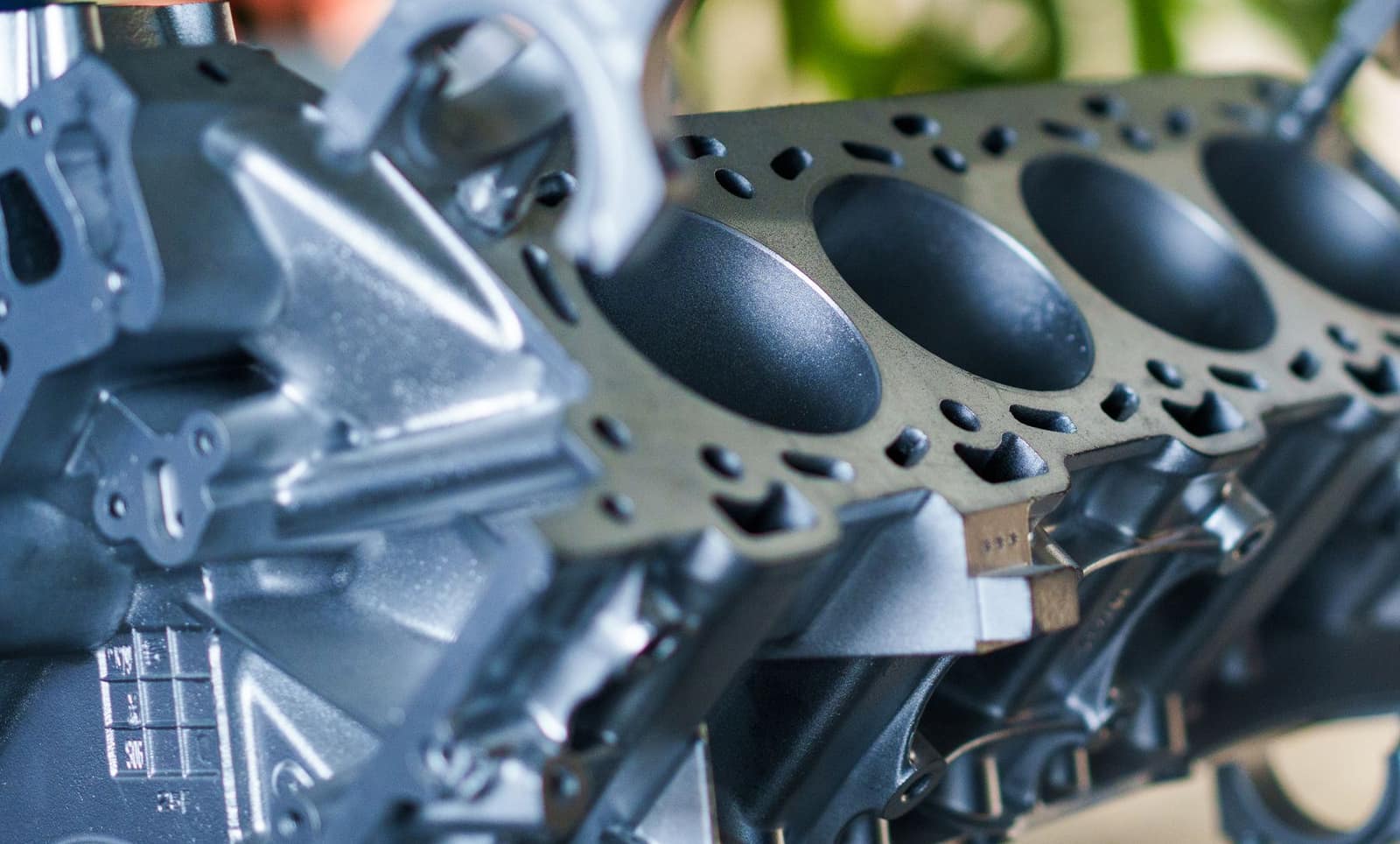
Engineering goods
Export auto parts and components
OEM and aftermarket vehicle parts; the USA, Germany and Italy buy most, with strong demand in Latin America.
- HS code
- 8708 Parts and accessories of motor vehicles — brakes, gearboxes, axles, wheels, suspension, radiators, clutches. Engine parts are in 8409, filters in 8421 and lighting in 8512.
- Export policy
- Free to export Free to export under ITC(HS) Schedule 2.
- Registrations
- 3 IEC, GST and those below
- India’s exports, 2025-26
- US$ 7.64 bn to 176 countries
What is exported
India supplies vehicle makers (OEMs), their tier-1 suppliers and the replacement (aftermarket) trade from clusters in Pune, Chennai, Gurugram–Manesar, Ludhiana, Jamshedpur and Rajkot. In 2025-26 India exported about US$ 7.6 billion under HS 8708; the USA led, followed by Germany, Mexico, Brazil, Turkey, Italy and Vietnam.


Varieties, grades and forms
- Engine partsPistons, valves, gaskets and crankshafts (mostly HS 8409 and 8483).
- Drive transmission and steering partsGearboxes, axles, clutches and steering parts (HS 8708).
- Brakes and suspension partsBrake pads, drums, shock absorbers — strong in the aftermarket.
- Forged and cast componentsMachined forgings and castings supplied to vehicle makers (OEMs).
- Two-wheeler and tractor partsAftermarket parts for Africa, South Asia and Latin America.
Where it is grown or made
- MaharashtraPune–Chakan, Aurangabad (Chhatrapati Sambhajinagar), Nashik
- Tamil NaduChennai, Hosur and Coimbatore
- HaryanaGurugram, Manesar and Faridabad
- PunjabLudhiana and Jalandhar — tractor, two-wheeler and aftermarket parts
- GujaratRajkot and Ahmedabad
The quality buyers ask for
- Drawing and tolerances
- Customer drawing with GD&T tolerances; dimensional report from CMM for each lot
- Material standard
- Steel, aluminium or rubber grade to SAE, DIN/EN, JIS or IS, with mill certificates
- Approval documents
- PPAP (AIAG, usually level 3) or VDA 2 / initial sample inspection report (ISIR) for German buyers
- Corrosion protection
- Plating or coating with salt-spray hours (ASTM B117 or ISO 9227) set by the buyer
- Material reporting
- IMDS entry for vehicle makers; EU End-of-Life Vehicles and REACH SVHC declarations
- Regulated parts
- Lamps, mirrors, brake hoses and similar safety parts need UNECE type approval (E-mark) in Europe or FMVSS compliance in the USA
Certificates
- IATF 16949RequiredThe automotive quality management standard; vehicle makers and Tier-1 suppliers require it of their suppliers.
- ISO 9001Often askedThe minimum for aftermarket buyers; a step towards IATF 16949.
- ISO 14001 / ISO 45001Often askedEnvironmental and health-and-safety systems, often asked for by global OEMs.
- E-mark (UNECE type approval)Often askedRequired in Europe for lighting, glazing, mirrors and other regulated parts.
- TISAXOften askedInformation security assessment asked for by German carmakers when you handle their design data.
Shipping, storage and shelf life
Parts go in returnable or export crates, steel or ISPM-15 wooden boxes on pallets, with VCI anti-rust film. A 20-ft container takes about 10 standard pallets on the floor and a 40-ft about 20; dense parts reach the weight limit first.
Sea for scheduled supply; air for urgent line-stoppage orders (often at the supplier's cost if late).
Protect machined surfaces from rust with oil or VCI packing; keep FIFO by lot for traceability.
What goes on the pack and carton
- Part number, revision, quantity, lot or heat number and date on every box (often to the buyer's barcode label format, such as Odette or AIAG).
- Country of origin on the part or packaging; US Customs requires origin marking.
- E-mark or DOT code moulded or printed on regulated parts.
- Aftermarket retail boxes: brand, application list (vehicle fitment) and part number.
ARAI (Pune) and ICAT (Manesar) are the government-recognised automotive test agencies; they test components and can support type approvals. For material, metallurgical and salt-spray tests, search the NABL directory under 'mechanical' and 'chemical' testing. MSME tool rooms and technology centres also offer testing.
Benefits of exporting this product
- RoDTEP: 0.5% of FOB
Tariff item 8708 99 00 (other parts and accessories of motor vehicles) earns 0.5% of FOB value, with no rupee cap, as a duty credit scrip on ICEGATE. Gear boxes (8708 40 00) get 1.3%, safety airbags (8708 95 00) 0.9% and brakes (8708 30 00) 0.8%. These rates continue to 31 Dec 2026 (DGFT Notification 41/2026-27). Confirm your exact 8-digit line on the DGFT RoDTEP page before you price an order.
DGFT — Appendix 4R, RoDTEP schedule for DTA exports w.e.f. 10.10.2024 (Notification 32/2024-25); rates continued to 31.12.2026 by Notification 41/2026-27 ↗ - Duty drawback: 2% of FOB
Drawback item 870803 (brakes and servo-brakes and parts) has an All Industry Rate of 2% of FOB, paid into your bank account. It is not available on exports under Advance Authorisation or from EOU/SEZ units. Most HS 8708 drawback items (gearboxes, axles, wheels, suspension, radiators, clutches, steering) carry the same 2%. Check the current schedule on the CBIC drawback page before shipping.
Gazette of India — Notification 77/2023-Customs (N.T.) dated 20.10.2023: All Industry Rates of duty drawback, in force from 30.10.2023 ↗ - Zero duty into the UK (CETA)
The India-UK CETA came into force on 15 July 2026 and gives zero-duty access to nearly 99% of India's exports; the Commerce Ministry named engineering goods among the sectors that gain. Claim it with a CETA certificate of origin and check the line for your code on the UK Trade Tariff.
PIB — India-UK CETA enters into force (15 Jul 2026): zero-duty access for nearly 99% of India's exports ↗
Where to register
- EEPC India (Engineering Export Promotion Council)RCMC for automobile components and other engineering goods.eepcindia.org ↗
Quality and checks
- OEM and tier-1 buyers expect an automotive quality system (usually IATF 16949), PPAP approval of samples and full traceability of each lot.
- Safety parts such as lamps, glazing and some brake parts need type approval in many markets (UN ECE "E-mark" in Europe and other countries; US federal motor vehicle safety standards).
- Aftermarket buyers check part-number fit, material certificates and packaging with barcodes.
For a newcomer the aftermarket is easier than OEM supply. Pick a product family you can make or source with consistent quality (for example brake parts or filters for popular vehicle models), prepare a part-number catalogue, join EEPC and meet distributors in the Gulf, Africa or South-East Asia through EEPC fairs.
Where new exporters go wrong
- Using vehicle makers' brand names or logos on aftermarket parts without a licence — goods can be seized as counterfeit.
- US tariffs on auto parts have changed since 2025; check the current US rate for your HTS line before quoting.
- Rust in transit on machined parts — use rust-preventive oil and VCI packing.
Documents this product needs
Schemes that apply
- RoDTEP Remission of Duties and Taxes on Exported Products
- Drawback Duty Drawback (All Industry Rates)
- Advance Authorisation Advance Authorisation
- EPCG Export Promotion Capital Goods Scheme
- ECGC ECGC export credit insurance for small exporters
- LUT Letter of Undertaking for zero-rated exports under GST
- Status Holder Status Holder certificate (One to Five Star Export House)
Sources (6)
- Department of Commerce, Export Import Data Bank — India's exports of HS 8708 by country, 2025-26
- DGFT — Appendix 2T: Export Promotion Councils and the products under each
- DGFT — ITC(HS) export policy search (Schedule 2)
- US International Trade Commission — Harmonized Tariff Schedule (current US duty rates)
- DGFT — RoDTEP scheme page and Appendix 4R rates
- EEPC India — official site
Trade data
Indian auto parts and components exports in numbers
From the Department of Commerce’s TradeStat, country by country. US$, Indian financial years (April–March).
- Exports in 2025-26
- US$ 7.64 bn +10.8% a year on average, 2020-21 to 2025-26
- Change from 2024-25
- ↑ +1.8% US$ 7.51 bn → US$ 7.64 bn
- Buyer countries
- 176
- Average export price
- US$ 5.67 per kg · 1.35 mn tonnes shipped · US$ 5.55 the year before
The price cycle
India’s average export price per kg each year (total value ÷ total quantity). Highest in 2020-21, lowest in 2021-22 — a 14% swing between them. Keep this swing in mind when you quote.
What next: a projection from the trend
The past trend carried forward — not a forecast by any authority. Sudden changes in policy, prices or demand are not in it.
Likely range US$ 8.49 bn to US$ 11.5 bn.
- Trend
- +9.5% a year
- Fit (R²)
- 0.79
- Based on
- 6 years of official figures
Method: a straight line through the logarithm of yearly exports (log-linear regression); range = ±1 standard error.
Biggest buyer countries
By value in 2025-26. Change is against 2024-25.
Where demand is rising and falling
Only countries that buy at least US$ 1 million or 1% of India’s exports of this product. Change from 2024-25 to 2025-26.
↑ High demand
- United Arab EmiratesUS$ 134 mn → US$ 222 mn↑+66.3%
- BelgiumUS$ 92.5 mn → US$ 149 mn↑+60.7%
- GermanyUS$ 438 mn → US$ 612 mn↑+39.7%
- ItalyUS$ 203 mn → US$ 268 mn↑+31.9%
- EgyptUS$ 68.2 mn → US$ 82.6 mn↑+21%
- ChinaUS$ 124 mn → US$ 149 mn↑+20.3%
- CanadaUS$ 118 mn → US$ 139 mn↑+18.2%
- BrazilUS$ 337 mn → US$ 389 mn↑+15.7%
↓ Low demand
- SlovakiaUS$ 110 mn → US$ 40.4 mn↓-63.3%
- TürkiyeUS$ 474 mn → US$ 315 mn↓-33.5%
- MexicoUS$ 507 mn → US$ 406 mn↓-19.9%
- VietnamUS$ 283 mn → US$ 227 mn↓-19.6%
- BangladeshUS$ 102 mn → US$ 88.9 mn↓-12.7%
- IndonesiaUS$ 183 mn → US$ 163 mn↓-10.6%
Which forms sell, and at what price
India’s exports by 8-digit tariff line, 2025-26. Average price = total value ÷ total quantity (TradeStat): the average of every shipment on that line, not the price of any one deal.
| Tariff line | Value 2025-26 | Change | Quantity | Average price |
|---|---|---|---|---|
Otr prtsandaccssrs of vehicles of hdg 8701-87058708 99 00 · Vehicle parts and accessories in heading no. 8708 | US$ 3.61 bn | ↑+1.3% | 6,35,138 tonnes | US$ 5.69 per kgwas US$ 5.38 |
Vehicle parts, brakes, servo-brakes and parts thereof — mounted brake linings8708 30 00 | US$ 822 mn | ↓-3.2% | 2,31,724 tonnes | US$ 3.55 per kgwas US$ 3.83 |
Vehicle parts, gear boxes and parts thereof — gear boxes8708 40 00 | US$ 738 mn | ↑+10.4% | 74,764 tonnes | US$ 9.87 per kgwas US$ 9.41 |
Drive axles with differential whether or not providedwith other transmission components8708 50 00 · Vehicle parts, drive-axles with differential, whether or not provided with other transmission components… | US$ 667 mn | ↓-0.1% | 1,28,911 tonnes | US$ 5.17 per kgwas US$ 5.25 |
Silencers and exhaust pipes8708 92 00 · Vehicle parts, silencers and exhaust pipes, parts thereof | US$ 297 mn | ↑+7.6% | 31,929 tonnes | US$ 9.30 per kgwas US$ 9.34 |
Other parts and accssrs of bodies(including cabs)8708 29 00 · Vehicles, parts and accessories, of bodies, other than safety seat belts | US$ 293 mn | ↑+24.8% | 53,847 tonnes | US$ 5.45 per kgwas US$ 5.14 |
Suspension shock absorbers8708 80 00 · Vehicle parts, suspension systems and parts thereof | US$ 281 mn | ↑+1.7% | 49,997 tonnes | US$ 5.62 per kgwas US$ 5.50 |
Sterng wheels,sterng columns and sterng boxs8708 94 00 · Vehicle parts, steering wheels, steering columns and steering boxes, parts thereof | US$ 270 mn | ↓-3.1% | 26,917 tonnes | US$ 10.02 per kgwas US$ 10.45 |
Road wheels and parts and accssrs thereof8708 70 00 · Vehicle parts, road wheels and parts and accessories thereof | US$ 170 mn | ↑+1.3% | 53,815 tonnes | US$ 3.16 per kgwas US$ 2.78 |
Clutches and parts thereof8708 93 00 · Vehicle parts, clutches and parts thereof | US$ 134 mn | ↑+10.2% | 18,438 tonnes | US$ 7.29 per kgwas US$ 7.44 |
Bumpers etc. for other vehicles8708 10 90 · Vehicles, bumpers and parts thereof, for the vehicles of heading no. 8701 to 8705 | US$ 112 mn | ↑+14.6% | 16,884 tonnes | US$ 6.66 per kgwas US$ 6.47 |
Safety airbags with inflater system; parts thereof8708 95 00 · Vehicle parts, safety airbags with inflater system, parts thereof | US$ 80.9 mn | ↓-36.3% | 3,511 tonnes | US$ 23.05 per kgwas US$ 28.45 |
Vehicle parts, radiators and parts thereof — radiators8708 91 00 | US$ 77 mn | ↑+1.8% | 4,574 tonnes | US$ 16.83 per kgwas US$ 14.23 |
Vehicles, bumpers and parts thereof, for the vehicles of heading no. 8701 to 8705 — bumpers etc. for tractors8708 10 10 | US$ 50.7 mn | ↑+10% | 11,338 tonnes | US$ 4.47 per kgwas US$ 6.00 |
The world market
Each country’s own recorded exports and imports in UN Comtrade, 2023 (the latest year nearly every country has reported).
- World imports
- US$ 449.6 bn 2023
- India among exporters
- #17 of 162 countries
- India’s share of world exports
- 1.5% US$ 7.04 bn
- Left for others to win
- US$ 449.8 bn exported by other countries
Top exporters — your competitors
- 1GermanyUS$ 67.8 bn 14.8%
- 2ChinaUS$ 53.1 bn 11.6%
- 3USAUS$ 47.5 bn 10.4%
- 4MexicoUS$ 40.6 bn 8.9%
- 5JapanUS$ 27.1 bn 5.9%
- 6Rep. of KoreaUS$ 19.4 bn 4.3%
- 7PolandUS$ 18.3 bn 4%
- 8CzechiaUS$ 16.9 bn 3.7%
- 9ItalyUS$ 16.3 bn 3.6%
- 10FranceUS$ 15 bn 3.3%
Biggest buyers in the world
- 1USAUS$ 87.8 bn 19.5%
- 2GermanyUS$ 47.9 bn 10.7%
- 3MexicoUS$ 32.4 bn 7.2%
- 4ChinaUS$ 21.5 bn 4.8%
- 5CanadaUS$ 20.2 bn 4.5%
- 6FranceUS$ 19.8 bn 4.4%
- 7SpainUS$ 15.6 bn 3.5%
- 8SlovakiaUS$ 15.3 bn 3.4%
- 9United KingdomUS$ 13.2 bn 2.9%
- 10CzechiaUS$ 12.8 bn 2.8%
Opportunity: what these countries buy from the world, and from India
Each country’s own recorded imports in UN Comtrade, latest year it has reported. The long light part of each bar is demand other countries are filling today.
TradeStat’s 2023-24 quantities are double-counted, so that year is left out of the price. Sources: TradeStat — Export Import Data Bank, Department of Commerce · UN Comtrade database (United Nations Statistics Division) · Figures taken 29 October 2026.
Step by step
How to export auto parts and components
India has a large and growing auto component industry that supplies both carmakers at home and global vehicle makers and aftermarket buyers abroad. Its main competitors are China, Mexico, Germany, Japan, South Korea and Thailand; for the US market, Mexico has the advantage of proximity and trade rules. Demand comes from vehicle makers diversifying away from single-country supply, from the large replacement-parts aftermarket, and from the shift to electric vehicles. Openings for a smaller firm are in aftermarket parts, machined and forged components for Tier-1 suppliers, and parts for two-wheelers and tractors, which India makes in very large numbers.
- 01Choose segment
Decide aftermarket or OEM/Tier-1 supply — they need different approvals and pricing.
- 02RFQ and feasibility
Study the drawing, confirm you can meet tolerances and volumes, and quote with tooling cost.
- 03Tooling and samples
Make tools, produce initial samples and full dimensional and material reports.
- 04PPAP / ISIR approval
Submit the approval package; the buyer audits your process before serial supply.
- 05Serial production
Run with control plans, SPC on critical dimensions, and lot traceability.
- 06Pack and ship
Pack to the packaging specification, file the shipping bill, claim RoDTEP and drawback.
- 07Payment and scorecards
Payment is usually on open account (60–90 days is common); OEMs rate you on quality and delivery. Use ECGC cover and factoring for cash flow.
Meet buyers
Trade fairs
- September, every two years (next: 5–9 September 2028)Automechanika FrankfurtFrankfurt, Germanyautomechanika.messefrankfurt.com ↗
- November (2026 edition: 10–12 November)Automechanika DubaiDubai, UAEautomechanika-dubai.ae.messefrankfurt.com ↗
- Usually November — check datesAAPEXLas Vegas, USAaapexshow.com ↗
- Check dates with EEPC IndiaIESS — International Engineering Sourcing Show (EEPC India)India (city changes)eepcindia.org ↗
Questions
Questions about exporting auto parts and components
Do I need IATF 16949 for aftermarket sales?
What is PPAP?
What is IMDS?
Are US tariffs a problem for auto parts?
Which council supports auto-part exporters?
Sources (7)
Who buys Indian auto parts and components
All countries → USDWashington, D.C.United States of AmericaIndia's largest single-country export market. Strict FDA rules for food; extra 10% US duty on most goods since July 2026.From India 2025-26US$ 87.3 bn
 EURBerlinGermanyEurope's largest economy and India's biggest EU partner. Values quality, certificates and supply-chain transparency.From India 2025-26US$ 11.5 bn
 EURRomeItalyManufacturing buyer of Indian leather, yarn, castings, chemicals and seafood. EU rules apply.From India 2025-26US$ 7.79 bn
 AITIGAVNDHanoiVietnamFast-growing manufacturing economy buying raw materials, yarn, steel, chemicals and feed ingredients from India.From India 2025-26US$ 6.67 bn
 CEPAAEDAbu DhabiUnited Arab EmiratesIndia's biggest Gulf buyer and a re-export hub for the Middle East and Africa. CEPA in force since 2022.From India 2025-26US$ 37.4 bn
 CETAGBPLondonUnited KingdomNew CETA in force since July 2026 — most Indian goods now enter duty-free. Strong market for garments, food and engineering.From India 2025-26US$ 13.4 bn
 AITIGAIDRJakartaIndonesiaWorld's fourth most populous country. Buys Indian vehicles, steel, chemicals, groundnuts and meat; halal and BPOM rules for food.From India 2025-26US$ 4.49 bn
 SARRiyadhSaudi ArabiaLarge Gulf market for rice, food and engineering goods. Strict SFDA food rules and SABER certification for regulated goods.From India 2025-26US$ 10.3 bn
More in engineering goods
All products → Free to exportEngineering goodsIron and steel castingsGrey and ductile iron and steel castings from Kolhapur, Rajkot, Coimbatore and Howrah; the USA leads.HS7325Exports 2025-26US$ 1.25 bn ↑3.2%
 Free to exportEngineering goodsHand toolsHammers, wrenches, pliers and garden tools from Jalandhar and Ludhiana; the USA buys most.HS8205Exports 2025-26US$ 161 mn ↓7%
 Free to exportEngineering goodsPumpsAgricultural, domestic and industrial pumps from Coimbatore, Rajkot and Ahmedabad; the USA leads.HS8413Exports 2025-26US$ 1.6 bn ↑5.2%